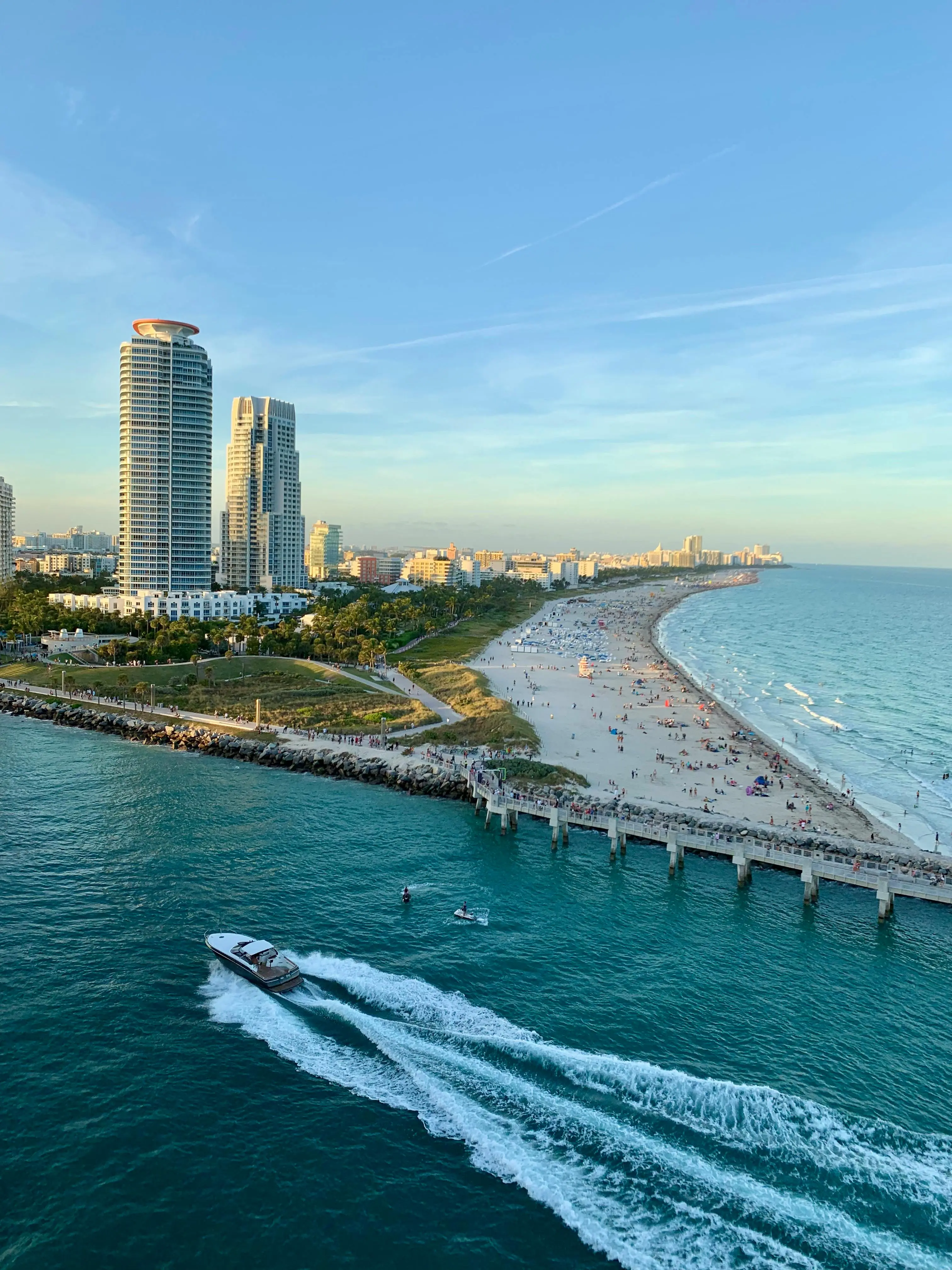
Lukas
Tech & Digital Nomad Cultural Editor ·
Miami rewards people who arrive knowing what they're walking into — and quietly punishes those who don't. The weather is extraordinary nine months of the year, the food is genuinely world-class, and the lack of state income tax changes your monthly maths in ways other US cities simply can't match. But the rent is brutal, the traffic is worse than you've heard, and hurricane season is not a footnote. This guide covers what you actually need before committing.
Which neighbourhoods suit which budgets and work styles
What moving to Miami actually costs, month by month
How Miami weather shapes your daily routine — and your utility bill
What the job market looks like if you're not fully remote
How public transportation works, and when it doesn't
The admin checklist: utilities, mail forwarding, and what to handle before moving day
Moving to Miami: Choosing Your Neighbourhood Before You Sign Anything
Miami is not one city — it's a loose collection of neighbourhoods that function almost independently, each with different price points, demographics, and daily rhythms. Get this decision wrong and no amount of great weather fixes the commute or the cost. Explore in person before you commit to anything longer than a month.
Brickell: Moving to Miami's Financial District on a Professional Budget
Brickell is where Miami's finance and fintech crowd lands first, and the infrastructure reflects that — walkable, high-rise, and priced accordingly.
Brickell City Centre — shopping, dining, and grocery options within one complex; useful on weeknights when you don't want to drive
One-bedroom apartments: $2,700–$3,200/month; studios from $2,100/month
maman — fantastic coffee and danishes; quieter than most café alternatives nearby
Parking is expensive and often separate from rent — confirm before signing
Brickell works if your salary has already adjusted for Miami; it's a punishing entry point if you're still figuring out the numbers.
South Beach and Miami Beach: The Address Everyone Wants and Fewer People Can Afford
South Beach looks like a lifestyle choice on Instagram and functions like a logistical problem in real life — beautiful, noisy, and priced for short-term visitors more than long-term residents.
One-bedroom rents average $2,720–$2,800/month; beachfront units push well above $3,500/month
Puerto Sagua — Cuban diner on Collins Ave, open since 1962; breakfast under $12, no pretension
Traffic on the MacArthur Causeway during rush hour adds 30–45 minutes each way to downtown Miami
Works best for people whose work is genuinely location-independent and who treat the beach as infrastructure, not amenity
Three weeks here will tell you whether Miami Beach is a home or an expensive hotel you've been renting by the month.
Coconut Grove and Coral Gables: The Quieter South Florida Alternative
If Brickell is the engine and South Beach is the showroom, Coconut Grove and Coral Gables are where people settle when they stop performing Miami and start living it.
Coconut Grove Farmers Market — Saturday mornings, year-round; the kind of weekly routine that makes a new city feel like home
One-bedroom rents in Coral Gables: $2,100–$2,600/month; Coconut Grove slightly lower at $1,900–$2,400/month
The Kampong — botanical garden in Coconut Grove; free on certain days, empty on weekday mornings
Private schools dominate the area — relevant if you're relocating with children, less so otherwise
Both neighbourhoods are slower and leafier than the rest of the Miami area, which is either exactly what you need or a sign you've picked the wrong city.
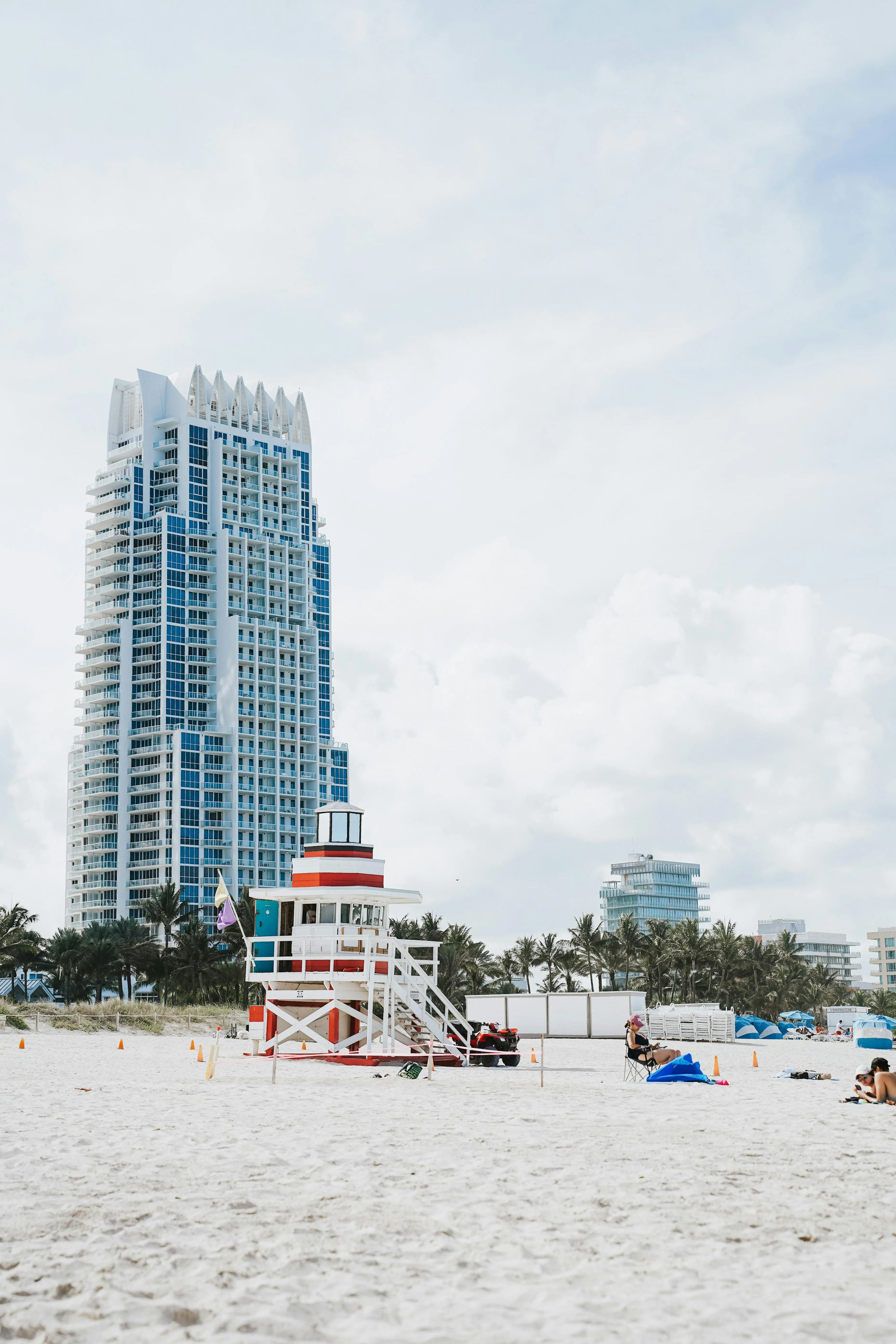
Miami offers a rare combination of walkable urban neighbourhoods like Wynwood and Brickell alongside quieter suburban options like Coral Gables and South Miami, so your commute tolerance should be the first thing you clarify before signing a lease.
The neighbourhood decision shapes every other cost in the relocation process — so lock that down before you start pricing anything else. Browse fully furnished apartments in Miami to see what's available across these areas before committing to a lease.
Neighbourhood | Monthly Rent (1-bed) | Vibe | Best For | Key Advantage |
|---|---|---|---|---|
Brickell | $2,700–$3,200 | High-rise, professional | Finance workers, young professionals | Walkable, close to downtown Miami |
Miami Beach / South Beach | $2,720–$3,500+ | Loud, tourist-adjacent | Fully remote workers, beach lifestyle | The beach, Art Deco architecture |
Coconut Grove | $1,900–$2,400 | Leafy, bohemian | Families, long-term residents | Quieter streets, bayfront access |
Coral Gables | $2,100–$2,600 | Residential, upscale | Families, professionals | Top public and private schools nearby |
Downtown Miami | $1,900–$2,500 | Urban, transit-connected | Commuters, budget-conscious professionals | Best public transportation access |
Explore Coconut Grove in our neighbourhood guide if you're still deciding between the beach side and the mainland.
Browse Miami homes near this area
What Moving to Miami Actually Costs: The Real Monthly Budget
Miami's cost of living runs 17% above the national US average, and that gap shows up immediately — not gradually. The rent hits first, then the utility bills, then the insurance quotes. Budget for all three before you move, not after.
Rent and Housing Costs Across the Miami Area
About 70% of Miami households are renters, and competition for well-priced units in desirable areas is real — especially given sustained demand from international buyers and relocation trends squeezing Miami-Dade County inventory.
Average one-bedroom rent citywide: around $1,800/month — but that average is dragged down by units far from the beach and downtown Miami; budget $2,200–$2,800 for anything central
Temporary accommodation for your first 2–4 weeks: furnished apartments typically $3,000–$4,500/month short-term; cheaper than a hotel if you plan ahead
Homeowners insurance averages over $8,000 per year — plus mandatory flood insurance if you buy — making renting the financially rational short-term choice for most new residents
Property taxes in Miami-Dade County are moderate, but they don't offset the insurance burden for most buyers
The number that matters most: a single professional should budget $4,800–$5,000 per month total, and that's not a comfortable buffer — that's a realistic floor.
Everyday items like groceries and household supplies cost roughly 8–12% more in Miami Beach than in inland neighbourhoods like Hialeah or Kendall, so locals who work on the beach but can handle the commute often shop at Winn-Dixie off the Palmetto Expressway instead.
Tax Advantages That Change the Maths for Relocating to Miami from Other US Cities
Florida levies no personal state income tax, and for anyone moving from New York, California, or other high-tax states, that single fact restructures the entire cost conversation.
Moving from New York City to Miami: save 4–10% of gross income depending on bracket — that's $6,000–$15,000 annually on a $150,000 salary
No state income tax applies to all Florida residents — remote workers, freelancers, and employees equally
Credit card companies, banks, and financial institutions typically require 30–60 days of documented residency for a Florida address to register for tax purposes
A single adult still needs $60,000–$80,000 annually to cover basic expenses — the tax saving matters most at higher incomes
The tax advantage is real, but it doesn't make Miami cheap — it makes Miami cheaper than the alternatives at the income levels where it tends to attract people.

Budget two to three business days to contact Miami utility providers like FPL and Miami-Dade Water and Sewer before move-in, as same-day activation is rarely available and you do not want to spend your first night without power in August.
Miami Weather, Air Conditioning, and What a Subtropical Climate Means Day-to-Day
Miami's weather is the reason most people come and the reason some leave. The winters are genuinely perfect — mild, dry, and warm enough for flip flops in January. The summers are something else entirely.
Miami Weather Month by Month: What South Florida's Climate Actually Delivers
Average annual temperatures hover around 77°F (25°C), but that number conceals a meaningful split between the dry season and the wet one.
November through April: low humidity, temperatures 65–80°F, minimal rain — this is Miami at its best and also when rents are most competitive to negotiate
June through November: hurricane season; August through October brings the heaviest rainfall, occasional flooding, and storm watches that affect everything from moving truck logistics to daily commutes
Humidity from May onwards makes outdoor morning work uncomfortable by 9am — if you rely on outdoor café work, plan your schedule around this
Palm trees and postcard weather are real — but so is the week in September when the city floods at high tide
If you're moving in summer, time your moving day delivery for early morning — by noon the heat turns a two-hour job into a four-hour one.
Moving to Miami from any other city in the northern U.S. means accepting that your electricity bill will run $150–$250 a month in summer purely because of air conditioning — it is not optional the way it might be in Chicago or Boston.
Air Conditioning Costs in the Big City Heat: What Your Utility Bill Will Look Like
Air conditioning in Miami isn't a comfort feature — it's structural, and running it continuously June through October pushes utility bills to levels that genuinely affect monthly budgets.
Average monthly utility bill with air conditioning running: $180–$260 in summer months; drops to $90–$130 in winter
Older apartment buildings in Miami Beach and downtown Miami tend to have inefficient central HVAC — ask about average bills before signing, not after
Contact Miami utility providers — FPL (Florida Power & Light) and Miami-Dade Water and Sewer — at least two weeks before your move-in date; setup delays are common in high-demand periods
Budget $200/month for utilities year-round as a conservative planning figure; that's $2,400 annually before you account for internet and renters insurance
The gap between a well-insulated apartment and a poorly sealed one is about $80/month in Miami summers — it's worth asking for floor-level and sun-exposure details before you commit.
Public Transportation, Traffic, and Getting Around Miami FL Without a Car
Miami is functionally a driving city, and most Miami residents own a car. That said, the honest answer to "do you need one?" depends entirely on which neighbourhood you pick — and how much you value your time during rush hour.

Public Transportation in Miami: What Works and Where It Stops
Miami-Dade County operates the Metrorail, Metromover, and Metrobus — and the Metromover in particular is genuinely useful for moving between downtown Miami and Brickell without a car.
Miami Central Station (MiamiCentral) — Brightline intercity rail connects Miami FL to Fort Lauderdale in 30 minutes and Orlando in under 4 hours; single fare to Fort Lauderdale around $10–$20
Metromover: free, runs through downtown Miami and connects to Metrorail — useful if you live and work in the urban core
Metrobus covers the wider Miami area but is slow during rush hour; not a reliable commute option for time-sensitive work schedules
Transportation methods beyond transit: Uber and Lyft are heavily used; surge pricing during rush hour and major events makes this expensive as a daily habit
If your apartment is in Brickell or downtown Miami and your life doesn't require leaving those areas often, you can make Miami work without a car — but the moment you need Coral Gables, Coconut Grove, or the airport, the maths changes.
Miami is not an easy city to navigate without a car — the Metrorail covers only two lines and misses most of Miami Beach entirely, so if you are relocating from a transit-heavy city like New York, budget for a car or a $30–$50 daily Uber spend.
Driving in Miami: Traffic, Parking, and a Smooth Move Without the Headaches
Miami's traffic is not just heavy — it's structurally bad in ways that make rush hour genuinely disruptive to work schedules, and moving day logistics in this city require planning most other US cities don't demand.
Rush hour: 7:30–9:30am and 4:30–7pm on weekdays; I-95 and the MacArthur Causeway are the worst corridors — avoid scheduling a moving truck delivery during these windows
Parking permits in Miami Beach and Brickell are required for street parking and often cost $150–$400/year; confirm whether your building includes a space
Car keys and a reliable vehicle matter more in Miami than in most other US cities — this is not a city that rewards being car-free by convenience
International drivers: Florida requires a US licence within 30 days of establishing residency for new Florida residents moving from abroad
The people who adjust fastest to Miami's traffic are the ones who stop fighting it — they shift their schedules so they're never in a car between 5pm and 7pm on a weekday.
Finding and Booking an Apartment in Miami Before You Arrive
The Miami rental market moves fast enough that apartments listed on a Monday are often gone by Thursday — and landlords here are not waiting for you to finish deliberating. If you plan to relocate without a local address and US credit history, that combination alone will disqualify you from most listings before the search even starts.
What the Miami Rental Market Actually Requires
More people arrive in Miami expecting a flexible, short-notice rental market and leave having paid two months upfront on a lease they negotiated badly — understanding the paperwork before you land makes a real difference.
Most landlords require proof of income at 3x monthly rent, a US bank account, and a credit check — remote workers with foreign income need pay stubs or a letter from a registered business to satisfy this on a daily basis
Security deposits run 1–2 months; first and last month's rent is standard — budget $6,000–$9,000 upfront for a $1,500–$2,000/month apartment before you have keys
Furnished short-term rentals (30-day minimum in most Miami neighbourhoods) bypass the credit check requirement and are the cleanest entry point for relocation without established US resources
Lease start dates are inflexible — if your move-in falls on a weekend or holiday, confirm logistics with the building a week in advance
The relocation process in Miami is smoother when you treat the first 30–60 days as a furnished rental window while you decide on a permanent neighbourhood — locking into a 12-month lease before you've lived the commute is the most common and most expensive mistake.

Before committing to your new home in Miami, visit the building on a weekday evening — noise levels in Brickell from Metromover trains and Brickell City Centre foot traffic sound completely different at 8pm than they do during a Saturday afternoon showing.
Neighbourhoods Worth Booking First for Newcomers
Brickell and Wynwood absorb most relocating remote workers by default — both are functional, but they suit different working styles in ways that aren't obvious from a listing photo.
Wynwood: studios from $1,800/month furnished; walkable to Panther Coffee Wynwood ($5–$6 flat whites, strong WiFi until 2pm before it gets loud) — better if your lifestyle involves afternoon meetings that need ambient noise, not silence
Little Havana: 1-bed furnished from $1,600/month; the Spanish-speaking community here means daily errands are easier in Spanish than English — ideal if you already speak the language, jarring if you don't
Edgewater: 1-bed from $2,200/month; quieter than Wynwood, waterfront access, better for a family relocating with children or anyone who needs to be off a laptop by 6pm and wants a walk, not a bar
Use fully furnished apartments in Miami to filter by neighbourhood and minimum stay before committing to anything — most landlords will not negotiate a shorter term once you've signed
Where you land in week one shapes what you think Miami feels like — book somewhere with a kitchen, a desk, and a neighbourhood you can actually walk, and your assessment of the city will be more accurate.
Water sports like paddleboarding and kayaking are genuinely part of everyday Miami life — Oleta River State Park in North Miami rents kayaks from $25 an hour, and locals use it on weekday mornings the way other cities use public gyms.
Miami Safety, Culture, and What Daily Life Is Actually Like
Miami has a reputation that is partly accurate and mostly exaggerated — the city is neither as dangerous as people who have never lived here suggest, nor as effortlessly smooth as its Instagram presence implies. What it is, consistently, is loud, hot, fast, and bilingual in a way that shapes culture at every level.
Safety by Neighbourhood: What Residents Know That Tourists Don't
Tourists in Miami Beach and Brickell get a version of Miami that is polished and patrolled; residents who explore beyond those corridors get a more complicated picture that is worth understanding before you decide where to live.
Brickell, South Beach, Coral Gables, and Coconut Grove are consistently safe for walking at night — the infrastructure is well-lit and foot traffic stays high late
Little Haiti and parts of Liberty City have higher crime rates; these are not areas to browse for cheap apartments without first visiting in person during daylight hours
Miami Beach noise and crowd levels spike significantly on holiday weekends — friendly people and a good street energy most nights, genuinely overwhelming during Art Basel, Ultra, and New Year's
Petty theft from unlocked cars is the most common crime affecting residents on a daily basis — never leave a laptop bag, wallet, or any bag visible through a car window, anywhere in the city
Daily life in Miami means genuinely great food at every price point — a full Cuban lunch at Versailles on Calle Ocho costs under $15, while a dinner in the Design District will run $80 per person without drinks.
The safety picture in Miami rewards the same logic it rewards in any US city: know your neighbourhood, vary your routes, and don't confuse the experience of tourists on Ocean Drive with the experience of people who actually live here.
Miami Culture, Weather, and the Lifestyle Trade-Offs Nobody Mentions
The weather is the reason more people relocate to Miami than almost any other US city — and the weather is also the reason some of them leave after one summer.
June through September is hot, humid, and subject to daily afternoon storms; the temperature rarely drops below 85°F and the humidity makes it feel worse — outdoor work is not realistic for most of that window
October through April is genuinely excellent: low 70s, low humidity, reliable sunshine — this is when Miami's beaches, culture, and outdoor lifestyle justify everything
Miami's Latin American community — particularly Cuban, Colombian, Venezuelan, and Brazilian — means Spanish is a functional first language in many neighbourhoods; this is not a surface-level cultural influence, it is structural
Entertainment runs late: dinner before 8pm feels early, and the music-to-silence ratio in most public spaces skews loud — if you work early mornings and need quiet evenings, plan your neighbourhood around that, not against it
Miami life is easiest for people who like warmth, noise, movement, and a city that doesn't slow down — it is genuinely difficult for people who arrived expecting that it would eventually feel quieter.
Use the following timeline as your baseline: secure your lease 45 days out, schedule utility activation 14 days out, and file your Florida vehicle registration within 10 days of arriving — the DMV in Doral books up fast and walk-in waits regularly exceed two hours.
Practical Resources for Relocating to Miami: What to Do on Moving Day
Relocating to Miami as a remote worker involves more administrative setup than most US cities simply because Florida operates differently from states with established expat infrastructure — and Miami's sheer size means the right resources are not always obvious.
Getting a Florida Address, Licence, and Bank Account Set Up
Florida residency paperwork is straightforward but has a strict sequence — working on important documents out of order costs time and, in some cases, money.
Florida driving licence: visit a Miami-Dade DMV office with two proofs of address, your current licence, and Social Security number — appointments book 2–3 weeks out, walk-in waits average 90 minutes
Proof of address: a signed lease, utility bill, or bank statement with your Miami address works — furnished rental agreements are accepted at most government offices and the United States Postal Service for new residents
Banking: Chase Bank Brickell and Wells Fargo both have Spanish-speaking staff at most Miami branches — open an account within the first week if you plan any lease applications or address forms
Health insurance: Florida did not expand Medicaid; remote workers without employer coverage should plan for a marketplace plan through healthcare.gov — budget $300–$600/month for a mid-tier individual plan
The administrative side of a Miami relocation is not complicated — it just requires doing things in the right order and not assuming Florida works the way your previous state or country did.
Notify your credit card companies of your new Miami address within 48 hours of moving — several issuers will freeze cards flagged with mismatched billing addresses, which is the last thing you need when buying furniture at IKEA Sweetwater on day one.
Groceries, Co-working, and the Infrastructure of Daily Life
Miami's daily infrastructure is functional but car-dependent in ways that affect how you plan a grocery run, a gym session, or a job interview on the other side of town.
Whole Foods Brickell — walkable from most Brickell apartments, well-stocked, expensive ($80–$120/week for one person); Publix Edgewater cuts that by 30% for the same basket
Mindspace in Wynwood — $25/day, $350/month hot desk; strong WiFi, good AC, and a community of Miami-based freelancers and remote workers worth knowing
Miami's beaches are free and accessible by car or rideshare — a Saturday morning at South Pointe Park costs nothing and is one of the better things the city offers without a reservation while giving you access to local businesses
Gym memberships: Life Time Fitness in Brickell runs $150–$200/month; local gyms in Wynwood and Little Havana start at $30/month — the gap matters if you plan a long stay
The logistics of daily life in Miami reward anyone who spends the first week mapping the 10 places they'll use most — after that, the friction drops sharply and the lifestyle starts to make sense.
Miami's position as a hub for international trade means white-collar jobs in logistics, finance, and Latin American business development are genuinely easier to find here than in most U.S. cities, which is a real career advantage if that is your field.

Is Miami Right for You? An Honest Assessment Before You Commit to the Magic City
Miami works best for remote workers who already know they want warmth, Latin American culture, and a city with genuine energy — and who have enough income to absorb the housing costs without financial stress. If you are relocating primarily because Florida has no state income tax, run the full numbers first: rent, car, insurance, and AC bills often neutralise that advantage faster than people expect.
The city is genuinely difficult for anyone who needs quiet, consistent routine, or a strong public-transit network. It is genuinely excellent for anyone who works well in warmth, speaks some Spanish, and is comfortable with a car-dependent lifestyle that occasionally surprises you with how good the beaches are at 7am on a Tuesday.
If you are still deciding, the most useful thing you can do is spend three weeks here — not as a tourist in South Beach, but in the neighbourhood you are considering, with a kitchen and a work setup. That stay will tell you more than any guide can. Start your search with fully furnished apartments in the United States and filter for Miami to find options with flexible 30-day minimum terms.