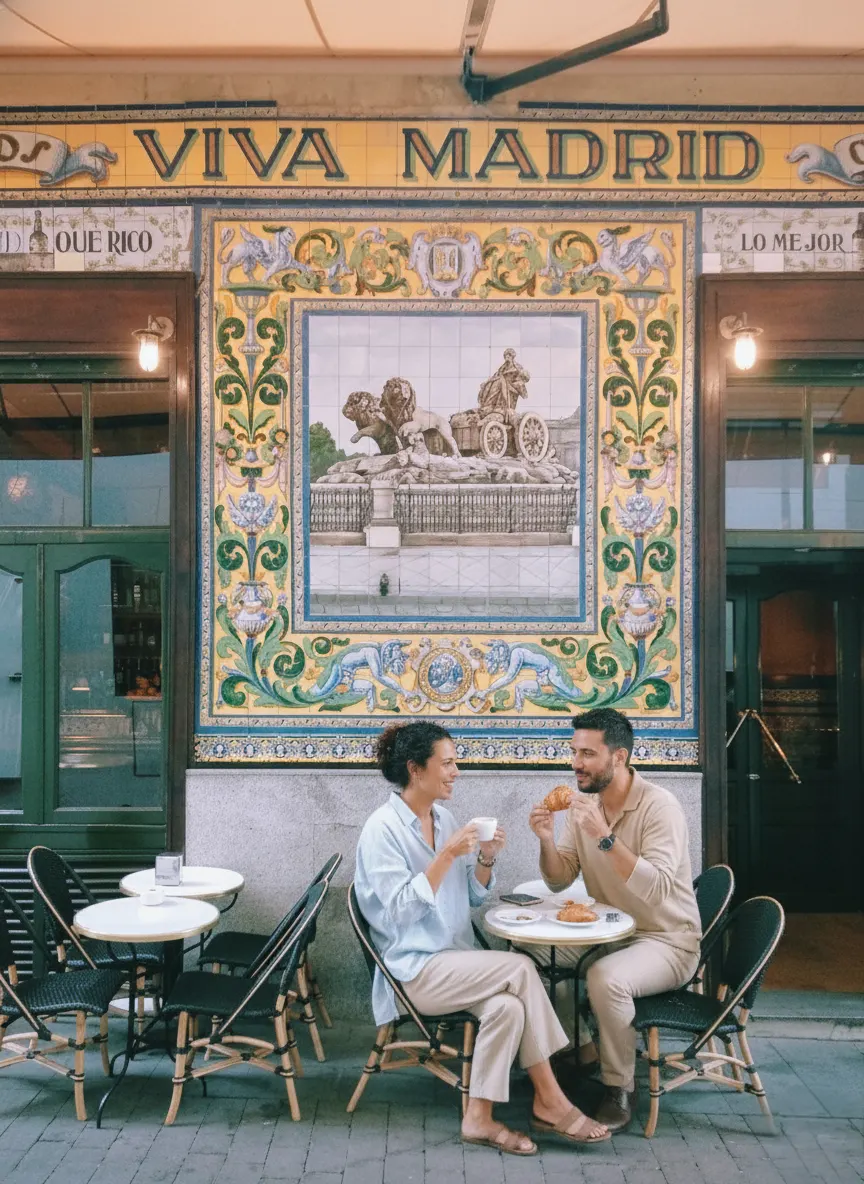
Madrid is a city that never stays still. Grand boulevards meet tucked-away taverns, palaces sit beside modern art museums, and somewhere between the two, life unfolds at its own unhurried pace. Three days here let you taste both sides — the regal and the everyday.
You’ll walk through centuries of history, from the Royal Palace and Plaza Mayor to leafy corners of Retiro Park and cafés that spill onto old cobblestone streets. In this capital city, mornings start with coffee and churros, afternoons drift through galleries like the Prado Museum, and nights hum with laughter in tapas bars around Puerta del Sol.
What makes a 3-day Madrid trip unforgettable:
-
Exploring the royal quarter and skyline views from Mirador de la Catedral
-
Sampling jamón, olives, and wine at Mercado de San Miguel
-
Admiring masterpieces at the Prado Museum and Reina Sofía Museum
-
Strolling beneath the trees of Retiro Park and visiting the Crystal Palace
-
Ending evenings with flamenco, laughter, and Chocolatería San Ginés churros
Madrid’s magic lies in contrast — majestic yet personal, timeless yet spontaneous. Three days here are enough to feel it all.

Day 1 — Royal Roots and Iconic Plazas in the City Center
The first day in Madrid is about understanding its heartbeat — where royal tradition, public life, and street culture meet within a few steps of each other. Everything begins in central Madrid, a compact area where plazas open onto grand avenues and cafés spill into courtyards. It’s where Spain’s royal legacy meets the everyday pace of the city center.
Start at the Royal Palace and Mirador de la Catedral
Begin your morning at the Royal Palace (Palacio Real de Madrid), the official residence of the Spanish royal family and the largest palace in Western Europe. The vast halls, baroque architecture, and sprawling courtyards set the tone for the city’s royal side.
Don’t miss:
-
The Royal Collections Gallery, or the Galería de las Colecciones Reales, showcasing treasures from Spain’s monarchs
-
The Mirador de la Catedral next to Almudena Cathedral for panoramic skyline views
-
The nearby National Archaeological Museum, where artifacts trace Spain’s ancient past
-
Gardens surrounding the palace — peaceful spots for photos before crowds arrive
Visit Plaza Mayor and Nearby Food Stops
From the palace, walk ten minutes to Plaza Mayor, Madrid’s most famous square and social meeting point since the 17th century. Surrounded by red-brick arcades and street performers, it’s the perfect place to pause and feel the rhythm of local life.
Where to eat and wander:
-
Mercado de San Miguel – classic tapas stalls serving croquetas, Iberian ham, and Spanish wine
-
Puerta del Sol – the lively square where you’ll find El Oso y el Madroño, Madrid’s beloved bear statue
-
Chocolatería San Ginés – open late, serving rich chocolate and churros since 1894
-
Calle de Alcalá – a walkable avenue linking Plaza de Cibeles and Puerta de Alcalá

Evening in Central Madrid — From Palaces to Tapas
As evening falls, central Madrid transforms. Street musicians play under the lights of Plaza de Cibeles, while the scent of garlic and wine drifts from small kitchens.
Ideas for your first night:
-
Dinner in La Latina, known for many restaurants and its authentic tapas crawl
-
A live performance at Teatro Flamenco Madrid, where tradition meets passion
-
A nighttime stroll past the illuminated Cibeles Fountain and grand Palacio de Cibeles
Madrid’s first impression is its most enduring — regal but welcoming, full of history yet alive with everyday conversation.
Cultural Corners — From Reina Sofía Museum to the Naval Museum
Madrid’s story stretches far beyond its plazas. Its institutions carry the city’s creative and historical depth — from the modern art inside the Reina Sofía Museum to the maritime relics preserved at the Naval Museum near El Retiro Park.
Unmissable cultural stops:
-
Reina Sofía Museum – modern Spanish masters, including Picasso’s Guernica and surrealist works by Dalí
-
Naval Museum – a quiet gem tracing Spain’s global voyages through maps, model ships, and ancient Egypt artifacts
-
Sorolla Museum – intimate galleries bathed in Mediterranean light, celebrating daily Spanish life
These museums reveal a Madrid that’s always been curious about the world — one that created art, explored oceans, and redefined culture at every turn.

Day 2 — Madrid’s Art Walk: Museums, Gardens, and Cultural Icons
After a royal first day, shift from palaces to paintings. Day two unfolds along the Paseo del Prado, where Madrid’s most celebrated art museums line one grand boulevard — a stretch so culturally rich it’s recognized as a UNESCO World Heritage Site. From Renaissance masters to modern icons, this is where the city reveals its creative soul.
Prado Museum and the Masters of Spanish Art
Start your morning at the world-famous Prado Museum, home to more than 8,000 works of European art spanning the 12th to 19th centuries. Inside, you’ll meet Spain’s greatest painters and the stories that shaped their time.
Essential highlights:
-
Francisco de Goya’s “The Third of May” and Velázquez’s “Las Meninas”
-
Works by El Greco and Titian that bridge Spanish and Italian traditions
-
A guided tour option for visitors who want context beyond the canvas
-
The nearby National Museum of Decorative Arts, ideal for a short stop afterward
Between galleries, grab coffee at the museum café or on a terrace along the Paseo del Prado — perfect for people-watching between exhibitions.
Reina Sofia Museum and Modern Spanish Culture
A short walk from the Atocha Train Station brings you to the Reina Sofía Museum, where modernism takes center stage. It’s a sharp contrast to the classical halls of the Prado — louder, freer, and charged with 20th-century emotion.
Must-see pieces and moments:
-
Picasso’s Guernica, the museum’s most powerful symbol of modern Spain
-
Surrealist works by Dalí and Miró that define modern art in Europe
-
Rotating exhibitions inside a bright, contemporary cultural center
-
Cafés around Plaza del Callao and the Metropolis Building for lunch or a quick espresso
Here, you’ll feel Madrid’s ongoing dialogue between old and new — reverence for tradition paired with fearless reinvention.
Afternoon in El Retiro Park — Nature Meets History
When museum fatigue sets in, fresh air awaits at El Retiro Park, once the private garden of Spanish kings and now the city’s favorite retreat. Just steps from the museum district, it’s a reminder that Madrid’s beauty isn’t limited to gallery walls.
What to see inside the park:
-
The glittering Crystal Palace, built for an 1887 exposition
-
The Fallen Angel, one of the few public statues dedicated to Lucifer — oddly beloved by locals
-
The Botanical Garden, a calm corner filled with native and exotic species
-
Peaceful walking trails that lead back toward the Paseo de Recoletos

As the sun lowers, artists set up along the paths, music floats from street performers, and the park becomes a living exhibit of Spanish culture.
Madrid’s second day is about balance — art in the morning, air in the afternoon, and the quiet satisfaction of seeing creativity everywhere you turn.
Day 3 — Literary Madrid, Shopping, and Local Flavor
By your third day, Madrid feels familiar — a place where you recognize faces at cafés and already have a favorite corner for morning coffee. Today’s itinerary moves through its creative neighborhoods and elegant boulevards, showing how the city mixes poetry, fashion, and food into one seamless rhythm.
Morning in Barrio de las Letras — The Historic Literary Quarter
Start your day in Barrio de las Letras, the city’s historic literary quarter, where writers like Lope de Vega and Enrique de Aguilera once lived and worked. The streets here carry fragments of their words, literally — excerpts from classic plays and poems are engraved into the pavement.
What to explore:
-
Plaza de Santa Ana, filled with terrace cafés and small theatres
-
Calle Huertas, lined with bookshops, record stores, and artisan studios
-
The House of Lope de Vega, a museum preserving the writer’s workspace
-
Creative coworking cafés where locals start their mornings with tostadas and strong coffee
This district captures Madrid’s literary soul — intellectual but unpretentious, steeped in history but always buzzing with conversation.
See Barrio De Las Letras homes
Midday — Famous Landmarks and Shopping at El Corte Inglés
Next, make your way toward the grand avenues that define central Madrid. This stretch combines architectural splendor with modern shopping — a contrast that captures the city’s evolving identity.
Don’t miss:
-
Plaza de Cibeles and the Cibeles Fountain, symbols of Madrid’s civic pride
-
The white marble Palacio de Cibeles, now home to the City Hall and an observation deck
-
Puerta de Alcalá and Plaza de la Independencia, marking the gateway to Retiro Park
-
A visit to El Corte Inglés, Spain’s legendary department store, where the rooftop offers panoramic views and excellent tapas

Between stops, admire how historic façades meet sleek boutiques — a reminder that Madrid’s modern energy flows right through its centuries-old streets.
Evening — Food Tour, Flamenco, and Local Markets
As daylight fades, it’s time to taste Madrid at its most authentic. The city’s food scene is rooted in tradition but thrives on experimentation, and every barrio has its own version of comfort.
Evening ideas:
-
Join a guided food tour through La Latina, sampling croquetas, vermouth, and jamón ibérico
-
Visit Mercado de la Cebada, a lively local market filled with seafood stalls and neighborhood chatter
-
End your night with a flamenco show at Teatro Flamenco Madrid, or unwind with wine at a bar tucked behind Plaza de Cibeles
This is Madrid at its most social — generous with its food, spontaneous with its rhythm, and always inviting one more story before the night ends.
Sweet Stops and City Strolls — Puerta de Alcalá to Chocolatería San Ginés
End your day the way madrileños have for generations: with dessert and a view.
Puerta de Alcalá, one of Madrid’s most photographed famous landmarks, rises over Plaza de la Independencia beside Retiro Park, glowing gold at sunset. From there, evening walks lead toward Chocolatería San Ginés, tucked behind San Ginés Church, where chocolate and churros have fueled night owls for more than a century.
Don’t miss:
-
Stopping at Puerta de Alcalá for photos and people-watching
-
Ordering churros “con chocolate” at Chocolatería San Ginés — best enjoyed standing at the counter
-
Exploring side streets full of small cafés and late-night laughter
Every visit ends here at least once — the taste, the lights, and the laughter leave a lasting imprint on anyone who comes to visit Madrid.

Beyond the City — Best Day Trips from Madrid
Madrid’s location at the heart of Spain makes it a perfect base for short adventures. Within an hour or two, you can find medieval walls, royal monasteries, and landscapes that feel centuries away from the bustle of the cosmopolitan city. Whether you’re after art, history, or a peaceful countryside stroll, these day trips add extra depth to your visit.
Toledo — The City of Three Cultures
Just 30 minutes from Madrid by train, Toledo is a living museum and a UNESCO World Heritage Site. Known as the “City of Three Cultures,” it once brought together Christian, Jewish, and Muslim traditions in one thriving center.
Highlights:
-
Works by El Greco in the Santo Tomé Church and Toledo Cathedral
-
Cobbled lanes lined with artisan shops and old convents selling marzipan. The Convento de San Clemente's nuns make and sell marzipan which is a local favorite.
-
Panoramic views from the Mirador del Valle — worth the short climb

Segovia — Royal Grandeur and Storybook Streets
Northwest of Madrid lies Segovia, home to one of Spain’s best-preserved Roman aqueducts and fairy-tale architecture that inspired Disney’s castles.
What to see:
-
The iconic aqueduct and Royal Family-built Alcázar of Segovia
-
The Gothic cathedral dominating the city skyline
-
Tapas and suckling pig at traditional Castilian taverns like the Jose Maria Restaurant.

El Escorial — Spain’s Royal Legacy
An hour away, El Escorial captures Spain’s golden age in stone. The vast monastery and palace complex built by King Philip II once symbolized the power of the Spanish royal family.
Don’t miss:
-
The Royal Site of San Lorenzo de El Escorial, burial site for generations of monarchs
-
The frescoed basilica and library with ancient globes and manuscripts
-
Peaceful gardens that overlook the Sierra de Guadarrama mountains

Other Remarkable Stops
If you prefer to stay closer to central Madrid, there are still unique places to explore, especially for Real Madrid fans:
-
The Naval Museum, a fascinating national museum near Retiro that traces Spain’s maritime heritage and even exhibits relics tied to ancient Egypt
-
The Real Madrid Stadium Tour, an immersive look at one of football’s most storied clubs
-
Small towns like Ávila and Aranjuez, each with their own royal and artistic stories
Each of these destinations deepens your connection to Spain’s history. From El Greco’s brushstrokes to royal mausoleums, Madrid’s surroundings remind you that every journey here leads to another story worth following.
Where to Stay — Work-Ready Comfort in Central Madrid
Choosing the right base turns a short city break into an experience. Madrid’s stays range from historic apartments near Plaza Mayor to quiet flats overlooking El Retiro Park. Many blend 19th-century façades with minimalist interiors, giving you modern comfort without losing that sense of place.
The best areas to stay keep you close to the city center while offering a short walk to transport, cafés, and coworking spots.
Best Neighborhoods for a 3-Day Madrid Itinerary
Central Madrid connects everything — royal landmarks, museums, and restaurants are never more than a metro stop away.
Where to stay depending on your pace:
-
Austrias & Palacio – ideal for history lovers; near the Royal Palace, the largest royal palace in Europe, and the Royal Collections Gallery
-
Barrio de las Letras – artistic and literary; steps from the Prado Museum, Reina Sofía Museum, and cozy wine bars
-
Salamanca – elegant, quiet, and lined with boutique stores near Retiro Park
-
La Latina – full of many restaurants, narrow lanes, and a lived-in charm perfect for longer stays
What to Expect from Central Apartments
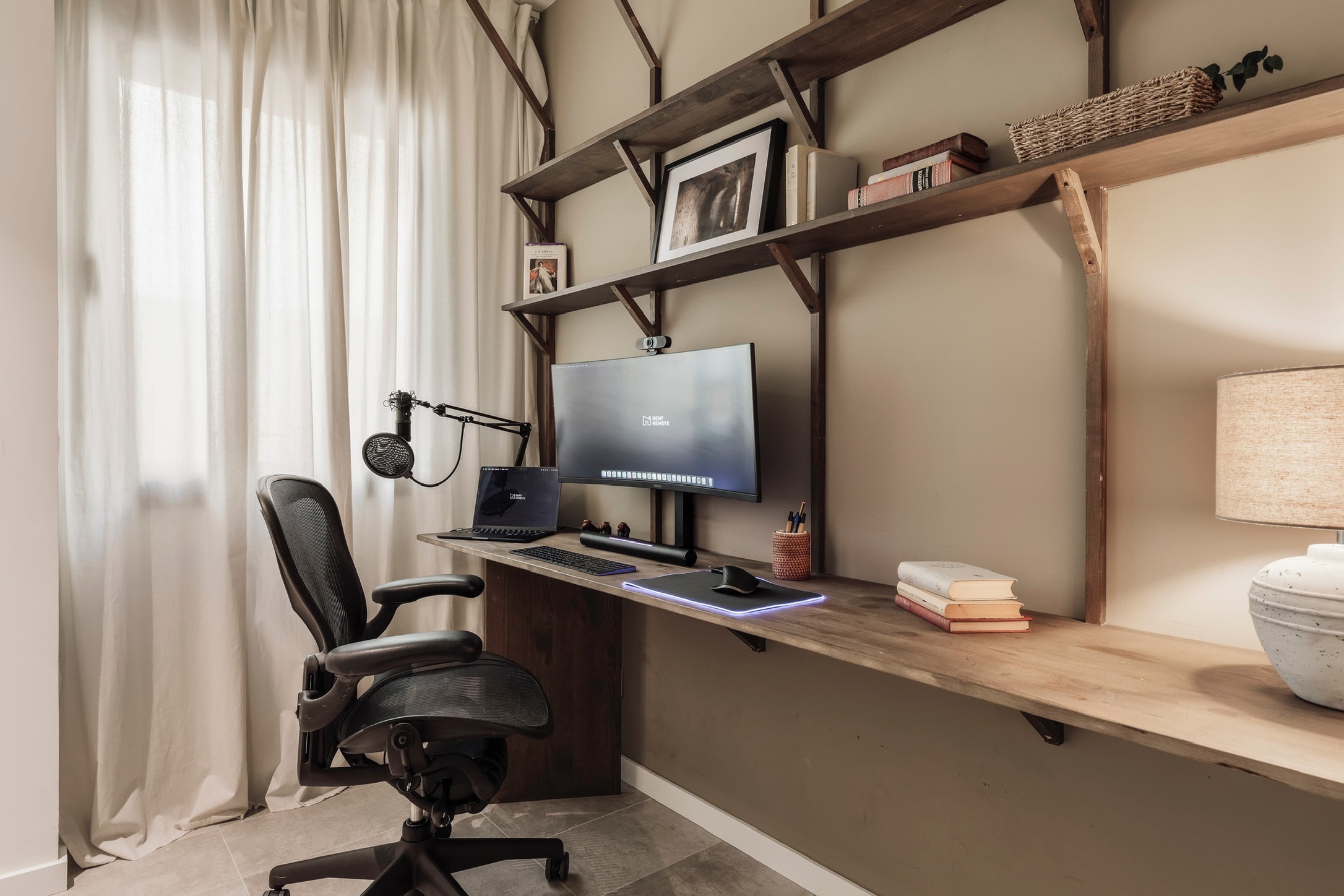
Most modern apartments in the city center are renovated with nomads in mind — fast Wi-Fi, ergonomic setups, and compact kitchens. They make it easy to blend work and travel without sacrificing comfort.
Common amenities include:
-
Dedicated workspace with desk and reliable Wi-Fi
-
Natural light and good insulation (key for Madrid summers)
-
Walkable access to plazas, markets, and coworkings
-
Smart design mixing vintage furniture with clean, minimalist touches
Location Tips for First-Time Visitors
If it’s your first time exploring Madrid, look for accommodation near:
-
Puerta del Sol – metro access to every part of the city
-
Calle de Alcalá and Plaza de Cibeles – architectural icons close to the Palacio de Cibeles
-
El Retiro Park – early morning walks or post-work breaks among trees
-
Plaza de la Independencia – a peaceful pocket still within the city center
Whether you’re here to admire art or chase tapas, the neighborhood you choose will shape your rhythm.
Explore fully furnished apartments in Madrid — handpicked spaces designed for focus, rest, and exploration with high speed WiFi, ergonomic workstations, and access to the real Madrid.
Neighborhood Guide — Madrid’s Barrios at a Glance
Every neighborhood in Madrid tells its own story. Some are polished and peaceful, others creative and loud — but all are linked by that same Madrid rhythm: late dinners, friendly faces, and cafés that turn into bars by night. Exploring the barrios gives you a sense of how locals visit Madrid — moving from royal plazas to lively side streets with ease.
La Latina — Tapas, Markets, and Sunday Energy
La Latina is Madrid’s social heart, known for narrow lanes, many restaurants, and the city’s most famous open air flea market, El Rastro. Sundays here hum with locals browsing antiques and grabbing vermouth before lunch.
What makes it special:
-
Tapas and wine bars that stay open past midnight
-
Short walks to Plaza Mayor and Mercado de la Cebada
-
Hidden terraces where you can watch the rooftops glow at sunset
It’s ideal for travelers who love local noise — a little messy, always welcoming, and never boring.
Malasaña — Creative and Bohemian
If you prefer vintage shops, indie music, and coffeehouses filled with students, Malasaña delivers. This is where Madrid’s counterculture took root and where you’ll still find creative freelancers working on laptops between playlists.
Highlights:
-
Retro boutiques and thrift stores that define its style
-
Casual bars serving craft beer and tapas for under €3
-
Easy access to the city center by metro or foot
It’s less polished than Salamanca, but that’s the charm — all personality, no pretense.
Chueca — Stylish, Modern, and Inclusive
Chueca represents modern Spanish culture at its best — diverse, expressive, and full of life. What began as a quiet residential quarter is now a hub for design, gastronomy, and nightlife.
Why you’ll love it:
-
High-end restaurants and rooftop cocktail lounges
-
Boutiques carrying Spanish and European designers
-
Quick access to Plaza de Cibeles and Puerta de Alcalá, two of Madrid’s most famous landmarks
Chueca is where work and leisure blend effortlessly — a good base for travelers who value both comfort and community.
Lavapiés — Multicultural and Artistic
Lavapiés feels like many worlds in one. It’s full of color, conversation, and a mix of cultures that gives the area its unique rhythm. You’ll hear half a dozen languages in a single café and find cuisine from every continent within a few blocks.
Local favorites:
-
Street art and galleries housed in old factories
-
International restaurants and late-night jam sessions
-
Easy access to El Retiro Park and nearby coworking spaces
It’s a place for travelers who like their neighborhoods authentic, a little unpredictable, and full of stories.
| Neighborhood | Vibe | Best For |
|---|---|---|
| La Latina | Historic, social | Tapas, markets, nightlife |
| Malasaña | Trendy, bohemian | Cafés, thrift stores, creative energy |
| Chueca | Stylish, inclusive | Dining, nightlife, design |
| Lavapiés | Multicultural, raw | Street art, global food, music |
| Wherever you stay, Madrid’s barrios offer a slice of city life that hotels can’t replicate — each one a world within walking distance. |
Browse fully furnished apartments in Spain — find your next base among cities that share Madrid’s mix of work and wanderlust.

The Things That Stay With You When You Visit Madrid
Madrid doesn’t just show you its landmarks — it pulls you into its rhythm. You start with maps and museum lists, then find yourself lingering in plazas long after plans have changed. Between royal corridors, lively tapas counters, and golden sunsets over Puerta de Alcalá, the city rewards both the planners and the wanderers.
By the time your three days end, you’ll already be planning your return — not just to visit Madrid again, but to live a little like those who call it home.