Jordi
Writer ·
Tokyo works for expats in a way that surprises most people who arrive expecting friction. The city is extraordinarily well-organised, safe, and connected — but it rewards preparation in a way that few other cities in the world demand. The language gap is real, the housing market has its own rules, and the bureaucratic entry points require sequencing. Get those things right, and Tokyo becomes one of the most liveable cities on the planet. Get them wrong, and the first month feels like running into walls.
Which visa categories apply to remote workers and employees moving to Japan
The best neighborhoods in Tokyo for expats — with honest trade-offs on each
How the housing market works for foreigners and what to expect from renting
Health insurance, banking, and essential services to set up on arrival
Working in Tokyo: company sponsorship, taxes, and the local work culture
Tips for moving that most guides leave out — the social and practical side
Moving to Tokyo as an Expat: What the First 30 Days Actually Look Like
The first month in Tokyo is almost entirely administrative. That is not a complaint — it is a warning. You will spend time registering at your ward office, opening a bank account, getting a phone plan, and understanding a transit system that runs on a logic of its own. The upside is that once those things are done, daily life becomes genuinely easy.
Your First Week: Registration and the My Number System
The My Number card is Japan's national identification system, and almost everything else unlocks from it — bank accounts, tax filings, even some rental agreements.
Register at your local ward office (kuyakusho) within 14 days of arrival — bring your passport and Residence Card
My Number card application takes 4–6 weeks to arrive; the notification slip comes first and can be used in the interim
Shibuya Ward Office and Shinjuku Ward Office both have foreign-resident windows with English-speaking staff — arrive before 11am to avoid queues
Without a Residence Card, you cannot open most bank accounts or sign a phone contract
The system is sequential and it does not bend — but it is also consistent, and once you know the order, it moves faster than you expect.
Getting a SIM and Bank Account in the Right Order
Most expats hit a catch-22: some banks want a phone number to open an account, and some carriers want a bank account to set up a plan — so the order matters.
Japan Post Bank — opens accounts for new residents before My Number card arrives; branches near every major station
Rakuten Mobile offers SIM-only plans from ¥1,078/month with no credit history requirement for new foreign residents
SMBC Trust Bank PRESTIA — English-language banking designed for international residents; ¥2,200/month fee waived with a ¥1M balance
IIJmio and Mineo both offer data SIMs you can register with just a Residence Card and passport
Open Japan Post Bank first, get your SIM second — that sequence eliminates most of the bureaucratic deadlock new arrivals run into.
Visas for Moving to Tokyo: Which Category You Actually Qualify For
Japan's visa framework is one of the more structured in the developed world — which means it is navigable, but not flexible. If you are moving to Tokyo for work, the visa is almost always tied to your employer. If you are coming independently, the options are narrower than people assume.
The Application Process for Employment and Skilled Worker Visas
The most common route for expats moving to Tokyo is the work visa sponsored by a Japanese company — and the application process begins before you board a plane.
Your employer files the Certificate of Eligibility (COE) with Japanese Immigration first — this can take 1–3 months and must happen before your visa application
Once COE is issued, you apply at a Japanese embassy or consulate in your home country; processing is typically 5–7 business days
The Highly Skilled Professional visa offers a points-based alternative: 70+ points qualifies you for faster permanent residency pathways — salary, education, and Japanese language ability all score points
The Specified Skilled Worker visa covers sectors with labour shortages: food service, construction, nursing — it does not require a degree but does require a qualifying exam
If your company handles the COE, the application process is largely paperwork — but the timeline means you need to start at least four months before your intended move date.
Digital Nomad and Freelance Options in Japan
Japan launched a Digital Nomad visa in 2024, but the income threshold makes it inaccessible for most — ¥10 million (roughly $68,000) annual income from non-Japanese sources is the floor.
Digital Nomad visa: six-month stay, no work for Japanese clients permitted, income threshold is strict and verified
Tourist visa (90 days for most nationalities) remains the de facto entry for remote workers, though it is technically not permitted for paid work
Business Manager visa covers those starting their own company in Japan — requires a registered office and at least ¥5 million in capital
Working Holiday visas are available for citizens of 30 countries aged 18–30 (some up to 35) — one of the genuinely accessible independent routes
Japan is not a place you hack your way into on a tourist visa long-term — it notices, and the consequence is a ban on re-entry.
Best Neighborhoods in Tokyo for Expats: Finding Housing That Actually Fits
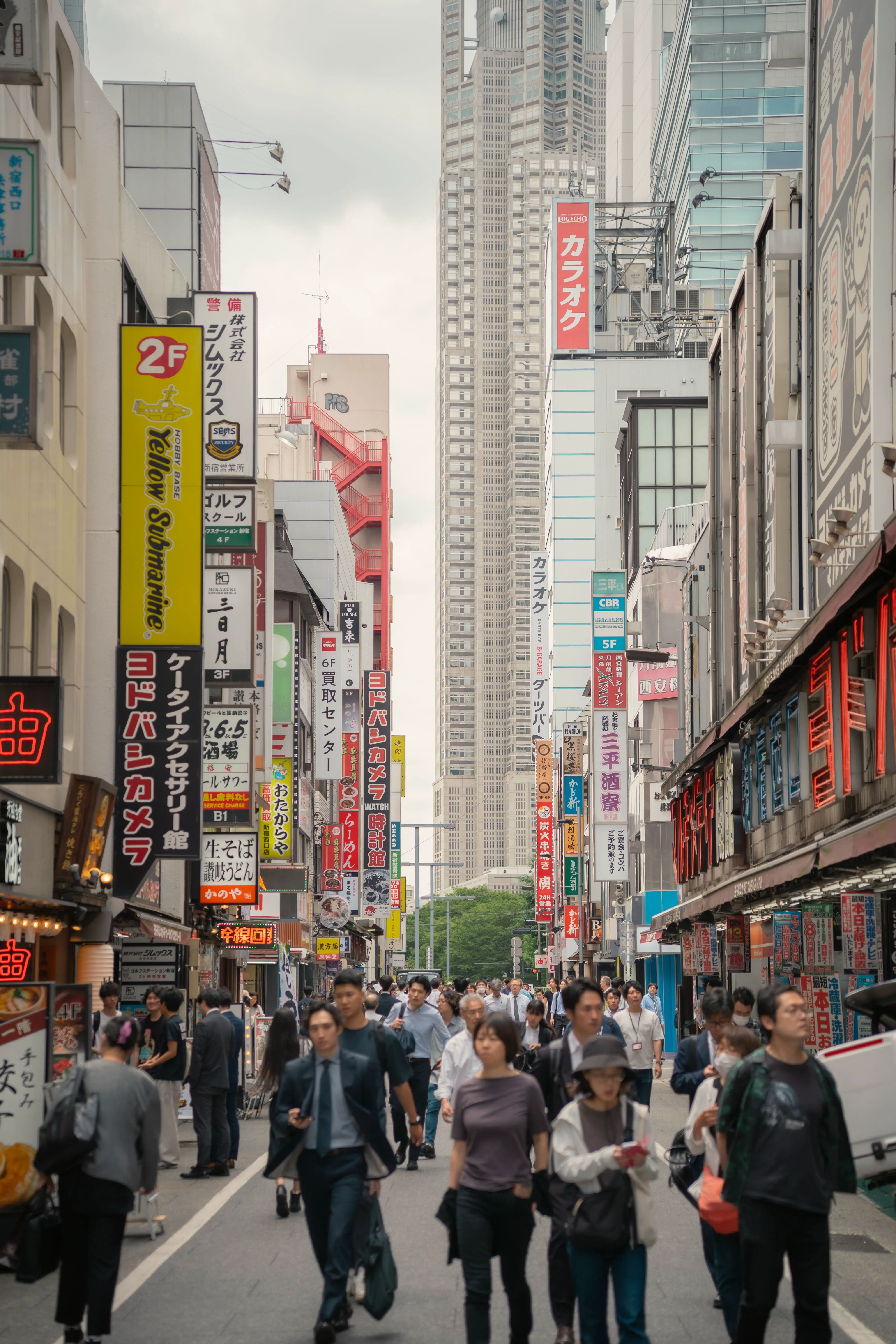
Tokyo is a collection of small cities layered on top of each other, and where you rent shapes everything — your commute, your social life, your weekend rhythm. Most expats default to Shinjuku or Shibuya because they know the names. The better move is to think about what your daily life actually looks like and work backwards from that.
Neighbourhood | Monthly Rent (1-bed) | Vibe | Best For | Key Advantage |
|---|---|---|---|---|
Shinjuku | ¥130,000–¥180,000 | Dense, commercial, 24/7 | First arrivals, central access | Every train line connects here |
Shibuya | ¥140,000–¥200,000 | Tech companies, young professionals | Creative and tech workers | Best international dining density |
Nakameguro | ¥150,000–¥220,000 | Quiet, design-forward, residential | Longer stays, lifestyle-focused expats | Canal walks, independent cafés |
Minato (Hiroo/Azabu) | ¥200,000–¥350,000 | Diplomatic, international, formal | Families, corporate relocations | International schools, embassies |
Koenji | ¥90,000–¥130,000 | Vintage, local, independent | Budget-conscious expats, creatives | Best value inside the Yamanote Line |
Sumida / Ryogoku | ¥80,000–¥120,000 | Traditional, quieter, east-side | Those who want local life over expat life | Lowest rent close to central Tokyo |
Minato Ward: Where Most Expat Families Land
Hiroo and Azabu-Juban are the default landing zones for company-sponsored relocations — and for good reason, even if the rent is punishing.
National Azabu Supermarket — imported goods, English labels, open daily; expect to pay 2–3x Japanese supermarket prices
Hiroo is a 10-minute walk from Roppongi and sits on the Hibiya Line — one transfer gets you almost anywhere in central Tokyo
International school proximity is the actual reason most families pay Minato rents — more on that in the education section
1-bed apartments from ¥200,000/month; most expat-targeted buildings include English-language management
Minato is comfortable in the way that insulates you from Tokyo rather than putting you inside it — which is either a feature or a flaw depending on why you moved here.
Finding Housing in the Tokyo Market as a Foreigner
The Tokyo housing market runs on guarantors and trust signals that most foreign residents do not have, which makes the first rental harder than anything that follows.
Sakura House — share houses and furnished rooms from ¥55,000/month, no guarantor required, English-language contracts
Fontana Apartments — serviced furnished apartments in central Tokyo from ¥150,000/month, utilities included, minimum one-month stays
Key money (reikin) is a non-refundable gift to the landlord — typically one to two months' rent, though many expat-targeted buildings have dropped it
Plaza Homes — English-speaking real estate agency specialising in expat rentals; properties from ¥120,000/month in Minato and Shibuya wards
The first apartment is a bridgehead, not a permanent home — many expats take a short-term furnished apartment for the first one to three months while they learn which neighbourhood actually fits their life. Explore fully furnished apartments in Tokyo to start with options that don't require a guarantor or a Japanese credit history.
Nakameguro gives you the full Tokyo experience in concentrated form — canal walks, independent coffee shops, and a 20-minute commute to Shibuya on the Tokyu Toyoko Line.
Explore Tokyo neighborhoods in our neighborhood guide if you want the quieter, more residential version of Tokyo that most guides underrate.
Health Insurance and Essential Services: What to Set Up Before You Need Them
Japan's healthcare system is genuinely good — precise, affordable at point of use, and staffed by doctors who take the work seriously. But the system requires enrolment, and the type of health insurance you need depends on how you arrived and who employs you.
Health Insurance Options for Expats in Japan
Every resident of Japan is legally required to hold health insurance — there is no opt-out, and the ward office will ask about it during registration.
Company employees are enrolled in Shakai Hoken (social health insurance) automatically — premiums split with employer, typically 10% of salary total
Self-employed residents and those not covered by an employer join the National Health Insurance (Kokumin Kenko Hoken) — premiums are income-based, averaging ¥20,000–¥50,000/month for most foreign residents in their first full year
National Health Insurance covers 70% of most medical costs; your out-of-pocket is 30% — an outpatient clinic visit typically costs ¥1,500–¥3,000 after coverage
International private health insurance (Cigna, AXA) is technically permitted alongside NHI but cannot replace the mandatory enrolment
The 30% co-pay sounds significant until you see the actual bills — a GP visit in Tokyo costs less out of pocket with NHI than most insured GP visits in the US or UK cost with coverage.
Finding English-Speaking Doctors and Clinics
English is not guaranteed at a standard Japanese clinic — but Tokyo has enough international medical infrastructure that you can access care in your language if you know where to look.
International Clinic Tokyo (Roppongi) — English-speaking GPs, internal medicine and basic specialist referrals; appointment-based, ¥5,000–¥8,000 per visit after NHI
St. Luke's International Hospital (Tsukiji) — the most established international-standard hospital in Tokyo; English-language patient support available
Hiroo Hospital — English-speaking staff, central location, well-regarded by the expat community in Minato ward
Japan Health Insurance Association's website has an English portal for NHI queries — use it before calling your ward office
The language barrier in medical settings is real but manageable — the bigger gap is knowing that Japanese doctors often expect you to ask fewer questions than you might be used to, which is a culture adjustment more than a language one.
Renting in Tokyo: What the Process Actually Costs You
The Japanese real estate market is not hostile to foreigners — it is indifferent to them, which is a different problem. Most standard leasing processes assume a Japanese guarantor, a Japanese bank account, and fluency in reading a contract written in Japanese. None of those things are impossible to solve, but each one takes time you may not have when you land.
What Key Money, Security Deposits, and Upfront Costs Actually Mean
The upfront cost of renting in Tokyo is not the rent — it is everything before the first month begins, and it adds up faster than most expats expect.
Security deposit (shikikin): typically 1–2 months' rent, held against damage — returned at checkout minus deductions, which in Japan are often more itemised than you expect
Key money (reikin): a non-refundable gift to the landlord, usually 1–2 months' rent — less common than it was a decade ago but still standard in central Tokyo and traditional landlord-managed buildings
Agency fee: one month's rent to the letting agent, non-negotiable in most cases
Guarantor fee: if you use a guarantor company (which most foreign renters will), expect ¥10,000–¥20,000 upfront plus an annual renewal fee
On a ¥150,000/month apartment in central Tokyo, you can be writing a cheque for ¥700,000–¥800,000 before you have spent a single night there — that is the number to have saved before you start viewing.
How Foreign Renters Actually Navigate the System
Foreigner-friendly agencies exist, and they are worth using — not because they offer better apartments, but because they remove the document translation and guarantor problems that kill most standard applications.
Tokyo Room Finder (Shinjuku) — English-language agency specialising in foreign applicants; listings from ¥80,000/month, guarantor services built in
Able Shinjuku — mainstream Japanese agency with an English-speaking desk; better inventory than expat-specialist agencies but requires more document preparation on your side
Your residence card is required for all rental applications — you cannot sign a lease on a tourist stamp, and landlords who accept it are rare enough to be a red flag
Furnished short-term rentals (Weekly Mansion, monthly apartment services) bridge the gap while you search — expect ¥120,000–¥180,000/month for a basic studio, but they buy you the time to apply properly
The expats who struggle most are the ones who try to sign a long-term lease in week one — the paperwork is not ready, the address is not registered, and the application fails; wait until your residence card is in hand.
Neighbourhoods Worth Knowing Before You Commit
Where you live in Tokyo shapes your commute, your grocery bill, and the pace of your daily life more than in most cities — the ward system means two apartments 20 minutes apart can sit in entirely different administrative, commercial, and cultural worlds.
Nakameguro: ¥130,000–¥200,000/month for a 1LDK — the canal walk is as good as it looks on Instagram, and the coffee is excellent, but you are paying a lifestyle premium that shows up in every receipt
Koenji: ¥85,000–¥120,000/month for a 1K or 1DK — genuinely local, independent music venues, no tourist foot traffic, JR Chuo Line direct to Shinjuku in 12 minutes
Monzen-Nakacho: ¥90,000–¥130,000/month — old-shitamachi atmosphere, dense with izakayas, on the Tōzai and Ōedo lines, far less expat density than Minato or Shibuya wards
Yoyogi-Uehara: ¥110,000–¥160,000/month — quiet, walkable, close to Yoyogi Park, Odakyu line plus Chiyoda line means central Tokyo is under 20 minutes in most directions
None of these are wrong choices — but pick one before you arrive, narrow your search to two wards, and do not let yourself be talked into a neighbourhood you have never walked through at 10pm on a Tuesday.
One of the most practical tips for renting in Tokyo is to budget for key money — typically one to two months' rent paid upfront to the landlord as a non-refundable gift, which is still standard practice in most Tokyo wards.
If you want to skip the lease process entirely while you settle in, fully furnished apartments in Tokyo let you land with a working address and no upfront key money — that address is what unlocks the rest of the administrative sequence.
Daily Life in Tokyo: Shopping, Food, and Getting Around
Once the paperwork is done, daily life in Tokyo is genuinely excellent — the city is dense with infrastructure, the food is extraordinary at every price point, and the train network removes almost every friction point that makes other megacities exhausting. The adjustment is cultural, not logistical.
Food and Shopping: Where Expats Actually Buy Things
Tokyo's supermarket and convenience store network is good enough that you can eat well without ever going to a specialist import shop — but knowing where the prices break will save you money every week.
Maruetsu Petite — the mid-range Japanese chain that covers most daily needs; produce, prepared foods, and basics at local prices, multiple locations across central Tokyo
KALDI Coffee Farm — the best source for imported pantry goods, decent wine selection, and international spices; prices are fair, shopping is genuinely pleasant
Ameyoko Market (Ueno) — outdoor market for fresh seafood, snacks, and street food at prices that undercut supermarkets; best on Saturday mornings before 11am
Seven-Eleven, Lawson, and FamilyMart are not a backup option — prepared meals are ¥300–¥600 and the quality is not what convenience store food means anywhere else
Shopping for most things in Tokyo means accepting that you will do it more often in smaller quantities — apartments are small, storage is limited, and the city is designed around frequent, local purchases rather than the weekly megastore run.
Getting Around: The Train Network and What It Actually Costs
The Tokyo train network is the most reliable urban transit system most expats will ever use — the question is not whether it works but how to stop overpaying for it.
Suica or Pasmo IC card: load it once, tap on and off every train, bus, and most convenience stores — essential from day one, available at any major station
Monthly commuter passes (teiki) cut per-journey costs significantly if you have a fixed route — a Shinjuku–Shibuya monthly pass is approximately ¥3,000; without it you pay ¥200–¥250 per journey
Shinjuku Station — the busiest station in the world by passenger volume; 12 platforms, 50 exits, and a layout that will confuse you for the first two weeks regardless of how well you prepared
Cycling is underused by expats and genuinely practical in flat central neighbourhoods — bike parking (chūrinjo) is mapped and legal, and most ward offices issue parking permits for ¥1,000–¥2,000/year
The train costs stack up if you live in the outer wards, but the network is honest — you always know exactly what a journey costs before you take it, which is more than can be said for rideshare pricing in most cities.
Work Culture and What Remote Workers Need to Know
Working in Tokyo as a remote employee or freelancer means navigating a city that was not designed around the concept — coworking infrastructure exists and is good, but the Japanese work culture assumption is that you are employed by someone, somewhere, and that your work has a physical address.
WeWork Marunouchi — professional coworking in central Tokyo; day passes from ¥3,000, reliable infrastructure, quieter than most café alternatives in the area
Trunk(Hotel) Coworking (Shibuya) — day-use coworking with a design-forward aesthetic; ¥2,500/day, better coffee than WeWork, more suited to creative work than client calls
A Japanese work visa is typically tied to a specific employer and role — changing jobs requires notifying immigration within 14 days and often requires a new certificate of eligibility if the role type changes
The work visa framework does not have a freelance category in the conventional sense — the Business Manager visa is the closest instrument, and its ¥5 million capital requirement makes it prohibitive for most independent workers
Shopping at Ameyoko Market in Ueno is a different experience from the polished department store floors of Isetan in Shinjuku — prices on fresh fish and snacks can be 30–40% lower if you go on a weekday morning.
Remote workers operating legally in Tokyo usually do so under an existing work visa with a foreign employer or on a spouse/dependent visa — the gap between what is technically possible and what immigration actually approves is where most people get surprised.
Banking, Admin, and the Paperwork That Follows You
The administrative sequence in Tokyo does not end after you register at your ward office — it continues for months as each piece of documentation unlocks the next. The expats who find this manageable are the ones who treat it as a project with a sequence, not a series of random bureaucratic events.
Opening a Bank Account as a Foreign Resident
Opening a bank account in Japan is genuinely possible for foreign residents — it just requires patience, the right timing, and realistic expectations about which banks will say no without explanation.
Sony Bank — online bank that accepts foreign residents with a residence card and My Number; English-language interface, competitive foreign exchange rates, no monthly fee
Shinsei Bank — one of the more foreigner-accessible Japanese banks; English-language support, international transfers built in, useful if Sony Bank rejects your application
You need your residence card, your registered Japanese address, and your My Number to open a bank account — walk in without all three and most branches will not process the application
Most major Japanese banks (Mitsubishi UFJ, Mizuho) technically accept foreign residents but in practice require you to have been registered for 6 months or more before they will approve an account
The bank account unlocks direct debit for utilities, automatic rent payment, and the payroll setup that most Japanese employers require — get it sorted in the first month, even if the first bank you try says no.
The Tokyo Metropolitan Government's multilingual support centre on the 5th floor of the Tokyo Metropolitan Government Building in Shinjuku provides free information on residency registration, tax filing, and pension enrolment — all in English.
The Residence Card and What It Unlocks
Your residence card is not just an ID — it is the administrative key to almost everything else in Japan, and its physical presence is required more often than you will think is reasonable.
The residence card is issued at the airport on arrival for most long-stay visa holders — if yours arrives blank or without your address, go to your ward office within 14 days to register and have it updated
You are legally required to carry your residence card at all times — in practice, police stops are rare in Tokyo, but landlords, banks, employers, and mobile providers will ask for it in person
Address changes must be reflected on the residence card — if you move wards, you notify your new ward office and the card is updated; skipping this creates downstream problems with your bank account and national insurance records
Moving to Japan from another country means your residence card is the first document that ties your foreign identity to a Japanese administrative existence — everything that follows (My Number, NHI, bank account) traces back to it
Treat the residence card as the root document of your Japanese life — lose it, and you are looking at a police report, a ward office visit, and a two-week wait for a replacement while your bank account sits inaccessible.
Is Tokyo the Right Move for You?
Who Actually Thrives Here
Tokyo is built for people who find comfort in structure, not frustration — if you treat the rules as a feature rather than a bug, the city will reward you disproportionately.
Professionals on sponsored visas who arrive with paperwork already processed and a clear employer relationship
People willing to spend the first few months inside the awkwardness of functional-but-broken Japanese before social life opens up
Remote workers employed by foreign companies who can absorb the upfront rental costs — key money, deposits, agency fees — before settling into genuinely competitive monthly rents
Anyone who values safety, precision, and an extraordinary density of excellent food as daily baseline conditions rather than occasional treats
The city doesn't bend to meet you halfway early on, but the people who push through that initial friction tend to stay far longer than they planned.
Where Tokyo Falls Short
If flexibility is your operating principle, Tokyo will work against you at almost every structural level.
No viable Digital Nomad visa exists yet, leaving most independent remote workers in a legal grey area that is genuinely difficult to resolve
Freelancing legally requires a specific visa status that most expats cannot access without an existing Japanese business entity or sponsor
The key money system, residence card requirement, and guarantor rules make rental commitments harder to exit quickly than in comparable Asian cities
The work visa structure creates a sequence of decisions — employer, ward registration, apartment — that locks in early and is slow to unwind if circumstances change
Tokyo doesn't punish indecision harshly, but it does punish it slowly, through a bureaucratic sequence that assumes you already know where you're staying and why.
How to Arrive on the Right Foot
The difference between Tokyo feeling overwhelming and Tokyo functioning beautifully is almost entirely determined by the order in which you handle the first two weeks.
Confirm your visa category before booking anything — the apartment type you can legally occupy is tied directly to your status
Book a furnished short-stay or serviced apartment first to give yourself an address for ward office registration without committing to a long-term lease blind
Schedule your ward office appointment for the first or second day — the residence card registration unlocks bank accounts, phone contracts, and long-term rental applications
Explore fully furnished apartments in Japan that are set up for expat arrivals and already familiar with the documentation landlords require
Expats who arrive with those three things in place — visa confirmed, furnished apartment booked, ward office appointment scheduled — typically describe Tokyo as one of the most liveable cities in Asia within the first month.
Start Your Tokyo Expat Journey the Right Way
Tokyo rewards preparation. The city's systems — from residency registration to renting an apartment — are logical once you understand the sequence, but they move in a strict order. Arrive with your visa in place, secure short-term furnished housing first, and use that stability to open your bank account, register at the ward office, and build the document trail that unlocks long-term renting.
The learning curve is real, but it compresses quickly. Most expats find that within four to six weeks of landing, the city shifts from overwhelming to genuinely exceptional — safe, clean, efficient, and endlessly interesting at every level of budget and lifestyle.
The best way to control that early period is to remove housing uncertainty before you land. Browse fully furnished apartments in the country to lock in a flexible, move-in-ready base and begin the Tokyo sequence on solid ground.