Sophia
Wellbeing & Living Editor ·
Santiago Chile is not the easiest entry point into Latin America, and it is not the cheapest. What it offers instead is stability — a modern city with infrastructure that actually works, a job market that has something in it, and neighbourhoods that make long-term living feel genuinely manageable. The trade-off is that you pay for all of that. Expats often budget between $1,600 and $2,500 USD monthly to live comfortably here, which puts it closer to Buenos Aires than to the rest of the region on price. That said, what you get for that money in Santiago's eastern neighbourhoods is hard to match anywhere else in South America.

This guide covers:
Cost of living in Santiago, with honest numbers by neighbourhood
Visas, income tax, and bank account setup for foreign nationals
The job market and what expats find in each sector
Healthcare, education, and what expats love about day-to-day life
Where to live, with a neighbourhood comparison table
What digital nomads need to know before committing to Santiago
Cost of Living in Santiago for Digital Nomads and Expats
Santiago is one of South America's more expensive capitals, and pretending otherwise will hurt you in month two when the novelty discount wears off. A single person needs roughly CLP 2,000,000 to 2,700,000 monthly to live without counting every peso — that translates to approximately $2,000 to $2,700 USD depending on the exchange rate. The range is real: monthly expenses vary greatly depending on your neighbourhood, whether you cook, and how much you lean on the Metro versus taxis.
What You Actually Spend on Housing and Food
Housing is the biggest line item and the one that shifts most dramatically by postcode.
1-bedroom apartment in Providencia: $700–$900/month — the practical sweet spot for most expats
Two bedroom apartment in Las Condes: $1,100–$1,400/month — family-sized, quieter, closer to the international schools
Santiago Centro room in a shared flat: $400–$500/month — affordable but you will notice the air quality difference from the eastern communes
Dining at a moderate restaurant: $15–$20 per person — a menú del día lunch at a neighbourhood spot runs closer to $7
Monthly expenses for a genuinely modest lifestyle — cooking most meals, using public transportation — sit around CLP 1,500,000, which is achievable if you stay west of Providencia.
Transport, Utilities, and the Costs Expats Miss
Public transportation in Santiago is one of the genuine wins — the Metro is clean, extensive, and a monthly pass costs around $50 USD, which is low cost by any major city standard.
Santiago Metro — monthly Bip! card reload around CLP 50,000; covers most of the city without a taxi
High speed internet: CLP 25,000–40,000/month through providers like Movistar or VTR — fibre is standard in the eastern communes
Private health insurance (ISAPRE): CLP 100,000–300,000/month depending on your chosen healthcare plan and age bracket
Gym membership at a mid-range facility: CLP 30,000–50,000/month
The cost people consistently underestimate is private health insurance — most expats skip the public healthcare system (FONASA) entirely, which means that line item is non-negotiable.
Budgeting CLP 80,000–150,000 per month for healthcare services through an ISAPRE plan is realistic for a healthy adult in their 30s, though premiums climb sharply if you want coverage at Clínica Las Condes or Clínica Alemana without co-pays.
Living in Santiago: Neighbourhoods, Housing, and What Expats Love
Expats love the eastern side of the city — Providencia, Ñuñoa, and Las Condes — and there are practical reasons for that, not just habit. The city's modern infrastructure concentrates here: sealed footpaths, good supermarkets, reliable high speed internet, and restaurants where you can comfortably speak English if your Chilean Spanish isn't there yet. Santiago Centro has cheaper rent and more character, but the air quality in winter is noticeably worse and the street-level experience is sharper.
Neighbourhood Comparison: Where to Base Yourself
Neighbourhood | Monthly Rent (1-bed) | Vibe | Best For | Key Advantage |
|---|---|---|---|---|
Providencia | $700–$900 | Calm, walkable, adult | Long-stay expats, couples | Best balance of price and quality |
Las Condes | $900–$1,400 | Corporate, polished, quieter | Families, professionals | Closest to international schools |
Ñuñoa | $600–$800 | Local, creative, residential | Remote workers, younger expats | More authentic, lower prices |
Bellavista | $550–$750 | Loud, arts-forward, nocturnal | Short stays, nightlife | Culture and food density |
Santiago Centro | $400–$600 | Dense, chaotic, historic | Budget-first stays | Cheapest rent in the city |
Browse Santiago homes near this area
Providencia: Where Most Expats Find Their Feet
Providencia is not exciting, which is exactly why it works — the friction of daily life is low enough that you can focus on settling in.
Café du Monde on Diego de Velásquez — reliable WiFi, espresso around CLP 2,500, fills up after 10am
Unimarc on Pedro de Valdivia — full supermarket, open late, five minutes from most rental streets
Studios from $600/month on Calle Eliodoro Yáñez — furnished options exist, landlords request proof of income as standard
Metro Line 1 runs the length of Av. Providencia — you will not need a car here
Foreigners can legally buy property in Santiago without residency, and Providencia is where many eventually do — the average price per square meter sits around 75 UF, which is high by Chilean standards but rational if you plan to stay.
Browse Santiago homes near this area
Ñuñoa: What Expats Find When They Stop Listening to the Corporate Trail
Ñuñoa has more Chileans in it than Providencia does, which is either appealing or inconvenient depending on how well you speak Spanish.
Plaza Ñuñoa — the neighbourhood's social hub; outdoor cafés, evening markets, genuinely local atmosphere
Pronto Cowork — day pass around CLP 15,000, reliable high speed internet, smaller and quieter than city-centre options
1-bedroom apartments from $600/month — the bedroom apartment stock here is newer than you expect given the price
Closer to Universidad de Chile campuses — area has a student energy without the noise of Bellavista
Most apartment buildings in Providencia now include a 24-hour concierge and a building-wide security system as standard, which is worth factoring into your shortlist because gated complexes in Santiago typically charge CLP 40,000–80,000 less in monthly common expenses than equivalent stand-alone houses with private security.
If Providencia feels too sanitised after a month, Ñuñoa is the natural next move — same Metro access, more texture, lower rent.
Browse fully furnished apartments in Santiago and filter by neighbourhood before you commit to anything — what looks close on a map can mean 40 minutes on a bad traffic afternoon. Explore Providencia in our neighbourhood guide for street-level detail on where to eat, work, and walk.
Short Term Visas, Income Tax, and Bank Account Basics for Expats
Chile's visa structure is more navigable than most Latin American countries, but it moves slowly — the gap between "I have a tourist visa and a laptop" and "I have legal residency and a bank account" is measured in months, not weeks. Plan for that gap before you arrive.
Short Term Visas and the Tourist Visa Window
Most nationalities from Europe, North America, and the Pacific arrive on a tourist visa that allows stays of up to 90 days — you need a valid passport, no prior arrangements, and nothing else at the border.
Tourist visa: 90 days, renewable once in-country for another 90 — some foreign nationals use this as a bridge while arranging a work visa
Temporary residence visa: valid for up to two years, requires proof of economic solvency or a signed work contract
Work visa: requires a contract notarised by a Chilean notary — employers prefer to formalise this before you arrive rather than after
Family reunification visa: available for spouses and children of existing residents — processing typically takes 3–5 months
The tourist visa route is technically not for remote workers billing foreign clients, but enforcement is loose — the real problem is that without residency, you cannot open a Chilean bank account, and without a bank account, landlords get nervous about longer leases.
Income Tax and What Living in Santiago Costs You Fiscally
Chile's income tax system uses a progressive scale that starts at 0% for lower income brackets and rises to 40% — most expats on mid-range salaries land between 15% and 25% once withholding is applied through payroll.
Chilean income tax applies to income earned in Chile — foreign-sourced income is generally not taxed if you are on a temporary visa
Employees have income tax withheld by their employer; freelancers and self-employed workers must file quarterly
Social services contributions (AFP pension and health) are additional — roughly 18–20% of gross salary on top of income tax
The Chilean peso fluctuates against USD and EUR — if your income is in a foreign currency, your effective cost of living in Santiago moves with the exchange rate
The income tax burden is real but not punishing by European standards — the social services component is what surprises people who were expecting a light Latin American country tax environment.
Opting into the private system through an ISAPRE while on a temporary work visa requires submitting your liquidación de sueldo to the insurer, and most providers will reject applications showing less than three consecutive months of Chilean payslips.
Opening a Bank Account as a Foreign National
Getting a bank account in Chile without a RUT (Chilean ID number) is close to impossible — the process starts with residency, not with a visa.
Banco Estado — the only state bank, and the most accessible option for new residents; CuentaRUT requires only your RUT, no income proof
Banco de Chile — better for expats with employment contracts; online banking is functional and in Spanish
Fintech alternatives: MercadoPago and MACH by BCI allow basic digital accounts while you wait for full residency
Most landlords accept bank transfers; a few in Santiago Centro still request cash for the first month
Open your CuentaRUT the week your RUT arrives — it is free, instant, and unlocks almost everything else in the administrative chain.
If you are on a tourist visa extension, you are not enrolled in the Chilean system, so carrying travel health insurance with at least USD 50,000 coverage is essential before your formal residency kicks in.
The Job Market in Santiago Chile: What Expats Find by Sector
Santiago's job market is the most developed in South America outside Buenos Aires, and in certain sectors it is ahead of it. The technology industry here has earned the city its "Chilecon Valley" nickname — it is not hype exactly, but it is concentrated in a small cluster of companies and startups, and the salaries reflect a market still maturing.
Expat Life in the Tech, Mining, and Energy Sectors
Santiago's top hiring industries for foreign workers are technology, mining, and renewable energy — three sectors that do not overlap much but all require credentials that Chilean employers take seriously.
Tech: mid-level developer salaries range from CLP 2,300,000 to 4,500,000/month; Start-Up Chile in Providencia runs a competitive accelerator that has drawn founders from across Latin America
Mining: roles are typically based outside the city in Chile's northern region — Santiago is the administrative hub, not the operational one
Renewable energy: growing fast, especially solar in the northern and southern region projects — employers prefer Spanish fluency at the project level
Monthly salaries for expats across these sectors: CLP 2,300,000 to CLP 5,500,000 depending on role and experience
The tech sector is where the English-language job market is deepest — most big cities in this Latin american country run their tech teams bilingually, and Santiago is no different at the senior level.
Teaching English and the Service Sector: What Expats Find in Entry-Level Work
Teaching English is a common job for foreigners in Santiago, and many expats find it useful as a bridge while sorting residency — it pays enough to cover rent if you keep costs low.
Private English tutoring: CLP 15,000–25,000/hour; clients cluster in Las Condes and Vitacura — you will need to speak Spanish to find and keep students
Language institutes like Berlitz Santiago hire native English speakers on contract — expect CLP 600,000–900,000/month for part-time hours
Hospitality and tourism: low cost entry point but salaries rarely exceed CLP 700,000/month — feasible only if your living costs are already controlled
Chileans value professional credentials and formal references — showing up without documentation of your work history moves you to the back of any hiring queue
The Chilean work culture is formal by Latin American standards — meetings start on time more often than they don't, and hierarchy is real in larger companies, which takes some adjustment if you arrive from a flat-structure tech background.
Chilean work culture places a strong emphasis on hierarchy and formal titles, so addressing your manager as 'Don Carlos' rather than 'Carlos' in your first month at a Santiago firm is the kind of small adjustment that opens doors faster than your CV will.
International School Options and the Education Landscape for Expat Families
Santiago has around a dozen international schools, most of them clustered in the Las Condes and Vitacura communes where the expat family concentration is highest.
Nido de Aguilas in Las Condes — the most established international school in the city; annual tuition from CLP 15 million to 30 million depending on year level
The Grange School — British curriculum, strong university placement record; fees similar to Nido de Aguilas
Universidad de Chile: the main public university, low cost by any standard, but instruction is entirely in Spanish — not suitable for expat children without Chilean-level fluency
Public school enrolment is open to all children with residency — quality varies greatly depending on the commune, with eastern Santiago schools consistently outperforming Santiago Centro
If you are moving to Santiago with school-age children, the international school fees are not optional for most English-speaking families — budget for that before you budget for anything else.
Getting Legal: Visas, Residency, and What the Process Actually Looks Like
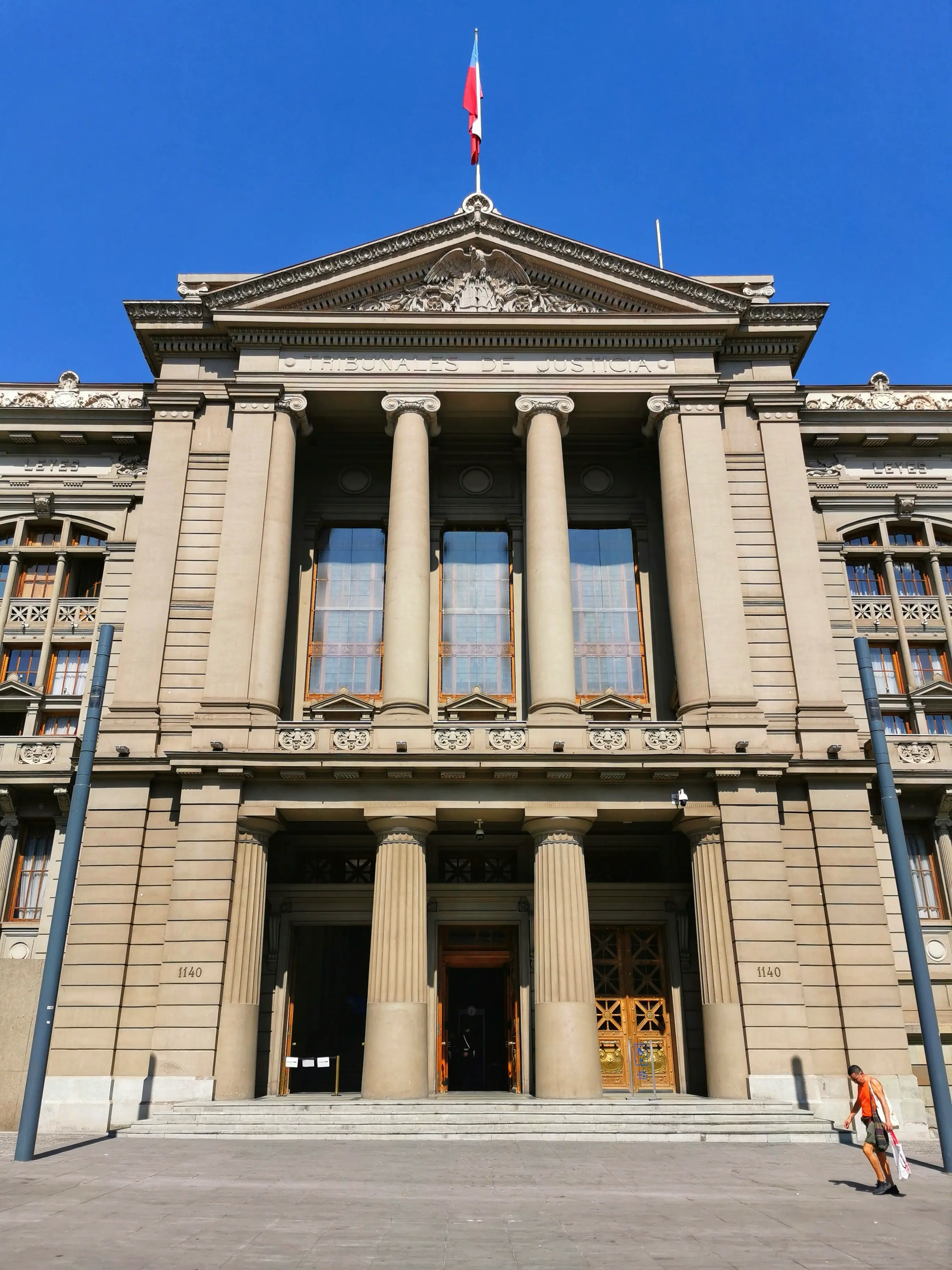
Chile's immigration system is more organised than most in Latin America — which means the paperwork is real, the timelines are fixed, and showing up without the right documents costs you months, not days.
Visa Options for Remote Workers and Long-Stay Expats
Chile introduced a Digital Nomad Visa in 2023, and it is the cleanest entry point for remote workers who do not plan to work for a Chilean employer.
Digital Nomad Visa: valid for 12 months, requires proof of sufficient funds (roughly $2,000 USD/month in income), a completed application form, and proof of remote employment or freelance contracts
Temporary Residency (Visa de Residencia Temporaria): the standard path for those staying longer — valid for one year, renewable, and the stepping stone to permanent residency after two years
Rentista Visa: suited to freelancers and investors with provable passive or foreign income — requires notarised bank statements from other countries showing consistent deposits
Tourist entry (90 days): usable as a soft arrival, but you cannot convert tourist status to residency from inside Chile — you must leave and re-enter with the correct visa, which many expats learn the hard way
Once your temporary residency is approved, you have 30 days to declare your chosen healthcare plan to the AFP office — defaulting without a declaration means the state automatically assigns you to FONASA Level A, which limits you to public facilities only.
The Chilean consulate in your home country processes the initial application — do not assume you can sort it in Santiago after arrival, because the online system still requires the originating consulate to approve the application form before anything else moves.
The Path to Permanent Residency
Permanent residency in Chile is achievable after two years of continuous temporary residency, and it is genuinely worth pursuing if you are staying long-term — it opens the formal job market, eliminates visa renewal cycles, and gives you access to the public system for healthcare and education.
Two-year continuous residence required — absences over 180 days in a calendar year reset the clock
Application submitted through the Servicio Nacional de Migraciones office in Santiago Centro — in-person appointment required, online pre-registration available
Documents needed: valid temporary visa, proof of address, clean criminal record from home country (apostilled), and evidence of personal connections to Chile such as a lease, employment contract, or Chilean bank account
Processing time: typically 6–12 months — budget for visa renewal fees during the wait
During the visa application window — which can take three to six months — Chilean immigration does not mandate travel health insurance, but Clínica Alemana and other private hospitals will ask for proof of coverage before treating you without upfront payment.
Notary and transfer fees vary greatly depending on whether the property is a new build or resale — new builds in Maipú attract a VAT component that can add 4–5% on top of the agreed price, while resale transactions in Vitacura typically carry lower closing costs.
Property, Rent, and Whether Buying Makes Sense
Rental prices in Santiago have risen sharply since 2020, and the gap between what landlords expect in Las Condes versus what you can find in Ñuñoa is wide enough to change your entire monthly budget — not just your commute.
What Rental Prices Look Like Right Now Across the City
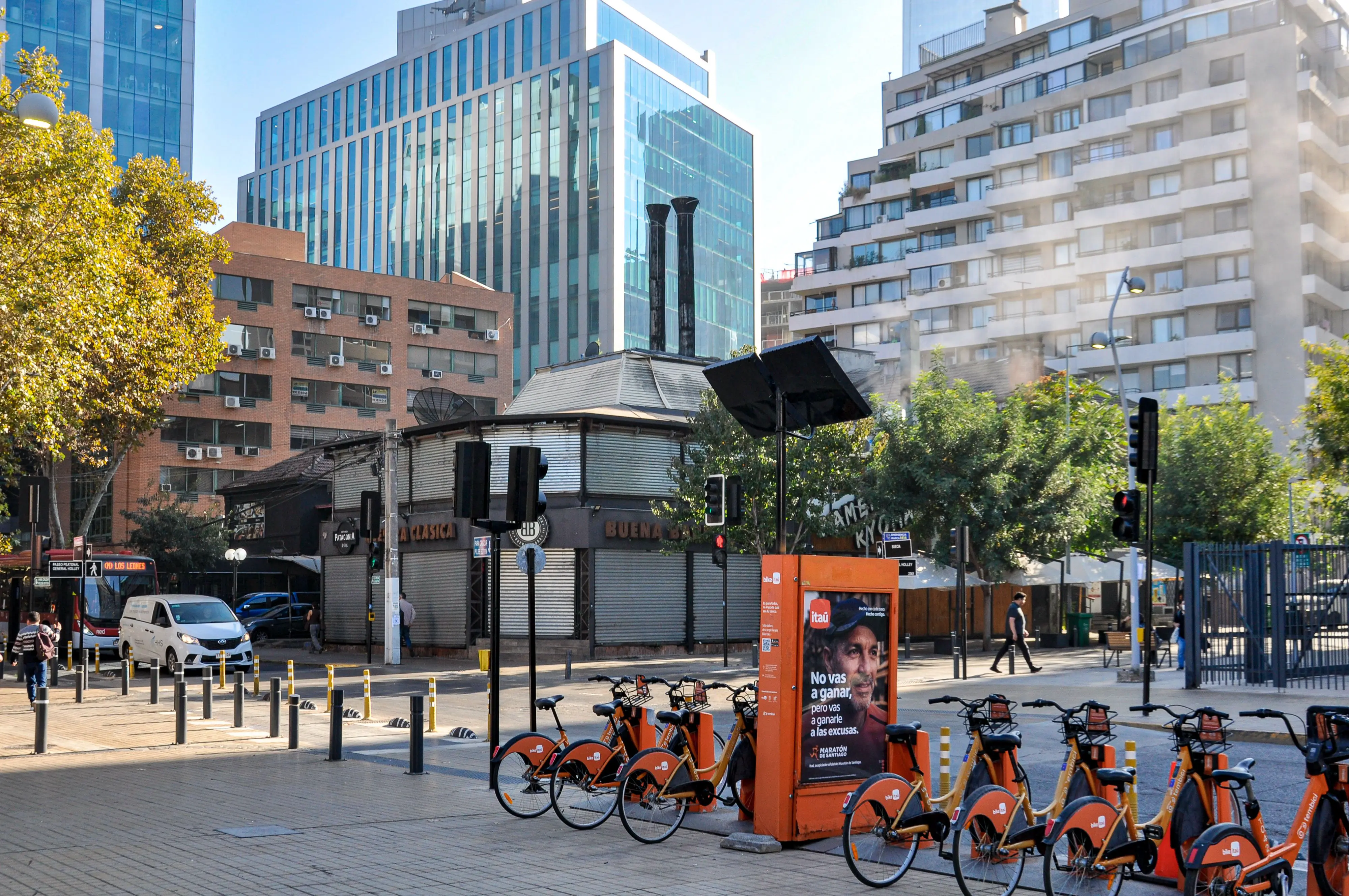
A one bedroom apartment in Las Condes will cost you more than the same floor plan three kilometres west, and the difference is not always about quality — it is largely about postcode signalling.
One bedroom apartment in Vitacura: $900–$1,200 USD/month — the most expensive commune in the city, priced for the corporate expat market
One bedroom apartment in Las Condes (near Avenida El Golf): $800–$1,000 USD/month — well connected to the financial district, but rental prices reflect that
One bedroom apartment in Providencia: $700–$900 USD/month — already covered in Part 1, but worth noting the price has not softened in three years
One bedroom apartment in Barrio Italia: $550–$750 USD/month — older buildings, less uniform finishes, but the neighbourhood is walkable and genuinely well connected to the rest of the city
The rental market moves faster than the listing sites suggest — if an apartment has been available for more than two weeks in Providencia or Las Condes, there is usually a reason worth asking about before you sign.
A two bedroom apartment in Ñuñoa typically lists for between UF 3,500 and UF 4,200 to purchase, compared to CLP 750,000–950,000 per month to rent — running the numbers, it takes roughly 18 years of rent to break even on buying in that neighbourhood.
Property Prices and Whether Buying Is Worth Considering
Foreigners can buy property in Chile with the same rights as citizens — no restrictions, no additional taxes — which makes it unusual among its neighbours, and worth considering if your timeline extends past two years.
Property value per square meter in Las Condes: roughly $2,500–$3,500 USD — comparable to mid-tier European cities, not a bargain
Property prices in Barrio Italia and Ñuñoa: $1,800–$2,500 USD per square meter — the gap is real and the neighbourhoods are not worse, just less institutionally favoured
Notary and transfer costs: approximately 2–3% of property value — Chilean property transactions require a notarised deed and Conservador de Bienes Raíces registration
Mortgage access for non-residents is limited — most Chilean banks require permanent residency or a co-signer, so buying before you hit the two-year mark usually means paying cash
Property value in eastern Santiago has held steadily through political cycles that rattled investor confidence in 2019–2022 — if you are committing to the city long-term, the numbers for buying are more defensible here than in most other cities in the region.
Daily Life: Climate, Safety, Language, and What Expat Living Actually Feels Like
Expat living in Santiago rewards people who adapt rather than people who resist — the city runs on Spanish, the summers are hotter than the Andes Mountains backdrop suggests, and the social fabric takes longer to enter than most expats expect.
Climate, Air Quality, and the Air Conditioning Question
Santiago sits in a basin, and from December through February the combination of heat and smog means air conditioning is not a luxury — it is a functioning necessity in any apartment you plan to actually work from.
Summer highs (December–February): regularly 32–36°C in the city, with periods where the Andes Mountains trap pollution and air quality drops to unhealthy levels for several consecutive days
Air conditioning is not standard in older Providencia and Barrio Italia buildings — check before you sign, not after your first January week
Winter (June–August): cool and grey, with temperatures dropping to 4–8°C at night — central heating is equally patchy in older stock; electric panel heaters are the default workaround
Spring (September–November): the best working months — clear skies, Andes Mountains visible every morning, temperatures in the low 20s, and the city at its most livable
The air quality issue is real and not discussed enough in moving guides — Santiago ranks among the most polluted cities in South America during winter temperature inversions, and if you have any respiratory sensitivity, that should factor into which months you arrive.
The produce at Mercado La Vega in central Santiago is of excellent quality and dramatically cheaper than supermarket chains — a week's worth of fruit and vegetables for two people rarely exceeds CLP 12,000 if you shop mid-morning on a weekday.
Safety, Crowded Areas, and How the City Has Changed
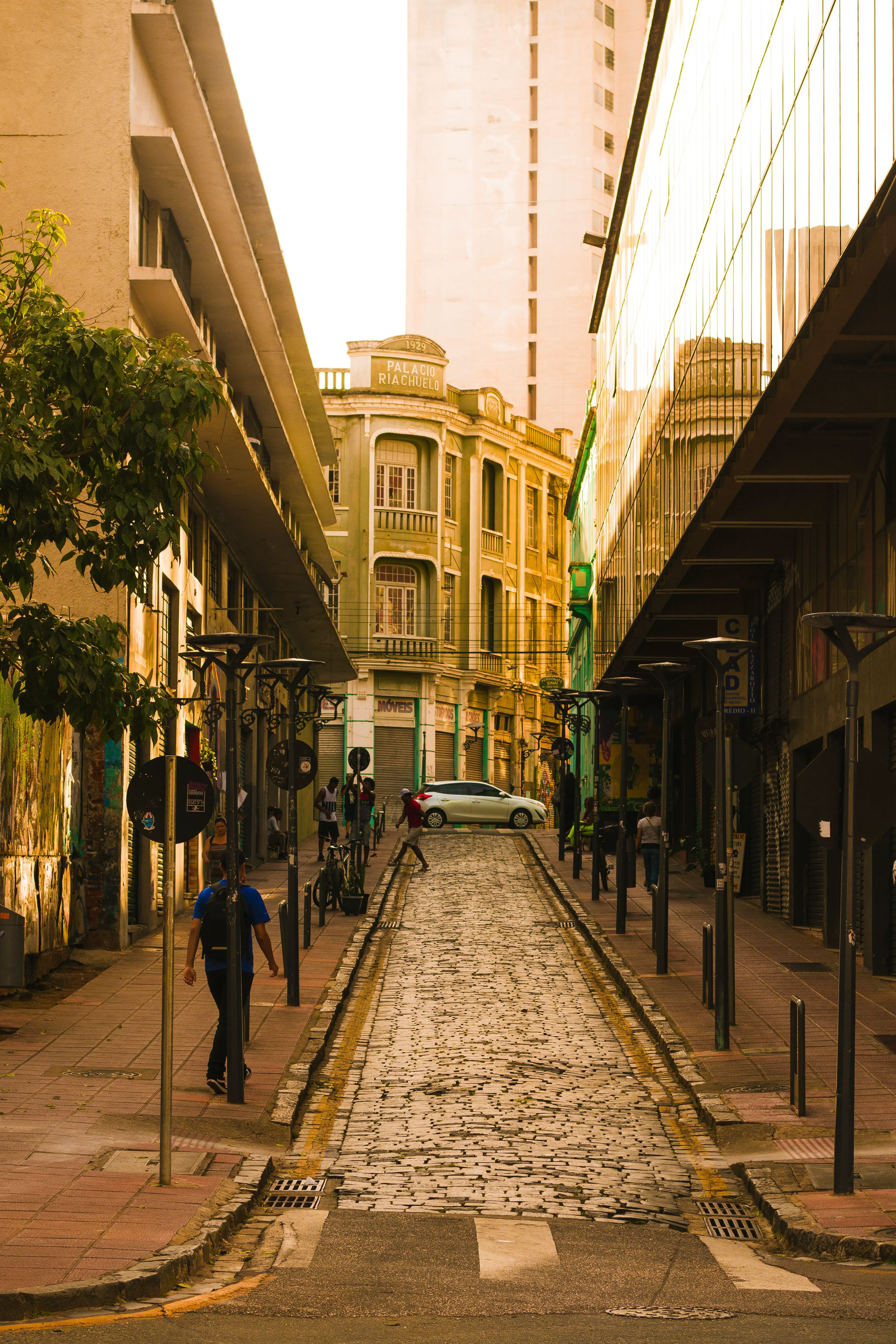
Santiago is safer than its reputation from 2019 suggests, but the city is not uniform — the risk profile of crowded areas in Santiago Centro is genuinely different from the eastern communes, and pretending otherwise sets you up for an avoidable problem.
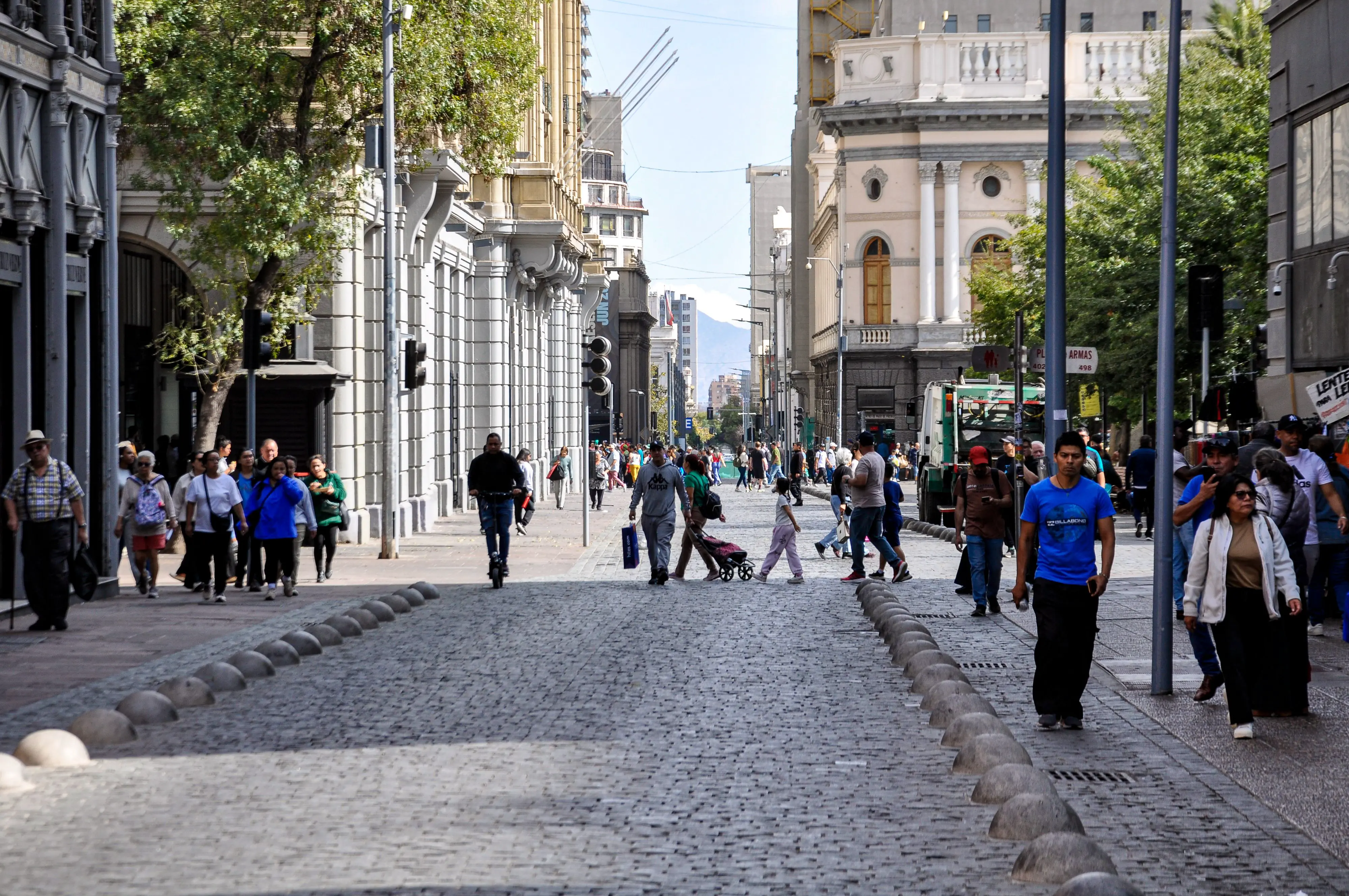
Plaza de Armas and the Centro: pickpocketing in crowded areas is common — phone snatching on Paseo Ahumada has increased since 2021; keep valuables out of sight during peak hours
Providencia, Las Condes, and Vitacura: lower street crime, but residential apartment security still varies — buildings with a concierge (portero) are materially safer than those without
Barrio Italia and Ñuñoa: generally calm, though the blocks immediately north of Avenida Irarrázaval warrant the same awareness you'd bring to any transitional neighbourhood
The 2019 protests left physical marks on parts of Santiago Centro and Gran Vía — most have been repaired, but the security posture of many businesses has not fully relaxed
Many expats default to the eastern communes precisely because the personal connections you build in those areas tend to come with social infrastructure — neighbours who notice, building staff who know your face — which matters more for daily safety than any statistic.
Living in Santiago puts Easter Island within a five-hour direct LATAM flight, and as a Chilean resident you pay domestic airfares that are often 40% cheaper than the international fares visitors see.
Spanish, Social Life, and How Long It Takes to Feel at Home
Chilean Spanish is its own category — fast, heavily contracted, and full of local slang (chilenismos) that will not be covered by any language course built for other countries.
Tandem Language Exchange Santiago (meets weekly in Barrio Italia): free, practical, and one of the faster ways to build personal connections outside the expat bubble
English proficiency is higher in the eastern communes and lower in Santiago Centro and working-class areas — do not assume you can navigate bureaucracy in English
Mercado Tirso de Molina in Barrio Yungay: the city's most local covered market, CLP 3,000–5,000 for a full lunch, and entirely in Spanish — the best weekly habit for forcing real language use
Many expats report that genuine social integration takes 6–12 months — Chileans are reserved in initial interactions, and the pace of trust-building is slower than in Argentina or Colombia
The expat community is large enough to sustain itself socially without ever requiring you to learn Spanish well — which is exactly the trap that leaves many expats in Santiago feeling isolated after year one.
Santiago has become an increasingly attractive destination for remote workers from Europe specifically because the CLP-to-EUR exchange rate in 2024 means a EUR 2,500 monthly income covers rent, groceries, and dining out comfortably without lifestyle compromises.
Is Santiago the Right Move? An Honest Assessment for South America Relocators
What Santiago Gets Right
No other city on the continent gives you this much functional infrastructure while keeping a wilderness of this scale within reach.
The Atacama Desert sits to the north — one of the most accessible extreme landscapes on earth from a single urban base
Patagonia anchors the south, reachable by domestic flight without repositioning your entire life
Ski resorts in the Andes are forty minutes from the city centre, usable on a weekend without a car
The city itself functions — metro, hospitals, supermarkets, banking — in ways that remove the low-grade friction that grinds you down elsewhere in Latin America
Expats who planned to stay six months are still here two years later, and the geography is usually why.
One underrated perk of choosing Santiago as your base is proximity to Chile's coast — Valparaíso and Viña del Mar are 90 minutes by bus, making a Friday-to-Sunday beach trip genuinely practical rather than a once-a-year event.
What Santiago Asks in Return
The city is safe and manageable, but those qualities are not the same thing as cheap or easy, and confusing them is the most common mistake newcomers make.
The cost of expat living is genuinely high by Latin American standards — budget accordingly, not aspirationally
Spanish here is fast, slang-heavy, and unforgiving; the language barrier is steeper than most guides admit
Santiago's social fabric is tight-knit and slow to open — expect months before you feel embedded, not weeks
Summers are hotter and hazier than the Andes postcard suggests, with smog that sits over the city for weeks at a time
Compared to other major cities in Latin America — São Paulo, Buenos Aires, Bogotá — Santiago consistently ranks highest for air quality, public transport reliability, and expat healthcare access, which is a meaningful practical advantage.
Coming here because it looks manageable from the outside is a reasonable instinct — just arrive with a language plan and a realistic budget, or the city will feel resistant rather than welcoming.

Who Should Actually Make the Move
Santiago rewards a specific profile: someone who values stability over cheapness, infrastructure over spontaneity, and is prepared to commit rather than test the waters.
A signed lease signals to landlords, neighbours, and yourself that you are here to build something, not audit the city
A structured language plan — classes, not just immersion — cuts months off the timeline to feeling functional
A realistic monthly budget that accounts for expat-level costs, not backpacker assumptions
Explore fully furnished apartments in Chile to make the first three months easier than they need to be
If those three things are in place before you land, Santiago returns the investment at a level that most other cities in Latin America simply do not.