
Daniel
Productivity & Remote Living Analyst ·
Mexico City rewards the remote worker who does the groundwork before arriving. A 1 bedroom apartment in Roma Norte and a 1 bedroom apartment in Narvarte can cost the same on paper and feel like completely different cities in practice — one is priced for expats, the other for locals, and the gap between them matters more than the monthly rent figure. This guide covers what you actually need to know before signing anything.
Which neighbourhoods suit remote work and which suit tourists
What a fair monthly rental looks like across different colonias
What lease terms to expect and what landlords will ask from you
What to check before move-in and what to photograph
Where to find furnished 1 bedroom apartments that don't require a Mexican guarantor
What your monthly expenses actually look like once rent is paid
How to Rent a 1 Bedroom Long Term Apartment: What Mexico City Requires
Renting in Mexico City as a foreigner is not complicated, but it has specific friction points that catch people off guard. The biggest one is the aval — a Mexican guarantor who owns property in the city and co-signs your lease. Most local landlords require this. If you don't have one, you need a workaround, and there are several.
What Landlords Will Ask You to Provide
Standard rental requirements in Mexico City differ from what most foreigners are used to, so go in knowing what the process looks like.
Passport or visa — FM2, FM3, or Residente Temporal all work; tourist stamps are accepted by some landlords, not all
Proof of income — bank statements from the last 3 months, or a remote work contract; landlords want to see roughly 3x the monthly rent in regular income
Aval or deposit alternative — without a guarantor, expect to pay 2–3 months as a security deposit, sometimes more in high-demand colonias like Roma Norte or Condesa
First and last month's rent upfront — standard across the market; factor this into your move-in budget
Furnished apartment platforms built for expats and remote workers often bypass the aval requirement entirely — which is the main reason they're worth the slight premium over going direct.
Lease Terms You Should Read Before Signing
Most leases in Mexico City are 12 months minimum, written in Spanish, and heavily weighted toward the landlord on termination clauses.
Termination penalty — typically one to two months' rent if you exit before the lease ends; negotiate this before signing, not after
Annual rent increase — legally capped at the annual inflation rate (INPC), but confirm it's written into the lease terms explicitly
Utility responsibility — water is usually included in the rent; gas, electricity, and internet are almost always your expenses
Maintenance terms — clarify in writing who handles appliances repairs; this is where disputes happen most often
If the lease is longer than two pages and you don't read Spanish, pay a local lawyer 500–800 MXN to review it — it's the cheapest insurance you'll buy all year.
It is important to know that Mexico City landlords almost universally require an aval — a Mexican national who co-signs your lease and owns property in the city — and securing one takes weeks if you have no local network.
Best Neighbourhoods for a Long Term 1 Bedroom Apartment Rental
The colonia you choose matters more than almost any other decision you'll make. Mexico City is not one city — it's forty neighbourhoods with different price points, noise levels, and rhythms, and finding the right fit on a long rental means understanding which of those rhythms matches how you actually work and live.
Neighbourhood | Monthly Rent (1 bed) | Vibe | Best For | Key Advantage |
|---|---|---|---|---|
Roma Norte | $900–$1,400 USD | Café culture, expat-heavy | First-timers, social remote workers | Highest café and coworking density in the city |
Condesa | $1,000–$1,600 USD | Tree-lined, quieter than Roma | Long stays, couples | Parque México on your doorstep |
Narvarte | $550–$850 USD | Local, residential, underrated | Budget-conscious, Spanish learners | Better value than Roma with similar Metro access |
Polanco | $1,200–$2,000 USD | Corporate, upscale | High-income remote workers | Modern buildings, strong security |
Del Valle | $600–$900 USD | Quiet, family-oriented | Long-term renters avoiding tourist pricing | Large apartments, local market pricing |
Doctores | $350–$550 USD | Gritty, central, authentic | Extremely budget-conscious, experienced CDMX renters | Lowest rents near the centre |
Roma Norte: The Default Base for Most Remote Workers
Roma Norte is where most people land first — and where many of them stay, not because it's the cheapest option but because the infrastructure removes friction in a way the other colonias don't.
LAtt.ente — espresso from 45 MXN, reliable WiFi, outlets at most tables; go before noon or wait for a seat
Mercado del Día on Álvaro Obregón — fresh groceries 6 days a week, comida corrida lunch for 80 MXN
1 bedroom apartments on Calle Orizaba or Tonalá: $950–$1,300 USD/month furnished; unfurnished drops to $650–$850
WeWork Roma — day pass 350 MXN, monthly coworking from 2,800 MXN, air-conditioned and reliable
The trade-off is noise and pricing — Roma Norte knows what it's worth, and the weekend foot traffic on Álvaro Obregón is not quiet. Explore Roma Norte in our neighbourhood guide.
Polanco offers walking distance to Lincoln Park and upscale dining on Presidente Masaryk; however, a one-bedroom there runs MXN 20,000–28,000 per month, which is almost double what the same space costs in neighbouring Anzures.
Narvarte: The Honest Alternative
Narvarte is what Roma Norte was five years ago — local enough that your landlord won't automatically assume expat pricing, connected enough that you're not sacrificing anything practical.
Café Jekemir on Insurgentes Sur — Yemeni-style coffee, 40 MXN, almost never full on weekday mornings
1 bedroom apartments near Plaza Popocatépetl: $600–$800 USD/month furnished; local landlords, no expat markup
Metrobús Line 1 on Insurgentes — direct to Roma, Condesa, and Centro in under 15 minutes
Mercado Narvarte — the best local market in the south of the city; produce cheaper here than anywhere in Roma
If your Spanish is functional and you'd rather save $300/month than live above a trendy café, Narvarte is not a compromise — it's a better decision. Browse fully furnished apartments in Mexico City.
Del Valle punches above its price point for amenities — you get walkable supermarkets, a Chedraui, and multiple parks within five blocks, all at rents around MXN 12,000–15,000 per month.
If you work remotely and need reliable fibre internet, consider Condesa over Tepito — the infrastructure gap is significant enough to affect your daily workflow.

Browse Mexico City homes near this area
What to Look for in a 1 Bedroom Apartment Before You Sign
Viewing an apartment in Mexico City is not like viewing one in a city with strong tenant protection law. What you see in photos and what you find at move-in can diverge significantly — and the lease will not automatically protect you. Going in with a checklist is not being paranoid; it's making sure you don't spend month two arguing about a broken boiler.
Appliances and Building Features to Check
Modern apartment listings often photograph well and function poorly — test everything in the unit before you commit to a rental.
Hot water — check the boiler (calentador); gas-powered units are standard and require the gas tank to be full; electric showers exist in older buildings and are often underpowered
Appliances — run the washing machine, test all oven burners, open the fridge and check the seal; photograph anything already damaged
Air conditioning — not standard in many older Roma or Condesa apartments; a ceiling fan in a top-floor unit in May is not comfortable at 30°C
WiFi speed — ask for the router brand and ISP; Telmex is the most common provider, but speeds vary enormously by building and floor
A 30-minute walk-through with a working phone camera is worth more than reading the listing three times.
Water damage on ceilings near Colonia Doctores is a potential dealbreaker — the neighbourhood sits in a flood-prone zone and older buildings often show recurring damp that landlords paint over between tenants.
Building Location and Daily Life Logistics
The street your apartment is on matters as much as the colonia — a unit on a major artery and one tucked into a side street two blocks away are not the same living experience.
Noise — Avenida Insurgentes, Reforma, and Viaducto are loud at night and early morning; side streets in Condesa or Del Valle are substantially quieter
Safety — research the specific block on Google Maps street view at night; lighting and foot traffic after 10pm varies more than neighbourhood reputation suggests
Tianguis and local market access — knowing where the nearest Wednesday or Saturday market is saves money every week; ask your landlord or check local Facebook groups
Parking — irrelevant if you're not driving, but if you are, confirm it's included and covered; street parking in Roma Norte disappears after 8pm
Apartments in Santa Fe often advertise amenities like a gym and rooftop pool, but check whether those are actually functional — several buildings have facilities that have been closed for months.
The location question is not just about proximity to good coffee — it's about what the street actually feels like at 7am when you're going to buy groceries.

Understanding Rental Costs: What You'll Actually Pay Each Month
The rent figure is not the total. In Mexico City, the gap between your advertised monthly rental and your real monthly expenses is wide enough to derail a budget that wasn't built around it. These are the numbers that actually determine whether a colonia is affordable for you.
Fixed Monthly Expenses Beyond Rent
Knowing your full monthly number before you sign a lease is the difference between a sustainable stay and a stressful one.
Electricity (CFE) — 300–600 MXN in winter, 800–1,400 MXN in summer if you're running AC; bimonthly billing means the bill arrives every two months and surprises people
Gas — 400–700 MXN/month depending on cooking and hot water use; you buy the tank from the truck that comes to your street, usually weekly
Internet — Telmex 300 MXN/month for 100 Mbps fiber where available; Izzi or Totalplay are alternatives in some colonias, often more reliable
Building maintenance (mantenimiento) — 300–800 MXN/month in condominiums; ask if it's included in the rent or billed separately
Budget an additional $150–$200 USD per month on top of rent to cover utilities — in most 1 bedroom apartments in Condesa or Roma Norte, that's the realistic number.
Keep in mind that many landlords in Lomas de Chapultepec quote rent in US dollars — at MXN 18–19 per dollar, a USD 1,000 apartment costs you over MXN 18,000 before you've paid a single utility bill.
Variable Expenses That Remote Workers Often Underestimate
The cost of working remotely in Mexico City is lower than most European cities, but the variable expenses add up faster than the rent figure implies.
Coworking — WeWork and local spaces run 2,500–4,500 MXN/month; if you're in a noisy apartment, this is a necessary expense, not a luxury
Eating out — a comida corrida (set lunch) at a local fonda is 80–120 MXN; the same meal repackaged for tourists in Roma Norte is 250–400 MXN
Transport — Metro single ride is 5 MXN; Metrobús is 6 MXN; an Uber across the city is rarely more than 100 MXN; a car is a liability, not an asset, in this city
Laundry — many 1 bedroom apartment rentals include a washing machine, but if yours doesn't, lavandería service runs 30–50 MXN per kilo
Before signing, consider that utilities in Roma Norte can add MXN 800–1,500 per month on top of your rent, depending on whether your building has shared or individual meters.
The menú del día gap between a fonda in Narvarte and a café on Álvaro Obregón is 200 MXN per lunch — across a month that's a meaningful chunk of rent in a cheaper colonia.

How to Find and Vet One-Bedroom Apartments in Mexico City Without Getting Burned
Most rental horror stories in Mexico City don't happen because someone signed a bad lease — they happen because someone skipped the step before the lease. Knowing how to search, what to check, and where the traps hide is the difference between moving in smoothly and spending your first month arguing with a landlord over who pays for a broken boiler.
Where the Listings Actually Are
The popular platforms for apartment rental in Mexico City are not the same ones that work in Europe or the US — and what you find on each tells you something different about the landlord.
Inmuebles24 — the most comprehensive local listing site for one-bedroom apartments; filters for colonias work well, but always verify the address yourself before committing to a viewing
Vivanuncios — skews toward longer lease terms and landlords who prefer tenants without the aval complication; pricing is generally more negotiable here than on expat-facing platforms
Facebook Marketplace — chaotic, often inaccurate on price, but occasionally surfaces rent deals that never make it onto the formal listing sites; check the group "Cuartos y Departamentos CDMX" specifically
RentRemote — fully furnished apartments in Mexico City listed here are already vetted for foreigners: no aval requirement, flexible lease terms, and furniture included from day one
Online listings in Mexico City often have photos that predate the last renovation or the last tenant — always ask for a video call walkthrough before you commit to a viewing trip from another city.
What to Check Before You Sign
The questions you don't ask before signing become the arguments you have in month three — and Mexican tenancy law, while protective in theory, is slow in practice.
Ask for the escritura or at minimum the predial (property tax receipt) — this confirms the person renting to you actually owns the unit and isn't subletting without permission
Check whether the building's management allows short-term arrangements or only allows leases of 12 months or more; some newer condominiums in Santa Fe and Polanco have internal policies that restrict anything under a year
Confirm the security deposit terms in writing — standard is one month, but landlords who waive the aval requirement often ask for two or three months upfront; get the refund criteria in the contract, not just verbally
Ask specifically whether the rent is fixed in MXN or USD — an apartment quoted in USD will cost you more as the peso strengthens, and this has become a live issue as the peso has been unusually strong against the dollar since 2022
A landlord who becomes evasive when you ask for the predial or who won't confirm the deposit refund criteria in writing is telling you something useful — believe it.
Using a local inmobiliaria agent rather than searching Facebook Marketplace alone helps you avoid phantom listings — agencies in Benito Juárez borough typically charge one month's rent as a fee, which is worth it for the vetting.
Lease Terms That Catch Foreigners Off Guard
Mexican lease agreements are standardised enough that you can review them efficiently, but they contain a handful of clauses that consistently surprise foreign renters on their first apartment rental here.
Incremento de renta — most leases allow an annual rent increase tied to inflation (INPC); in 2023 that was around 6–8%, so a 15,000 MXN apartment becomes 16,200 MXN by month 13; negotiate a cap if you're signing for more than a year
Terminación anticipada — early termination penalties are typically two months rent; if your plans are uncertain, negotiate this down to one month or ensure the clause allows you to sublet with landlord approval
Servicios included vs. excluded — some lease terms lump water and building maintenance into the rent figure; others do not; this needs to be a line item in the contract, not an assumption
Mascotas and other use policies — if you have a pet or plan to use the apartment as a workspace with occasional clients visiting, check the building's internal reglamento; violations can void your lease in some buildings
Getting lease terms reviewed by a local abogado costs 500–1,000 MXN and takes less than 48 hours — it's the most efficient 500 MXN you will spend in this entire process.
Living in Mexico City Day to Day: What Your Rent Actually Gets You
The monthly number on your lease only tells part of the story. What changes the experience of renting in Mexico City — especially for remote workers — is what that rent buys you in terms of daily infrastructure: where you can work, where you can eat well without thinking about it, and how the neighbourhood feels at 8am on a Tuesday, not just on a Saturday night.
Working From Your Apartment vs. Working From the Neighbourhood
Most one-bedroom apartments in Roma Norte and Condesa have internet included — but the quality varies enough that you should always test the connection on your first day, not after you've cancelled your coworking membership.
Insitu Cafés Especiales on Orizaba, Roma Norte — reliable WiFi, good natural light, opens at 8am, fills up by 10:30; go early or accept that you'll share a bench
Workshop Cowork, Colonia Nápoles — day pass 200 MXN, monthly 2,800 MXN, quieter than most Roma Norte options, 10 minutes by Metro from Del Valle
Blend Station, multiple locations including Juárez — espresso 45 MXN, fast WiFi, popular with the design and freelance crowd, best tables by the window before noon
Apartment buildings with amenity floors (business centres, rooftop areas) are becoming more common in Santa Fe and Insurgentes Sur developments; if you work from home daily, this is worth the additional 2,000–3,000 MXN in monthly rent
If your apartment's WiFi drops during calls, you will become a regular at a café within two days — factor 1,500–2,000 MXN per month into your budget for that reality rather than hoping it doesn't happen.
Digital services like Rappi and Cornershop deliver groceries to most addresses in Cuauhtémoc within 30 minutes, which largely compensates for the fact that not every street in the borough has a nearby supermarket.
Eating Near Where You Live: The Real Cost Breakdown
Mexico City's food infrastructure is genuinely one of its strongest arguments for long-term stays — but only if you learn to use it the way the neighbourhood actually works, not the way a tourist guide presents it.
Mercado De San Cosme, Narvarte — comida corrida 90–110 MXN for a full three-course lunch; not for morning coffee, but essential for anyone trying to keep their monthly food spend under 8,000 MXN
Taquería Orinoco, multiple locations — tacos 30–45 MXN each, open late, consistent quality; the Insurgentes branch near Condesa is the most useful if you're south of Reforma
Superama and Walmart Express are the most convenient grocery options in most central colonias; Chedraui is cheaper and worth the slightly longer trip for weekly shops — price difference on basics runs 15–20%
Cooking at home versus eating out in Mexico City is a closer financial call than it is in most European cities; local ingredients are cheap but the comida corrida is so well-priced that many remote workers only cook breakfast
The real food budget variable in Mexico City isn't whether you eat out — it's which street you eat on; the same taco costs three times more on Álvaro Obregón than it does two blocks away on a side street in Narvarte.
The Metro's various lines connect Observatorio to Pantitlán in under 45 minutes for MXN 5 per ride, which makes living in Mixcoac genuinely viable even if your coworking space is in Reforma.
Getting Around: What the Transit Map Doesn't Tell You
Mexico City's Metro is one of the best transit systems in Latin America by cost — 5 MXN per ride — but the map doesn't show you where to live relative to lines that are actually reliable.
Line 3 (Indios Verdes to Universidad) and Line 1 (Observatorio to Pantitlán) are the most congested; if your apartment is within walking distance of a Línea 7 or Línea 12 station, your commute to Polanco or Xochimilco is genuinely manageable
Ecobici — the city's bike-share program runs 587 MXN/year or 115 MXN/month; within Roma Norte, Condesa, and Narvarte it is faster than Uber for trips under 3km and you stop thinking about traffic entirely
Uber operates well throughout the city, but surge pricing during rush hour (7–9am, 6–8pm) on Insurgentes or Reforma can push a 4km ride to 120–150 MXN; walking distance to your café or coworking space matters more than it sounds
Metrobús Line 1 on Insurgentes connects Buenavista to Ciudad Universitaria in under 40 minutes — if you meet clients or collaborators regularly across town, an apartment near an Insurgentes station is more efficient than one near the Metro alone
The neighbourhoods that allow you to work, eat, and move without getting into a car every day are the ones where the rent-to-quality trade-off makes sense — and that list is shorter than the expat forums suggest.
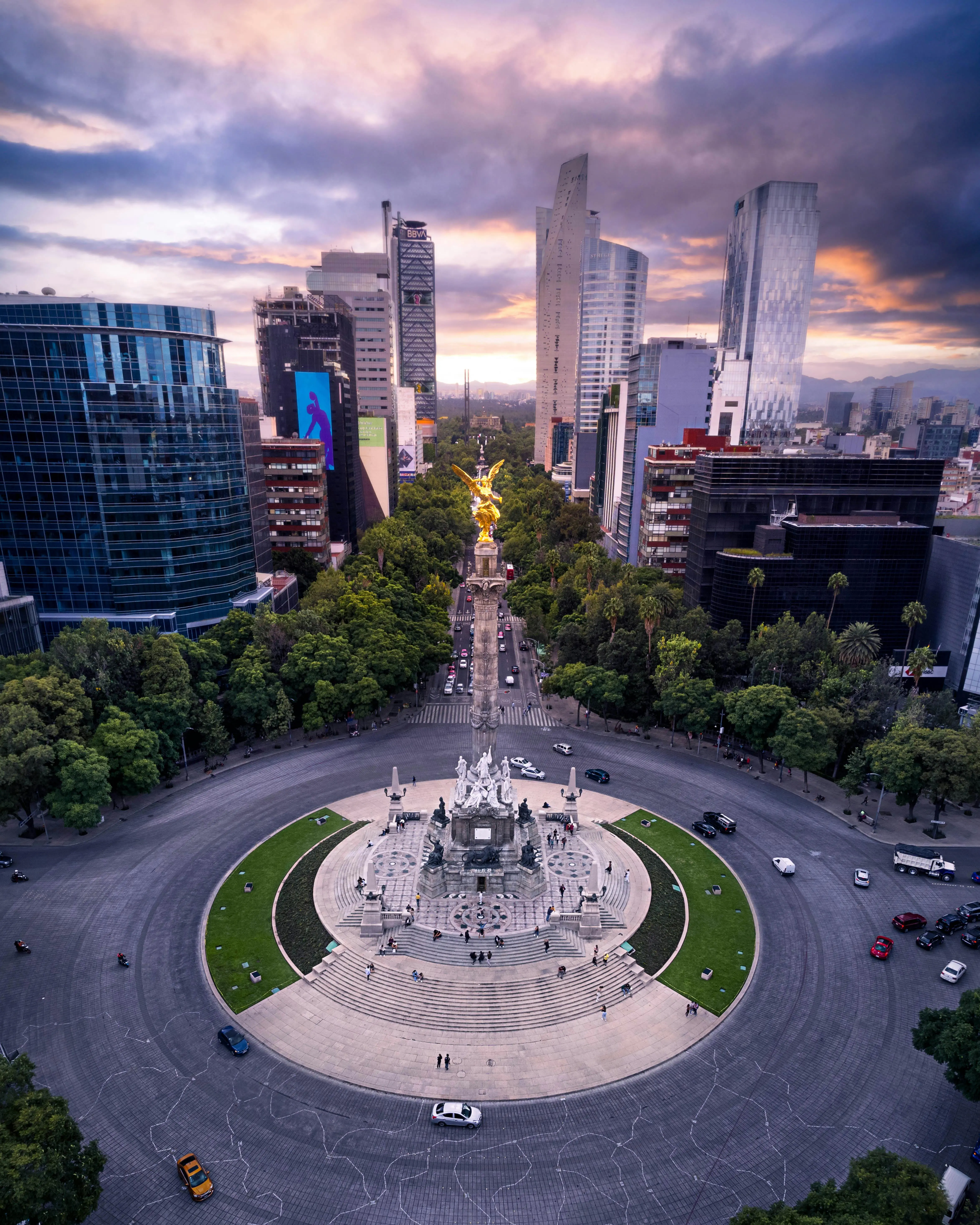
Renting Trends, Red Flags, and What's Actually Changed Since 2022
Mexico City's rental market has shifted meaningfully in the last two years, and some of the assumptions that held in 2019 or even 2021 no longer apply. The trends are worth understanding before you anchor to a price or a neighbourhood that no longer reflects reality.
What Gentrification and Remote Work Have Done to Prices
Rent in central Mexico City has risen faster than most expats expected — and the neighbourhoods absorbing that pressure are not always the obvious ones.
Roma Norte and Condesa have seen rent increases of 25–35% since 2022, driven directly by remote worker and digital nomad demand; this is no longer a cheap option by Latin American standards
Colonia Juárez, which was underpriced relative to its location two years ago, has now largely corrected — one-bedroom apartments there run 13,000–18,000 MXN depending on the building and whether furniture is included
Newer inventory in Nuevo Polanco and near Insurgentes Sur developments is increasingly priced in USD and built specifically for international renters; these buildings allow pets and flexible lease terms but start at $1,300 USD/month
Del Valle and Narvarte remain the most defensible value positions — prices have risen but not at the same rate, and the infrastructure arguments for both neighbourhoods are stronger than they were before the gentrification pressure hit Roma Norte
The two rental trends worth tracking going into 2025 are the continued USD-pricing of new inventory and the slow emergence of Colonia Doctores as a serious lower-cost alternative for remote workers who prefer proximity to the centre over social scene.
Short-term Airbnb conversions in Juárez have reduced long-term supply significantly, which is a potential problem if you're searching during high season and expecting more than a handful of listings.
Red Flags You Can Spot Before You Visit
Some landlord and listing problems are only visible in person — but a surprising number show up before you ever leave your own apartment.
Listings that refuse to confirm the colonia — "near Reforma" or "central CDMX" without a specific address is almost always a property that is not quite where it implies; insist on a cross-street before a viewing
Any landlord who asks for the deposit in cash via Oxxo transfer before you've signed anything; the security deposit should always follow a signed contract, never precede it
Photos showing no natural light or taken exclusively at night — the apartment may have no east or south-facing windows, which in Mexico City's climate matters more than it would in a colder city
Listings that describe the apartment as "amueblado" (furnished) without a furniture list in the contract; "furnished" in CDMX can mean a mattress and a plastic chair — confirm what's included with a specific inventory or check it yourself on viewing
The most common deposit dispute in Mexico City isn't about damage — it's about furniture that was already broken when the tenant arrived and wasn't documented; take photos of every item in every room on the day you get the keys, send them to the landlord by WhatsApp, and keep the thread.
Is Mexico City the Right Long-Term Base for You?

Who Mexico City Actually Works For
This city rewards remote workers who treat friction as a feature rather than a flaw — if you need everything to run smoothly without effort, you'll be miserable here within a month.
High-initiative workers thrive: negotiating leases, learning basic Spanish, and reading the city's rhythms are part of daily life, not exceptions to it
Creatives and builders benefit from a city that is genuinely stimulating without being performatively trendy
Those accustomed to European or Southeast Asian nomad infrastructure will find Mexico City comparable in the areas that matter — fast internet, walkable neighbourhoods, strong café culture — and messier everywhere else
Anyone expecting a city that runs itself should look at Lisbon or Medellín instead
Mexico City is rarely the perfect base if you need to travel internationally more than twice a month — Benito Juárez International Airport serves fewer direct transatlantic routes than you'd expect for a city of 22 million.
The value Mexico City offers is real, but it is conditional — it depends almost entirely on how much effort you're willing to put into understanding it before you arrive.
Where to Base Yourself Without Defaulting to the Obvious Choice
Roma Norte is overpriced relative to what it offers, and choosing it because it appeared in a nomad blog is the single most reliable way to overpay for Mexico City.
Narvarte delivers walkability, markets, and quiet streets at rents that still make sense for a one-bedroom on a mid-range remote salary
Del Valle offers genuine neighbourhood infrastructure — supermarkets, parks, transit — without the expat markup that has followed Roma and Condesa north
Juárez and Doctores both have emerging pockets worth watching if you're signing a longer lease and want to get ahead of the curve rather than arrive after it
One-bedroom apartments across these colonias remain meaningfully cheaper than comparable options in Lisbon, Barcelona, or Buenos Aires — but only if you choose deliberately
The best neighbourhood for you is not the one with the most cafés on your Instagram feed — it's the one whose daily rhythm actually matches how you live and work.
How to Move From Browsing to Actually Booking
The hard part of renting in Mexico City is not the city itself — it's arriving without a plan and discovering that the local rental market is built around trust mechanisms that foreigners simply don't have access to.
The aval requirement — a Mexican guarantor who owns property — blocks most foreign renters from standard listings; furnished apartments for remote workers sidestep this entirely
Flexible lease terms matter here more than in most cities, because you genuinely need two to four weeks on the ground before you know which colonia suits you
Start with fully furnished apartments in Mexico — listings already configured for foreign renters, with no aval requirement and move-in timelines that don't assume you have a local network
Lock in a short-term base first, then negotiate a longer lease once you've ruled out the neighbourhoods that looked right on a map but didn't work in practice
Most people who struggle with Mexico City housing struggled because they arrived without accommodation sorted — the city itself is not the obstacle.
Start Your Mexico City Apartment Search: Key Next Steps
Renting a one-bedroom apartment in Mexico City long term is one of the most rewarding decisions an expat or digital nomad can make. The city offers an unmatched combination of affordability, culture, and connectivity — but only if you arrive with a clear understanding of how the local rental market works. Knowing what landlords expect, which neighborhoods fit your lifestyle, and how to navigate lease requirements puts you miles ahead of most first-time renters.
The groundwork you lay before you land matters more than anything else. Securing a furnished apartment with a flexible lease removes the biggest friction points: no hunting for furniture, no aval negotiations, and no long wait to feel settled. From there, the city opens up quickly.
When you're ready to take the next step, browse fully furnished apartments in the country to find listings built specifically for international renters — with transparent terms, no local guarantor required, and the flexibility to stay as long as you need.