Lukas
Tech & Digital Nomad Cultural Editor ·
Lima works for expats in ways that other South American capitals don't — the food scene alone justifies the move, the neighbourhoods are genuinely distinct, and the cost of living still runs well below what you'd pay in Bogotá or Santiago for equivalent quality. The trade-off is a city of 11 million people with real traffic, grey skies from May to November, and a bureaucratic pace that will test your patience before it rewards it. This guide covers what you actually need to know before you commit.
Which visa options suit your situation and how long each takes
Where expats actually live — neighbourhoods, rents, and trade-offs
Healthcare, schools, and what quality of life looks like day to day
What digital nomad life costs in Lima month to month
How the Peruvian property market works for foreign buyers
Practical tips on transport, Spanish, and building a community here
Moving to Lima as an Expat: What This City Actually Demands
Lima doesn't ease you in gently. It hands you a megacity and waits to see what you do with it. The expats who thrive here are the ones who pick a neighbourhood, learn enough Spanish to navigate daily errands, and stop treating it like a temporary posting within the first three months.
What Kind of Foreigners Actually Move Here — and Why
The expat population in Lima is more varied than most people expect before they arrive.
Corporate expats on regional packages — often placed in San Isidro's financial district, with housing allowances that push them toward the top end of the market
Remote workers and digital nomad arrivals from North America and Europe, drawn by the time zone (Lima runs EST in summer), the food, and rents that are still genuinely lower than their home cities
Retirees, often American or European, who want good private healthcare at a fraction of home costs and find Miraflores a comfortable, walkable base
Entrepreneurs and small business operators attracted by Peru's relatively open foreign investment framework
None of these groups live the same Lima — which is exactly why neighbourhood choice matters more here than in almost any other city of this size.
The Pros and Cons of Lima That No One Puts in the Brochure
The pros and cons of Lima need to be stated plainly, because the gap between what people expect and what they find in the first month is wide.
Pro: Peruvian food is not a minor selling point — Central and Maido are two of the best restaurants on the planet, and you can eat extraordinarily well at every price point
Con: Lima has roughly 300 sunny days a year — almost none of them between May and October. The garúa (coastal fog) is persistent, grey, and genuinely affects mood for people who didn't anticipate it
Pro: A furnished one-bedroom in Miraflores runs $700–$1,100/month. The equivalent apartment in Madrid costs twice that.
Con: Traffic is severe, public transport is fragmented, and without a car or reliable app-based transport, certain parts of the city become genuinely inaccessible during peak hours
Lima rewards the people who come prepared for all of this — not just the food photos they saw on Instagram.
Lima offers something rare for a city of 11 million — a genuinely world-class restaurant scene at prices that feel absurd to anyone arriving from Europe or North America, with tasting menus at Central running $200 USD compared to $500-plus equivalents in London.
Visa Options for Expats: What's Popular and What's Actually Practical
Peru's visa framework is more foreigner-friendly than its bureaucratic reputation suggests, but the process is slow, the paperwork is specific, and getting it wrong means starting again. The visa options are popular with different types of arrivals for different reasons — understanding which category fits your situation saves months.
Which Visa Options Are Popular Among Expats Moving Long-Term
Most expats in Lima end up on one of three visa tracks, depending on how they earn their income and how long they intend to stay.
Rentista visa — requires proof of a minimum monthly income from foreign sources (typically $1,000–$1,500/month); this is the most common visa route for retirees and passive-income expats
Worker visa — requires a Peruvian employer sponsor; realistically only available to corporate expats or those with a formal contract with a local company
Investor visa — requires a capital investment in a Peruvian business or property; thresholds are relatively low by regional standards
Tourist visa extension — many digital nomad arrivals start here; Peru allows stays of up to 183 days on a tourist entry, though this is not a legal long-term solution and cannot be renewed indefinitely
All visa applications route through Migraciones Peru — budget 3–6 months for the full process, more if any document requires apostille from your home country.
Income Tax for Expats: What Changes After 183 Days
The income tax situation for foreign residents in Peru is straightforward in principle and occasionally complicated in practice.
Non-residents (under 183 days in a calendar year) pay a flat 30% income tax on Peru-sourced income only — foreign income is not taxed
After 183 days in a 12-month period, you become a tax resident and pay progressive rates from 8% to 30% on worldwide income — which is the threshold that changes everything for digital nomads earning abroad
Peru has a limited number of double-taxation treaties; American expats in particular should take advice before assuming their US tax obligations are unaffected
Peruvian income tax is administered through SUNAT — the national tax authority — and registered accountants (contadores) who work with foreign clients are available in San Isidro and Miraflores
If you're a remote worker earning in dollars or euros and spending more than six months in Lima, talk to a local contador before month five — not after.
The rentista and investor visa categories offer the most straightforward path to long-term residency, but both require notarised financial documentation that can take six to eight weeks to process through Migraciones.
Lima Neighborhoods for Expats: Where to Actually Live
Miraflores is where most expats land first, and San Isidro is where corporate packages tend to place people. Both are legitimate choices — but they're not the only choices, and depending on your budget and lifestyle, they may not even be the right ones.
Neighbourhood | Monthly Rent (1-bed) | Vibe | Best For | Key Advantage |
|---|---|---|---|---|
Miraflores | $700–$1,100 | Polished, walkable, coastal | Solo expats, remote workers, retirees | Best infrastructure density in the city |
San Isidro | $900–$1,500 | Corporate, quiet, formal | Families, corporate expats | Closest to Lima's main business district |
Barranco | $500–$900 | Bohemian, creative, noisy on weekends | Digital nomads, creatives | Lower rent, strong café and arts scene |
Surco | $600–$1,000 | Suburban, residential, family-focused | Families with children, longer stays | Near most international schools |
San Borja | $600–$950 | Calm, mid-range, overlooked | Expats who want quiet without Miraflores prices | Well-maintained, central, underrated |
Miraflores: The Default Base That Usually Earns Its Reputation
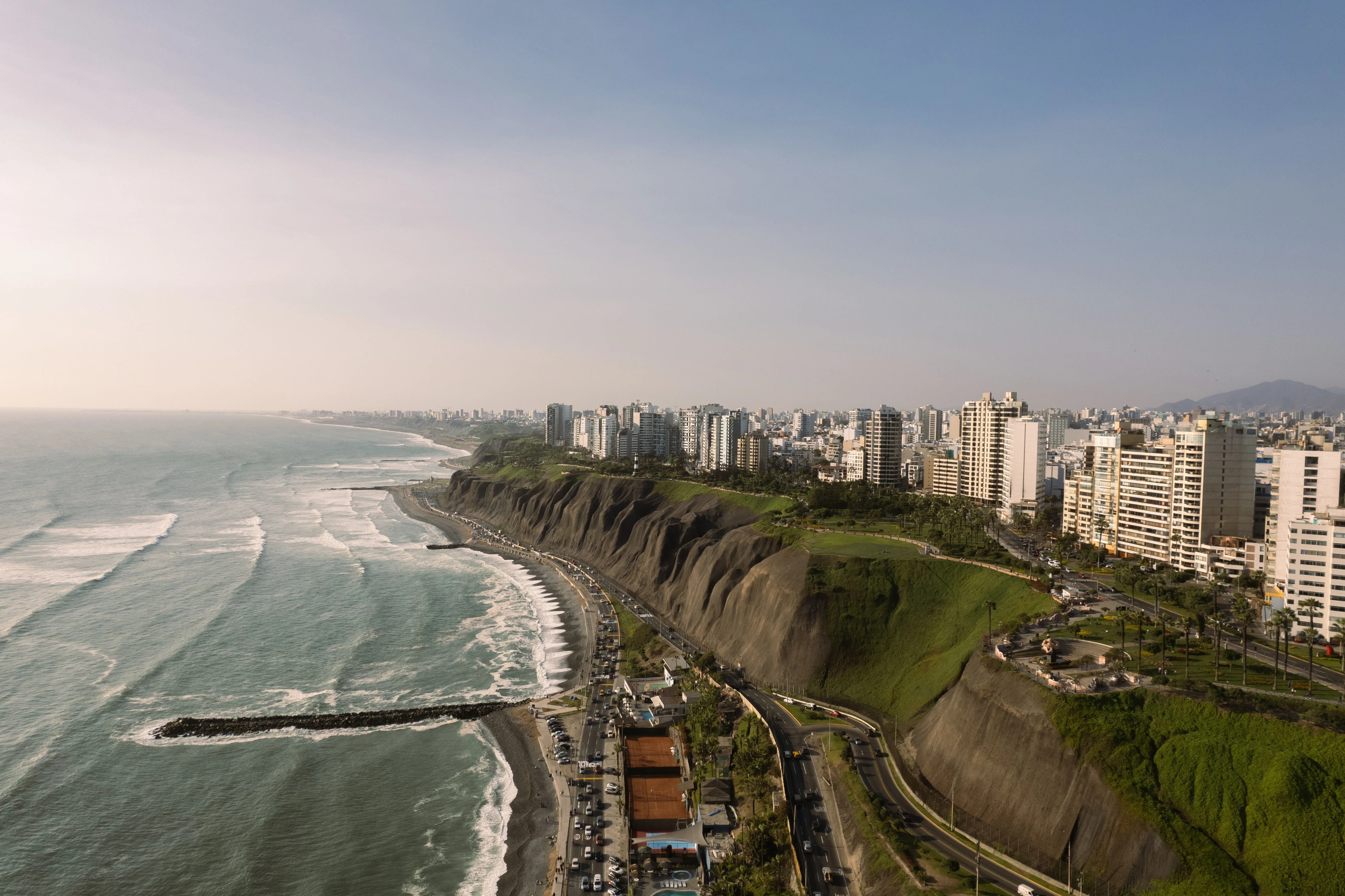
Miraflores is not the most interesting neighbourhood in Lima, but it is the most functional — and after two weeks of navigating the city, that distinction matters.
Parque Kennedy — the social centre of Miraflores; surrounded by cafés and restaurants, useful as a local landmark and meeting point
Larcomar — open-air mall built into the cliff face above the Pacific; more useful than it sounds for groceries, pharmacies, and banking
Furnished 1-beds from $750/month on and around Calle Berlín — the closer to the Malecón, the higher the premium
Coworking at Comunal Miraflores — day pass around $15, reliable fibre, the best-known coworking brand in Lima
If you're arriving in Lima without a local network yet, Miraflores is forgiving — but once you know the city, you may find you've overpaid for safety you no longer need.
fully furnished apartments in Lima
Barranco: Where the Digital Nomad Crowd Has Settled
Barranco is the neighbourhood that the digital nomad community gravitates toward once they've done a month in Miraflores and want something with more character and lower rent.
Café Ancestral Barranco — reliable WiFi, good espresso, fills up after 10am; arrive early or accept background noise
Puente de los Suspiros — the neighbourhood's most photographed street; useful for understanding why Barranco has the reputation it does
1-bed apartments from $500/month on quieter side streets; expect weekend noise if you're within two blocks of the bar strip on Calle Grau
The local food market, Mercado de Barranco, runs Tuesday to Sunday and is genuinely cheaper than Miraflores supermarkets for produce
Barranco is the right call if you can handle the weekend noise and don't need proximity to corporate Lima — the rent savings over 90 days are real.
Safety in San Isidro is noticeably better than in neighbouring districts — the financial district has private security on nearly every block, and petty theft rates are among the lowest in the city.
Quality of Life, Healthcare, Schools, and Safety for Expats in Lima
The quality of life in Lima is better than the city's international reputation suggests — and that reputation is usually shaped by people who spent three days in a hotel near the airport. The honest version is more nuanced: private healthcare is excellent and affordable, the international schools are genuinely good, and safety is a function of neighbourhood choice more than city-wide risk.
Quality of Life Healthcare: Private Clinics Are the Standard for Expats
Public healthcare in Peru is not the system expats use — private clinics are where you go, and the cost makes that straightforward.
Clínica Anglo Americana in San Isidro — the most English-friendly private clinic in Lima; a GP consultation runs $50–$80 without insurance
Clínica Ricardo Palma in San Isidro — slightly lower cost, comparable quality, used widely by the local upper-middle-class and expat community
International health insurance typically runs $100–$200/month for a healthy adult in their 30s — policies from providers like Cigna Global or Allianz Care are the standard choice
Dental care is significantly lower cost than in Europe or North America; a standard check and clean runs $40–$60 at a private practice in Miraflores
Healthcare is not the reason to hesitate about Lima — it's genuinely one of the arguments in the city's favour once you're in the private system.
International health insurance through providers like Cigna or Allianz typically runs $1,200 to $2,500 USD annually for a healthy adult, and most expats say it is worth every dollar the first time they need an MRI or specialist referral.
International Schools in Lima: What Families with Children Need to Know
There are good international schools in Lima, and that matters — because if you're moving with children, the school question often determines the neighbourhood question.
Colegio Franklin Delano Roosevelt (The American School) in Surco — the flagship American curriculum school; fees run $15,000–$22,000/year, and there is a waiting list
Markham College in Surco — British curriculum, strong academic reputation, fees in a similar range; most families choosing between the two do so on curriculum preference, not quality
Peruano Británico — lower fees than the top-tier international schools, bilingual Spanish-English curriculum, popular with expat families on tighter budgets
Most international schools cluster in Surco and San Borja — which is why those districts dominate the family expat market despite being less obvious choices for solo arrivals
If the school question is what's driving your neighbourhood decision, Surco gives you the best concentration of options — and rents there are lower than Miraflores by a meaningful margin.
Lima's Districts: Which Neighbourhood Actually Fits Your Life
Most expats pick Miraflores by default and discover within two months that it was the right call — or the wrong one. The districts south of the city centre each attract a genuinely different kind of person, and the gap between them is wider than a map suggests.
District | Monthly Rent (1-bed) | Vibe | Best For | Key Advantage |
|---|---|---|---|---|
Miraflores | $700–$1,100 | Polished, coastal, expat-heavy | Solo arrivals, first-timers | Walkable, high security, English spoken widely |
San Isidro | $900–$1,500 | Corporate, quiet, formal | Business professionals, families | Best private services concentration in Lima |
Barranco | $500–$900 | Creative, social, neighbourhood feel | Artists, freelancers, long-termers | Culture and food density without the premium |
Surco | $600–$950 | Suburban, family-oriented | Families with children in school | International schools, quieter streets |
La Molina | $700–$1,200 | Green, gated, residential | Families, long-term residents | Space, air quality, private security culture |
San Isidro: The District That Makes Sense If Your Work Demands It
San Isidro earns its premium — the streets are clean, the security is visible, and every private service you need is within a ten-minute walk — but you pay for all of it in rent and in a certain absence of personality.
El Olivar Park — the olive grove at the centre of San Isidro; genuinely beautiful, free, and the best place to work outdoors on a clear morning before 11am
Vivanda San Isidro — the most reliable high-end supermarket for imported goods; expect to spend 30–40% more than a local market, but the product range is consistent
Furnished apartments in San Isidro typically run $900–$1,500/month for a one-bedroom — higher than Miraflores for equivalent space, justified only if your business meetings are in the district
The San Isidro financial district concentrates Peru's major law firms, banks, and corporate offices — which is either irrelevant to you or the entire reason you're here
San Isidro is not where you go to feel like you're living in Lima — it's where you go when living in Lima is secondary to operating professionally within it.
Barranco: The District That Rewards Patience
Barranco has the highest density of good food and social culture per square block of any district in Lima, which is exactly why it's harder to work from than it looks on paper.
Calle Centenario — the main street running through Barranco's gallery and restaurant strip; more interesting after 7pm than before noon
Dédalo — art bookshop and café on Paseo Sáenz Peña; $3–5 for coffee, unreliable WiFi but useful for half-days when you need a change of scene
Isolina Taberna — the most honest Peruvian kitchen in the district; lunch for two runs $30–45, no tasting menu posturing, just well-executed traditional food
Single-bedroom apartments in Barranco run $500–$900/month — the lower end gets you older building stock with less natural light; the upper end gets you a renovated apartment near the cliff walk
If you can find the discipline to work from your apartment and treat Barranco's street life as the reward rather than the workspace, it's the most liveable district in the city for people who plan to stay more than three months.
San Isidro sits in a central position between Miraflores and the financial district, which means most expats working office jobs can walk or take a 10-minute taxi to their desks for under $3 USD.
Browse Lima homes near this area
La Molina and Surco: Where Families Actually Live
La Molina is the district Lima expats discover in year two, usually after one too many Saturday afternoons stuck in Miraflores traffic with children who need space to run.
La Molina campus area — the university grounds provide green buffer that makes this district feel ten degrees cooler and significantly less urban than it is on a map
La Molina and Surco both operate on a private security model — most residential streets have a guardhouse; this is normal, not a warning sign
Jockey Plaza in Surco — the largest shopping centre in Peru; useful less for shopping than for the food court and cinema on a grey Sunday when you need a plan
Family-sized apartments in La Molina with three bedrooms run $1,000–$1,800/month — cheaper per room than Miraflores and quieter streets for the trade-off of a longer commute anywhere
The districts south and east of Miraflores aren't where the city shows off — they're where people who've decided to stay actually live.
The neighborhoods east of Surco, like La Molina, offer quieter streets and larger homes but add 45 minutes to your commute into San Isidro on a bad traffic day.
Explore fully furnished apartments in Lima across all major districts, filtered by neighbourhood and move-in date.
Browse Lima homes near this area
Safety, Street-Level Reality, and What Foreigners Need to Know
Lima's safety picture is real but uneven — and most of what foreigners worry about before arrival is not what actually causes problems once they're there.
How Safety Actually Works Across Lima's Districts
Security in Lima is neighbourhood-specific in a way that makes general city-wide warnings nearly useless — the gap between Miraflores and districts further north is not a matter of degree, it's a different city.
Miraflores, San Isidro, Barranco, and La Molina have dedicated serenazgo (municipal security) patrols on major streets — visible, frequent, and effective for deterrence
Express kidnapping (secuestro al paso) is a real risk in Lima but is concentrated in taxi situations — the fix is simple: use only Beat or InDrive with app-tracked rides and never hail from the street
Laptop theft in cafés happens; the districts where it's most common are those with the most foot traffic through open-frontage spaces — work from places with a clear sightline to your bag
The rule most long-term expats follow: Miraflores and San Isidro are fine at any hour, Barranco fine until midnight on a busy night, everything changes north of the city centre
Lima rewards the same risk awareness that any major South American city requires — not paranoia, but paying attention to context, especially in the first few weeks before you've built instincts.
While Miraflores and Barranco feel genuinely safe for evening walks, taking your phone out on a quiet street in Cercado de Lima after dark is a risk that experienced expats consistently say is not worth taking.
Private Services and the Expat Infrastructure Layer
Lima has a parallel private infrastructure — schools, healthcare, security, transport — that most foreigners end up living almost entirely within, and it functions well once you're inside it.
Private security is not a luxury signal in Lima's residential districts; gated apartment buildings with 24-hour concierge are the standard for any apartment marketed at expats or upper-middle-class Peruvians
Lima Airport Partners VIP lounge access from $35 — worth knowing about if your income depends on regular international travel and Jorge Chávez is your hub
Banking as a foreigner is slower than you expect: opening a local account requires a carné de extranjería (foreign ID card), which requires a visa — budget two to three months before you have a functioning local account
Most expats on shorter stays manage entirely on a foreign card and dollar cash; the official exchange rate on the street in Miraflores (at the casas de cambio on Avenida Diagonal) is better than any bank rate
The private services layer in Lima takes a few weeks to map, but once you know which clinic, which supermarket, and which transport app to use, the daily friction drops considerably.
Barranco is especially good for expats who want a social life that does not revolve entirely around other foreigners — the bar and live music scene there draws a genuinely mixed crowd of Limeños and internationals most nights of the week.
Food, Social Life, and the Culture Foreigners Underestimate
Lima's food reputation is well-earned and genuinely accessible — the best meals in this city are not at the restaurants foreigners read about before they arrive.
Where to Eat Without the Tasting Menu Budget
Lima's market food culture is where the city's culinary identity actually lives — the high-end restaurants are extraordinary, but a $4 ceviche at the right market stall is a more honest introduction.
Mercado de Surquillo No. 2 — the market most Lima food obsessives actually shop at; the ceviche stalls on the upper level run $4–8, busiest and best between 11am and 1pm
WARIQUE DE LA PATADA - SURQUILLO in Surquillo — no reservations for walk-ins, traditional Peruvian portions, full lunch with drinks runs $25–35 — arrive before 1pm or accept a wait
El Enano in Barranco — the kind of bar that has been there forever and will outlast everything around it; pisco sour is $4, the food is secondary, the social culture is the point
The menú del día culture exists in Lima beyond the tourist districts — a full three-course lunch runs $4–8 in Surquillo and Miraflores side streets, though quality is uneven and worth trialling before committing to a regular spot
Lima's food culture rewards the people who stop looking for recommendations and start walking into places that look right — the city's street-level quality is high enough to make that a reasonable strategy.
The mercados in Surquillo — especially Mercado No. 1 — offer the most honest window into everyday Peruvian cooking, and a full market lunch there costs under $3 USD.
Social Life, the Expat Community, and What Actually Works for Integration
Lima's expat social scene is smaller than its size suggests — which is not a complaint, but it means that integrating with Peruvians rather than circling within a foreigners bubble is both easier and more rewarding than in cities like Buenos Aires or Mexico City.
Meetup Lima hosts a rotating schedule of English-language and bilingual social events — the quality is inconsistent, but the first three months before you have a social circle, it matters
Spanish at an intermediate level unlocks the city; at a beginner level, Miraflores is comfortable but San Isidro business culture and Barranco social spaces both shift in register once you can hold a conversation
WeWork — day pass from $25, the most reliable single-location coworking space for meeting other remote workers; the social density is higher here than in independent spaces
The Lima expat community skews business and diplomatic rather than digital nomad — if your income is remote and location-independent, you will be in a minority, which either suits you or it doesn't
The foreigners who find Lima most rewarding socially are almost always the ones who learned enough Spanish to be genuinely useful in a conversation — it narrows the city's social geography considerably, and in the right direction.
The lifestyle Lima offers makes most sense for people who genuinely enjoy food culture, urban density, and the energy of a fast-moving city — expats looking for beach access or outdoor adventure will find they need to travel out of the city on most weekends.
Is Lima the Right Move? An Honest Assessment for Expats
Who Lima Actually Works For
Lima rewards expats who come looking for a serious city rather than an easy one.
Remote workers with a mid-range income find their money goes substantially further here than in any comparable European city
People genuinely interested in food culture will find Lima has no peer in South America — this isn't marketing, it's the reason chefs relocate here
Expats willing to learn Spanish unlock a city that Miraflores alone cannot show them
Those who can read bureaucratic slowness and traffic as fixed conditions rather than problems being solved will settle faster
The expats who struggle here almost always arrived expecting a city being optimised for foreigners — Lima has never been that and isn't becoming it.
On a practical level, getting a local SIM card from Claro or Entel on day one solves most navigation and communication problems immediately — both offer unlimited data plans for under $15 USD per month.
The Trade-Offs Worth Naming Upfront
Lima has genuine drawbacks that no amount of good ceviche will offset if they hit you in the wrong way.
The grey coastal winter runs from May through October — not occasional overcast days, but a defining atmospheric condition that affects mood at a population level
Miraflores provides enough English-language infrastructure to get by, which is exactly the problem — it makes it easy to stop there and miss the city
Traffic is structural, not cyclical; building your daily routine around it rather than against it is the only adjustment that actually works
Bureaucracy moves slowly and inconsistently — anyone who needs administrative predictability will find this a repeated source of friction
None of these are reasons to dismiss Lima, but anyone who reads this list and feels resistance rather than resignation should take that seriously before committing.
Making the Decision and the First Move
If the trade-offs above read like a list you can live with, the neighbourhood question matters more than almost any other decision you'll make here.
Choosing the right district is the difference between a posting and a home — Miraflores, Barranco, and San Isidro each suit a different kind of working life
A solid remote income stretches meaningfully in Lima in ways it no longer does in Lisbon, Barcelona, or Berlin
Starting with furnished accommodation gives you time to learn the districts before locking into a lease in the wrong one
Explore fully furnished apartments in Peru as a practical first step rather than an abstract research exercise
Lima will return what you put into understanding it — which is either an appealing proposition or a warning, depending on what kind of expat you are.
Securing housing before you arrive is worth the extra effort — landlords in Miraflores frequently ask for three months' deposit upfront, and good apartments at fair prices get snapped up within days of listing.
Making Lima Your Next Home Base
Lima rewards the expat who does their homework. Choosing the right district shapes your entire experience — Miraflores offers ease and infrastructure, Barranco delivers character and community, and emerging neighbourhoods like Jesús María split the difference on cost without sacrificing comfort. Get the neighbourhood right first and most other decisions fall into place around it.
The logistics are more manageable than Lima's reputation suggests. Furnished apartments are widely available across all price points, Spanish-language classes are plentiful, and an active expat community means you are rarely starting entirely from scratch. The city has a learning curve, but it is a short one for anyone who arrives prepared.
If Lima is on your shortlist, the best next step is a trial stay in the district you are considering before committing to a longer lease. Browse fully furnished apartments in the country to compare options across Lima's key neighbourhoods and find a base that matches both your budget and your lifestyle.