Lukas
Tech & Digital Nomad Cultural Editor ·
Grey Lynn is not the flashiest neighbourhood in Auckland, and that is precisely why expats who stay longer than a month tend to end up here. It sits close enough to the CBD to be practical, far enough to feel like a real neighbourhood rather than a hotel district. The trade-off is cost — Grey Lynn is not cheap — but what you get for that cost is a suburb with actual character, walkable streets, and a grocery run that does not require a car.
Which Auckland neighbourhoods suit expat life — and which ones look good on paper but do not deliver
What Grey Lynn actually costs to rent and live in month to month
How to find work, access services, and get set up from scratch
The practical differences between Grey Lynn, Mount Eden, the North Shore, and South Auckland
Where to eat, work, and shop without having to figure it all out by yourself
What to do before you arrive and in your first two weeks
Moving to Grey Lynn Auckland as an Expat: What You're Actually Choosing
Grey Lynn sits about two kilometres west of Auckland's CBD, between Ponsonby to the east and Western Springs to the west. Choosing to live here means choosing walkability over space. The houses are mostly character villas on modest sections, the streets have trees, and the Richmond Road strip has enough cafés, grocers, and bottle shops to handle most of your week without getting in a car. What it does not offer is cheap rent or quiet weekends — Ponsonby Road bleeds into the neighbourhood's social life whether you want it to or not.
Looking for somewhere to stay? Browse fully furnished apartments in Auckland across all major neighbourhoods.
What Grey Lynn Looks and Feels Like on a Normal Tuesday
The suburb runs on a pace that is easy to underestimate if you arrive on a weekend when the markets are on.
Grey Lynn Farmers Market — Sundays on Surrey Crescent, local produce, genuine regulars, arrive before 10am for selection
Woolworths Grey Lynn — everyday groceries, open late, within walking distance of most Grey Lynn rentals
Western Springs Park — free, large, used by people who actually live here rather than tourists
Most streets within ten minutes of a bus route to the CBD — the 22 and 22N run regularly
On a Tuesday morning it is calm, quiet enough to work from a café, and exactly what it looks like: a real suburb where people live year-round, not just weekends.
What Expats Get Wrong About Grey Lynn Before They Arrive
Most expats confuse Grey Lynn with Ponsonby because the suburb boundaries are not obvious on a map and every property listing will stretch them.
If your rental address is on Ponsonby Road, you are in Ponsonby — louder, more expensive, less residential
Grey Lynn proper is quieter but still within a ten-minute walk of everything Ponsonby has to offer
International arrivals often overestimate how easy it is to live here without a car — you can manage without one, but the bus frequency drops sharply after 9pm
The neighbourhood is popular with families and young professionals, which means weekend noise peaks around the park, not around bars
The distinction matters because your daily rhythm will be set within your first week, and the difference between a Grey Lynn villa and a Ponsonby apartment is not just price — it is sleep quality on a Friday night.

Auckland Neighbourhoods Compared: An Expat Guide to Where to Base Yourself
Grey Lynn is one reasonable choice. It is not the only one, and depending on your situation — budget, work location, whether you have a car — it might not be the right one. Here is what the main alternatives actually offer, without the estate-agent gloss.
Neighbourhood | Monthly Rent (1-bed) | Vibe | Best For | Key Advantage |
|---|---|---|---|---|
Grey Lynn | NZD $2,200–$2,800 | Residential, leafy, café-dense | Expats who want walkability without full city noise | Character of a real neighbourhood, close to CBD |
Mount Eden | NZD $2,100–$2,600 | Quieter, more suburban | Couples, families, anyone prioritising calm | Lower noise, good school zone, volcano views |
Ponsonby | NZD $2,500–$3,200 | Social, restaurant-heavy, busy | People who want nightlife accessible on foot | Best dining and bar strip in Auckland |
North Shore | NZD $1,800–$2,400 | Suburban, beach-adjacent | Families, people with cars, beach lifestyle | More space for the money, beaches nearby |
South Auckland | NZD $1,500–$2,000 | Diverse, large, less walkable | Budget-conscious, longer-term settlers | Cheapest rents within the Auckland metro area |
Mount Eden: The Quieter Version of What Grey Lynn Offers
Mount Eden is the choice you make when you want the same inner-city access but two fewer degrees of social intensity.
Mount Eden Village — small strip of cafés and independent shops, none of the Ponsonby Road foot traffic
1-bed rentals from around NZD $2,100/month — marginally cheaper than Grey Lynn for comparable space
Maungawhau / Mount Eden Summit — free, 20-minute walk from most of the suburb, 360-degree city views
Bus routes to CBD are reliable during peak hours; evenings are slower than Grey Lynn
If your work keeps you home most of the day and you want silence as your default setting, Mount Eden earns its reputation — but do not expect Richmond Road's café density on your doorstep.
Browse Auckland homes near this area
North Shore: More Space, More Car Dependency
The North Shore across the Harbour Bridge is a genuinely different city in terms of how you move around and how you spend your days.
Suburbs like Takapuna and Devonport offer beach access within walking distance — something inner Auckland cannot match
Rent is lower — NZD $1,800–$2,400/month for a 1-bed — but you will spend that difference on transport or a car
Takapuna Beach — free, popular with families, walkable from central Takapuna rentals
The Northern Busway into CBD is fast during peak hours; off-peak it becomes a real inconvenience
The North Shore suits expats who arrive with a car and a preference for suburb-over-city life — it does not suit anyone who assumed the commute would be simple.
Explore Posonby in our neighbourhood guide
Browse Auckland homes near this area
New Zealand Expat Guide: Visas, Banking, and Getting Set Up in Auckland
New Zealand is administratively straightforward compared to most countries expats move to — but straightforward does not mean fast, and a few things will catch you out if you arrive without a plan. The visa situation, in particular, is not as simple as the country's reputation for being easy to deal with would suggest.

Visas and the Right to Work in New Zealand
Your visa category determines everything else — without the right to work you cannot open a local bank account at most institutions, and without a bank account you cannot rent.
Skilled Migrant Category Resident Visa: the main pathway for long-term expats with professional job offers — points-based, takes months
Accredited Employer Work Visa (AEWV): if your employer is New Zealand-based and accredited, this is faster and more common for international hires
Working Holiday Visa: available for citizens of many countries under 35, valid one year, covers most work — useful for a first year before deciding to stay
All visa applications go through Immigration New Zealand — allow more time than you expect
If you are arriving on a Working Holiday Visa and plan to stay longer, start the skilled migrant process during your first year in Auckland, not at the end of it.
Banking and Essential Services from Day One
Getting a bank account open is the first thing that unlocks everything else, and it is the step most expats underestimate in terms of how long it takes.
ANZ Bank — one of the more expat-friendly for new arrivals, branches throughout Auckland including Grey Lynn Road area
You will need a New Zealand IRD (tax) number before you can start paid work — apply online, takes 8–10 working days
Spark NZ — largest mobile provider, good coverage in Grey Lynn; prepay SIM available same day for around NZD $30
Health services: enrol with a local GP as soon as you arrive — Grey Lynn Medical Centre on Richmond Road is the obvious first call
The IRD number and bank account are the two things you cannot shortcut — do both in week one and everything else follows.
Finding Work and Building a Business Base in Auckland
Auckland's job market is competitive in a way that surprises expats who arrive expecting a skills shortage to do most of the work for them. The skills shortage is real in specific sectors — construction, healthcare, tech — but in general business roles the competition from local candidates is significant, and your international experience is an asset only if you frame it correctly.
Where the Job Market Actually Has Room for International Hires
The sectors genuinely short of skilled workers in Auckland are specific, and they are not evenly distributed across the city.
Construction and trades: demand is consistent; Grey Lynn and surrounding inner suburbs have active development projects needing site management and engineering roles
Healthcare: nurse and specialist shortages are well-documented — New Zealand actively recruits internationally through the AEWV pathway
Technology: Auckland's tech sector is smaller than Sydney's or Singapore's but growing, with a cluster of business operating from the CBD Wynyard Quarter
Seek NZ — the dominant job platform; more useful than LinkedIn for understanding what the market actually looks like right now
If your field is not on the shortage list, the job search will take longer — budget for at least two to three months of active searching before your first Auckland pay cheque.
Working for Yourself or Running a Remote Business in Grey Lynn
Grey Lynn suits remote work and self-employment better than most inner Auckland suburbs, mainly because the café infrastructure is dense enough and quiet enough to use as a default office.
Paradise Cafe and Bakery — reliable WiFi, tables that accommodate a laptop, best before 11am on weekdays
BizDojo Auckland — coworking space in nearby Ponsonby/Newton, day passes from around NZD $35, popular with freelancers and small business operators
Registering as self-employed in New Zealand is straightforward — IRD handles it online, no business registration fee for sole traders
GST registration is required once your income exceeds NZD $60,000 per year — below that threshold it is optional
The Grey Lynn and Ponsonby corridor has enough coworking options and fast-café infrastructure that you can run a remote business here without ever committing to a fixed office — which matters when you are still deciding whether Auckland is a one-year experiment or a permanent home.
Getting Around Auckland from Grey Lynn: Public Transport, Cycling, and the Car Question
Grey Lynn sits close enough to central Auckland that the commute question feels easy — until you try to get somewhere at 8:45am on a Tuesday without a car. Public transport here works, but it works on its own terms.

Buses, Bikes, and What Actually Gets You to Work
The bus network covers the main corridors well, but frequency drops sharply once you move off Ponsonby Road or Great North Road — and Grey Lynn's residential streets sit between those corridors, not on them.
Great North Road bus stops — routes into the central business district take around 15–20 minutes off-peak; double that at 8:30am
AT HOP card — monthly bus pass in the inner-zone runs approximately NZD $65–$80; load it at any convenience store before your first commute, not at the bus stop
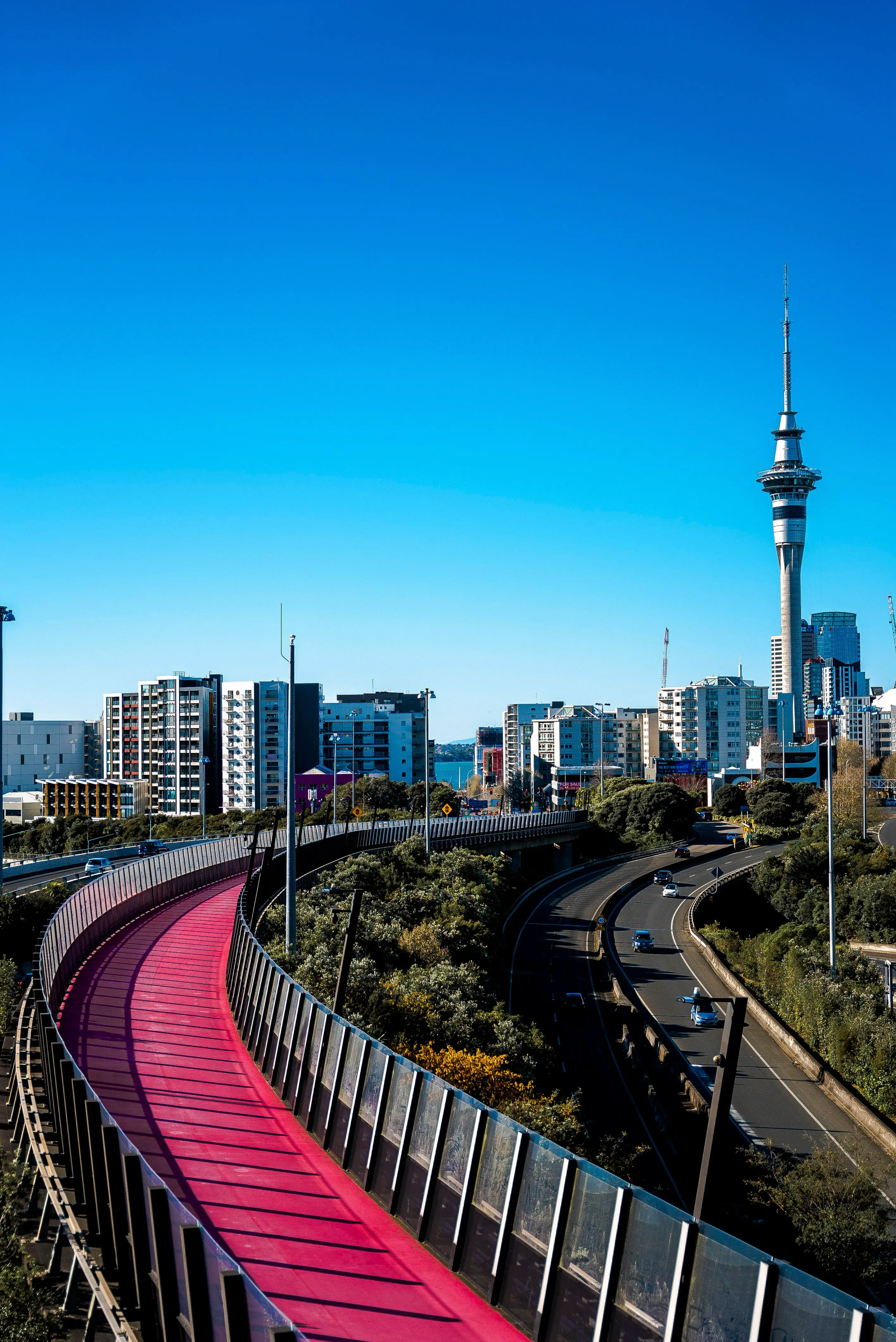
Cycling to the central business district along the Lightpath (Te Ara I Whiti) takes under 15 minutes from Grey Lynn — the pink elevated cycleway is one of the few pieces of cycling infrastructure in Auckland new Zealand that actually works as intended
Lime scooters operate across the inner suburbs and are useful for the gap between your front door and the nearest useful bus stop
If your work is in the central business district and you keep regular hours, you can live car-free in Grey Lynn without significant friction — the trouble starts when your schedule is irregular or your clients are scattered across Auckland Auckland's wider network.
The Car Question Every Expat Has to Answer
Most expats arrive intending to go car-free and buy a car within six months — not because Grey Lynn forces the issue, but because New Zealand does.
Weekend trips to Piha, Muriwai, or the Coromandel are not realistically achievable by public transport — new Zealand's regional connections outside Auckland are thin
A reliable second-hand car costs NZD $8,000–$15,000; Turners Cars Auckland runs regular auctions and is the most transparent used-car market in the city
Parking in Grey Lynn is predominantly on-street and generally available — unlike Ponsonby or Herne Bay, where residents' parking is contested
Warrant of Fitness (WOF) checks are required every 12 months for cars under six years old — budget NZD $60–$80 per check
The honest answer to the car question is this: you don't need one to live in Grey Lynn, but you will want one to live in New Zealand.
Easy Access to Central Auckland on Foot
Grey Lynn's walkability into town is one of its actual advantages — easy access to the city centre on foot is something Ponsonby's northern end and most of the North Shore cannot offer.
The walk from Surrey Crescent to Karangahape Road (K Road) takes about 20 minutes — which means easy access to one of Auckland's most active dining and nightlife strips without any transport cost
Karangahape Road — independent restaurants, bars, and the weekend market; the strip genuinely rewards walking rather than arriving by Uber
Grey Lynn to Auckland Central City Library on Lorne Street is a 30-minute walk through Victoria Park — useful if you work remotely and need a free, quiet, high-quality space with fast WiFi
The walk into central Auckland is something you'll do more than you expect — and it starts to feel like part of living here rather than a commute.
Healthcare, Banking, and the Admin Every Expat Faces
New Zealand's admin systems are generally less painful than most expats expect — but a few decisions made in your first month will affect your finances and health coverage for the rest of your time here.
Enrolling with a GP and Understanding Your Health Cover
New Zealand's public health system covers most expats on work visas, but the coverage gap between "eligible" and "fully covered" is wide enough to matter — especially for specialists and dental.
Grey Lynn Medical Centre on Richmond Road — enrol here as your GP within your first two weeks; enrolled patients pay around NZD $19–$35 per visit, unenrolled patients pay full casual rates of NZD $75–$90
Dental care is not covered by the public system for adults — a standard check and clean costs NZD $120–$200 at most central Auckland practices; factor this into your first-year budget
Health insurance from providers like Southern Cross Health Society costs approximately NZD $80–$180/month depending on your age and cover level — it is not mandatory, but the wait times for non-urgent specialists make it worth considering
ACC (Accident Compensation Corporation) covers all injury-related treatment regardless of visa status — this is genuinely useful and genuinely free at point of use
Health insurance is the one expense that expats consistently underestimate in their first budget — sort it before you need it, not after.
Banking and the IRD Number You Need Before Almost Everything
Your IRD number is the unlock code for functioning in New Zealand — without it, employers withhold tax at the highest rate and banks limit what they will offer you.
Apply for your IRD number online at ird.govt.nz immediately after you arrive; it arrives by post within 8–10 working days — have your passport and visa details ready
Kiwibank — New Zealand-owned bank, generally the easiest for new expat accounts; bring your passport, proof of address (a signed tenancy agreement works), and your IRD number
Westpac and ASB are also widely used and have branches within easy access of Grey Lynn via central Auckland; all three offer online account opening, though in-person verification is often faster
Transferring money internationally — Wise (formerly TransferWise) saves meaningfully over bank transfer rates; most long-term expats use it for regular payments home
Get your IRD number in week one — every other piece of admin in New Zealand connects back to it, and the delay costs you money in overtaxed pay if you start work before it arrives.
Schools, Childcare, and What Families Need to Know
If you are moving to Grey Lynn with children, the local schooling situation is strong enough that it is one of the reasons families choose this area over cheaper suburbs further out.
Grey Lynn School on Prosford Street — a well-regarded state primary; zoning applies and the zone is competitive, so confirm your rental address falls within it before signing a lease
Childcare costs in Auckland new zealand run NZD $350–$500 per week per child before the 20 Hours ECE subsidy kicks in at age three — the subsidy reduces that to NZD $150–$300/week depending on the centre
For secondary school, Auckland Girls' Grammar and Western Springs College are the main zone options; Western Springs is particularly strong for arts and has an active international student community
Families moving to New Zealand often treat the schooling question as secondary to housing — it should be parallel; the zone boundaries directly affect where you can rent.
The Immigration New Zealand website holds the most up-to-date information on enrolling with a GP as a temporary resident — Auckland City Hospital's patient services team can also walk you through it in person if the forms are unclear.
Real Estate, Long-Term Renting, and When to Buy
The real estate conversation in Grey Lynn is inseparable from the broader question of whether you are renting while you settle in, or starting to think about putting down permanent roots in New Zealand.

How the Rental Market Actually Works in This Part of Auckland
Grey Lynn's rental market is tight — vacancy periods are short and well-priced properties go within 48 hours of listing, which means moving to new Zealand without pre-arranged housing is a genuine risk.
Trade Me Property — the dominant rental listing platform in New Zealand; set up alerts before you arrive and treat anything listed for more than two weeks with mild suspicion
Property managers in Grey Lynn expect 12-month lease commitments as standard; shorter terms exist but carry a premium of NZD $100–$200/month
Barfoot & Thompson Ponsonby — one of the most active real estate agencies in this corridor; their rental listings move fast and their property managers are responsive compared to the Auckland average
Bond is four weeks' rent, held by Tenancy Services — for a NZD $2,400/month apartment, that is NZD $2,400 sitting untouchable until you leave
The rental market in central Auckland rewards expats who arrive with paperwork ready — employment contract, references from previous landlords, and a bank account already open; show up without those and you will lose good properties to someone who has them.
Buying Property: What Expats Can and Cannot Do
New Zealand's Overseas Investment Act restricts most non-residents from buying existing residential real estate — this catches a lot of expats off guard, especially those moving from countries with fewer restrictions.
If you hold a resident visa (not a work visa), you can buy existing property — this distinction matters if you are planning to purchase and timing your visa application accordingly
Grey Lynn real estate prices: median house prices in the suburb sit around NZD $1.4–$1.8 million for a standard villa; entry-level apartments start around NZD $650,000–$800,000
Harcourts Mount Eden handles a significant volume of Grey Lynn transactions and can give you an honest read on whether the market is moving in your timeframe
New Zealand's foreign buyer ban does not apply to new builds — if you are on a work visa and determined to buy, a new build in central Auckland or nearby Waterview is the legal route
Most expats who buy in Grey Lynn do it after two or three years here — enough time to know whether new Zealand is permanent, and enough time to build the income history that Auckland lenders want to see before approving a mortgage.
Landlords in Grey Lynn often bundle utilities such as water and fibre internet into rent for furnished apartments, which can save you NZD 150–200 a month compared to setting up accounts yourself.

Is Grey Lynn the Right Base for You? A Honest Assessment
Who Grey Lynn Actually Works For
Grey Lynn suits a specific expat profile, and being honest about that saves you a frustrating first month.
Remote workers or those with a job offer confirmed before arrival — not people hoping to figure out income once they land
Renters comfortable with NZD $2,200–$2,800 a month for a character home or well-positioned apartment
People who want proximity to central Auckland without living in it — the CBD is a 10-minute bike ride, not a 40-minute commute
Expats who value neighbourhood texture — independent cafés, weekend markets, tree-lined streets — over a buzzing town centre on the doorstep
If that profile fits, very few inner Auckland suburbs compete with Grey Lynn on livability over the long term.
Where Grey Lynn Falls Short
It is worth saying plainly: Grey Lynn is not the right base for every expat moving to Auckland, and some would be better served elsewhere.
Tight budgets are poorly served — there is no budget tier here, and cheaper suburbs further out trade convenience for cost in ways that add up
South Auckland commuters face a counterintuitive geography — Grey Lynn sits northwest of the CBD, adding time and distance to any southern motorway route
Expats wanting a dense, walkable city core outside their front door often find Wellington a more immediately engaging base — that comparison is worth making before you commit
Anyone who needs a proper high street of shops, restaurants, and services within a five-minute walk will find Great North Road functional but not quite that
Moving to New Zealand via Wellington suits a certain profile better than Auckland does, and acknowledging that is more useful than pretending one city fits everyone.
What Settling Into Grey Lynn Actually Looks Like
The expats who thrive here stop treating the neighbourhood as temporary within a few weeks — because it stops feeling that way.
A morning walk to a café on Great North Road becomes routine faster than you expect
The Saturday market gives the week a rhythm that a CBD apartment rarely does
The bike ride into the central business district on a clear morning is one of the better commutes inner Auckland offers
Starting from a furnished base gives you time to make the right long-term decisions rather than the fastest ones
Find your fully furnished apartment in New Zealand and use Grey Lynn for what it does best — it is not an experiment in urban living, it is just a very good place to actually live.
Start Your Auckland Expat Journey in Grey Lynn
Grey Lynn offers expats something that is genuinely hard to find in a new city: a neighbourhood that feels lived-in from day one. The mix of independent businesses, green spaces, walkable streets, and a community that is welcoming without being performative means you are not just passing through. You are arriving somewhere that has real character and staying power.
The practical advantages are just as compelling. Strong transport links, proximity to the CBD, excellent schools, and a rental market that offers genuine variety across budgets make Grey Lynn a logical choice as well as an appealing one. Whether you are relocating for work, family, or a change of pace, the neighbourhood rewards those who take the time to settle into it properly.
If you are still in the planning stages, the smartest move is to secure flexible accommodation that gives you breathing room before committing to a long-term lease. Explore fully furnished apartments in the country and arrive ready to explore, not scramble. Grey Lynn will still be there when you are ready to make it home.