
Daniel
Productivity & Remote Living Analyst ·
Conde Duque sits in the northwest pocket of Madrid's center, one block west of Malasaña and a ten-minute walk from Gran Vía. It is quieter than either of those neighborhoods but not removed from them — which is precisely why expats who have done a few months in Madrid tend to end up here rather than arriving here first. The streets feel residential without feeling sleepy, and the cultural infrastructure is serious enough that you stop thinking of it as a bonus after the first week.
How Conde Duque compares to other popular neighborhoods in Madrid
What rent actually costs and what you get for it
Where to eat, work, and build a daily routine
Public transport in Madrid and how it serves this neighborhood
Healthcare in Madrid and essential services close by
The international community and how easy it is to meet people

Living in Conde Duque Madrid as an Expat: What the Neighborhood Actually Feels Like
Most expats who move to Madrid default to Malasaña or La Latina on the advice of the internet, and both are defensible choices. Conde Duque is what you find when you want the same walkability without the weekend noise floor.
The Streets and the Rhythm
Conde Duque runs quieter than Malasaña from Sunday to Thursday, which makes it genuinely usable as a home base rather than just a place to sleep.
Calle del Conde Duque — the main artery, lined with independent shops and low-key bars; foot traffic peaks around 8pm, not midnight
Centro Cultural Conde Duque — free or low-cost cultural programming most weeks; the courtyard alone is worth showing visitors
Mercado de Vallehermoso — ten-minute walk north, proper produce market, open mornings; easier than a supermarket if you cook regularly
Residential blocks on Calle Montserrat and Calle Alberto Aguilera stay quiet even on Friday nights — useful if you keep European working hours
The trade-off is that Conde Duque has fewer late-night restaurants than Malasaña — if you eat dinner after 11pm, you will be walking one block east more often than not.
Who Actually Lives Here
It is a mixed neighborhood in the real sense: Spanish families who have been here for decades alongside younger professionals and a steady layer of expats on mid-to-long stays.
Fewer short-term tourists than La Latina or the center — the accommodation stock skews toward longer lets
A noticeable international community, particularly French, Italian, and Latin American professionals
Several language schools within walking distance pull in a younger, transient crowd — useful if you want to meet people, background noise if you do not
Dog ownership is high; the small parks and plazas are genuinely social spaces before 10am
If your working day starts at 9am and ends before dark, Conde Duque fits that rhythm in a way that La Latina — which runs later and louder — does not.
Most expats who make Conde Duque their home find that a one-bedroom flat on Calle Montserrat runs between €1,100 and €1,400 per month, which is noticeably cheaper than equivalent space in Salamanca or Chamberí.
Neighborhoods in Madrid Madrid: How Conde Duque
Madrid's neighborhoods are close enough together that you can walk between most of them in twenty minutes, which makes the choice feel lower-stakes than it is. Where you sleep shapes your grocery run, your commute to a coworking space, and how often you actually leave the apartment after a long day — and those things compound.
Neighborhood | Monthly Rent (1-bed) | Vibe | Best For | Key Advantage |
|---|---|---|---|---|
Conde Duque | €1,100–€1,500 | Quiet residential, culturally active | Expats on 1–6 month stays | Central without the noise |
Malasaña | €1,200–€1,700 | Loud, creative, late nights | Social first-timers in Madrid | Highest café and bar density |
La Latina | €1,000–€1,400 | Historic, tapas-heavy, weekend crowds | Short stays, Spanish culture immersion | Best food-per-euro ratio |
Salamanca | €1,600–€2,400 | Polished, quiet, expensive | Corporate expats, families | International schools nearby |
Retiro | €1,300–€1,900 | Green, calm, residential | Remote workers who need park access | El Retiro Park on the doorstep |
Lavapiés | €900–€1,300 | Multicultural, dense, unpolished | Budget-conscious expats | Cheapest central option |
Conde Duque sits in a gap the table makes visible: more affordable than Salamanca or Retiro, quieter than Malasaña, and with better housing stock than Lavapiés for the same money. The fully furnished apartments in Madrid that fit a one-to-three month remote work stay tend to cluster here and in the blocks immediately east toward Malasaña.
Why La Latina Isn't the Same Comparison People Think
La Latina comes up constantly in expat discussions about Madrid, but it is solving a different problem — it is where you go for Spanish food culture at its most concentrated, not where you go to build a working routine.
La Latina's restaurant and bar scene is best on weekends; the neighborhood is noticeably quieter midweek
El Rastro market (Sunday mornings, La Latina) is worth attending once as a visitor, genuinely disruptive as a resident
Apartment stock in La Latina skews older and smaller — higher ceilings, less natural light, narrower rooms
Walking distance to the Spanish capital's main transport hub at Puerta del Sol: about 12 minutes
La Latina works for a two-week visit and for people who genuinely prioritise the tapas crawl over everything else — it is not where you build a productive month. Explore La Latina in our neighbourhood guide if you want to weigh it properly before deciding.
Within Madrid, Madrid locals often debate whether Malasaña or Conde Duque has the better bar scene — but Conde Duque wins on price, with a caña costing around €1.80 versus €2.50 in the more touristy pockets nearby.
When expats compare Madrid Madrid-wide, Conde Duque consistently ranks alongside Malasaña and Lavapiés for walkability and neighbourhood character, but with noticeably fewer tourists on a Saturday morning.
Public Transport in Madrid: Getting Around from Conde Duque
Madrid's public transport network is one of the genuinely good things about this capital — frequent, cheap, and legible enough that you stop needing to think about it after a week. From Conde Duque, you have multiple options within a short walk.
Metro and Bus Coverage
Conde Duque is not directly on a Metro line, which sounds worse than it is — the nearest stations are a five-to-eight minute walk and connect to lines that cover the city well.
San Bernardo Metro station (Lines 2 and 4) — 6-minute walk east; Line 2 reaches Retiro in 7 stops, Puerta del Sol in 4
Noviciado Metro station (Line 2) — 5-minute walk; useful for Lavapiés and the south
Madrid Metro monthly pass: €54 for Zone A — after day two you stop doing the mental arithmetic
Bus lines 21 and 147 stop on Calle Alberto Aguilera — useful for Gran Vía and the wider center without going underground
The one honest inconvenience: the Metro closes around 1:30am, which matters less in Conde Duque than it would in Malasaña, where you are more likely to be out past that hour.
It is easy to reach Barajas Airport from Conde Duque in under 40 minutes using the Line 8 connection from Nuevos Ministerios — a straightforward route that costs €5 flat regardless of the time of day.
Walking and Cycling in the Neighborhood
Most of what you need day-to-day is walkable from Conde Duque, and the city's BiciMAD network has docking stations close enough to be genuinely useful rather than theoretical.
BiciMAD docking station on Calle Conde Duque — annual subscription €25, single trips €2; flat terrain makes cycling practical here in a way it isn't in some other parts of the Spanish capital
Gran Vía: 12-minute walk southeast — all the major chain services, international banks, and pharmacy clusters
El Retiro Park: 25-minute walk or one Metro change — far enough that you plan the trip, close enough that you go
Malasaña's café and coworking strip along Calle Fuencarral: 8 minutes on foot
If your life is mostly apartment, laptop, and a café or two, Conde Duque's position means you rarely need the Metro during the working week — and when you do, the fare structure makes it a non-decision.
Move to Madrid: What You Actually Need to Sort Before You Arrive
People who move to Madrid without preparation do not fail because Madrid is difficult — they fail because Spanish bureaucracy moves at a specific pace and does not reward improvisation. Getting the sequence right before you land saves weeks of frustration after.
The Digital Nomad Visa and Who It Actually Suits
Spain's digital nomad visa opened a realistic legal pathway for remote workers in 2023, but it is not the right move for everyone who wants to stay long-term.
Digital nomad visa requirement: minimum monthly income of approximately €2,160 (3× the Spanish minimum wage) — verifiable via contracts or invoices from non-Spanish clients
Application process: submit through the Spanish consulate in your home country before arriving; processing takes 20–45 working days
Visa duration: one year, renewable up to five years — qualifies for Spanish tax resident status under the Beckham Law, which caps income tax at 24% for the first four years
If you are planning a stay under 90 days, you do not need the visa — EU/EEA nationals have different rules entirely, and the process is significantly easier
The digital nomad visa is worth pursuing if you are committing to six months or more; for shorter stays, the 90-day Schengen allowance is more practical and the paperwork saves itself.
Essential Services: What to Register for First
When you move to Spain with any intention of staying beyond a tourist visit, three registrations determine whether everything else — banking, healthcare, phone contracts — actually works.
Empadronamiento (municipal registration): done at your local Oficina del Padrón — you need your rental contract and passport; without this, most Spanish banks will not open an account for you
NIE (Número de Identidad de Extranjero): your Spanish tax identification number — needed for any contract, purchase, or bureaucratic process; apply at the Comisaría de Policía Nacional on Calle Leganitos, a 10-minute walk from Conde Duque
Spanish SIM card: Más Móvil and Yoigo offer prepaid options from €10/month — easier to get before you have an NIE than a full contract; most international phone shops on Gran Vía will help
Spanish bank account: BBVA and Openbank (Santander's digital arm) are most straightforward for new expats — both offer English-language interfaces and require only the NIE and empadronamiento
Do the empadronamiento first — everything downstream is easier once that certificate exists, and the offices near Conde Duque are less crowded than the central ones near Puerta del Sol.
Renting in Spain requires a NIE number, and most landlords in Conde Duque will ask for it before signing any contract — get it sorted at the Extranjería office on Calle Pradillo before you even start viewing flats.
Getting Around Conde Duque: Public Transport, Cycling, and Walking
Conde Duque's public transport situation is genuinely good — not in the way that every Madrid neighbourhood claims, but measurably so. You have two Metro lines and a bus network dense enough that most errands don't require planning.
Madrid Metro Access from Conde Duque
Two Metro lines put most of Madrid within 20 minutes, which matters when your coworking space or client office is nowhere near the neighbourhood.
Metro Ventura Rodríguez (Line 3) — 6-minute walk from most of Conde Duque; connects to Moncloa, Sol, and Leganés without a transfer
Metro Plaza de España (Lines 3 and 10) — slightly further at 8–10 minutes but opens up Line 10 toward Casa de Campo, Alcorcón, and the airport interchange at Nuevos Ministerios
Madrid Metro monthly pass (Zona A): €54 — flat rate, unlimited journeys; stop doing the per-journey arithmetic after day two
Night Metro (Búho) runs Friday and Saturday until 6am — Line 3 is included, so late returns from the centre are straightforward without a taxi
The 6-minute walk to Ventura Rodríguez is an honest 6 minutes — flat, no hills — which puts Conde Duque in a better position than several nominally central neighbourhoods where the Metro is technically close but practically inconvenient.
While the Noviciado metro stop on Line 2 covers most cross-city journeys in under 20 minutes, the neighbourhood itself is compact enough that most residents walk to work entirely.
Bus and Cycling: The Options Most Residents Actually Use
For shorter journeys within the centre, the bus network and public transportation cycling infrastructure are more practical than the Metro — and cheaper per trip when you factor in the monthly pass you already have.
EMT bus lines 2, 21, and 44 run through or adjacent to Conde Duque — line 2 connects directly to the Salamanca district in under 25 minutes
BiciMAD station on Calle Alberto Aguilera — e-bike hire from €2/journey or €25/month for annual subscription; faster than the Metro for anything within 3km
Calle Princesa is the main cycling artery north–south — not always comfortable with traffic, but the dedicated lane is consistent and connects through to the Parque del Oeste
Walking to Plaza Mayor takes around 22 minutes at a normal pace — a useful data point, because it tells you the neighbourhood is central without being in the tourist core
Most Conde Duque residents use the Metro twice a week and walk or cycle the rest — the neighbourhood is dense enough that daily errands rarely require a journey longer than 15 minutes on foot.
Daily Life in Conde Duque: Cafés, Green Spaces, and the Working Week
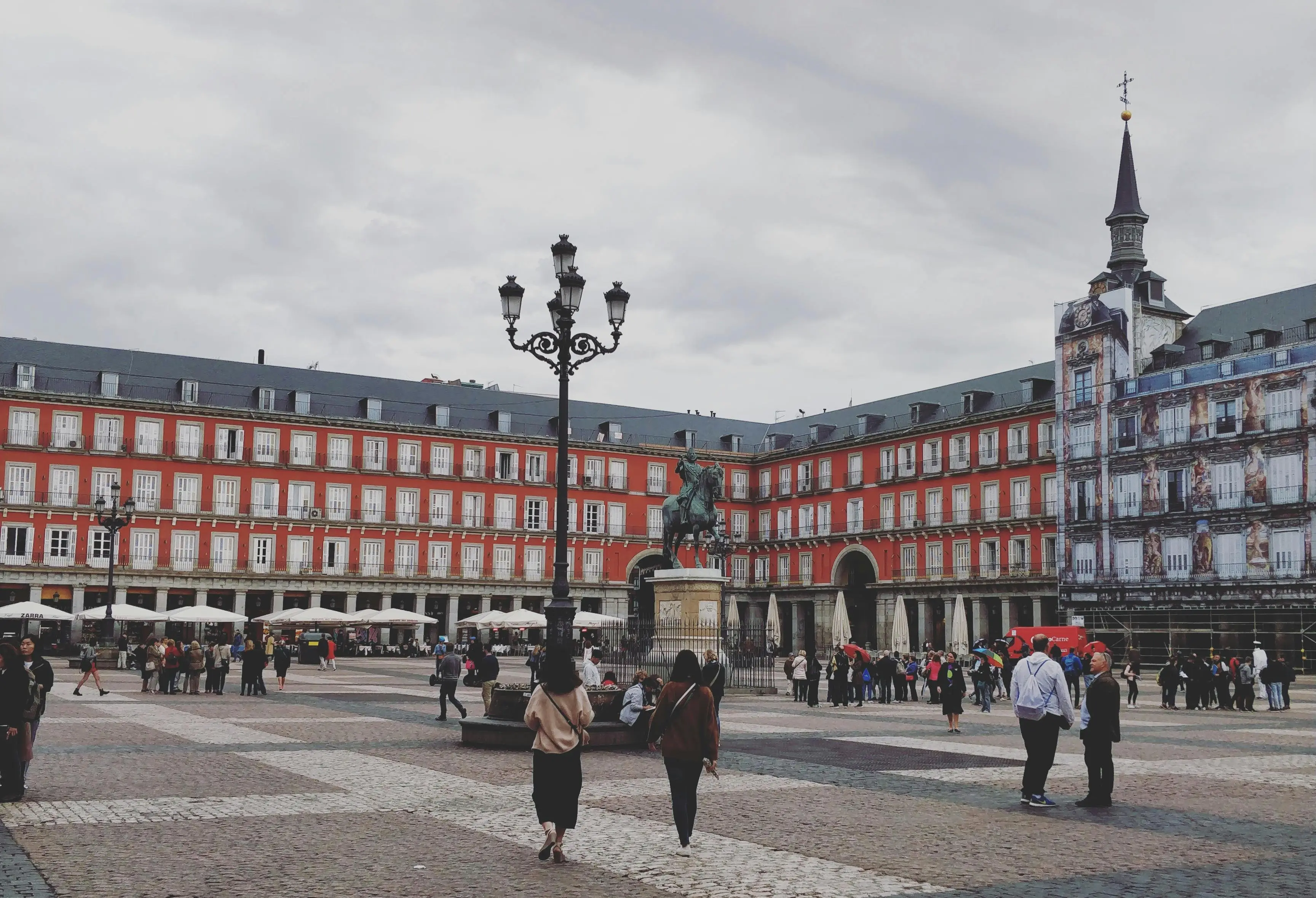
The working rhythm in Conde Duque is different from what you find in Malasaña or the areas around Gran Vía — quieter mornings, less foot traffic by noon, and a neighbourhood that actually empties out enough to feel residential rather than performatively local.
Where to Work and Eat During the Day
The café density in this part of Madrid is good but not overwhelming — you have clear first and second choices rather than the analysis paralysis you get in Chueca or the Malasaña core.
Café Comercial (Glorieta de Bilbao, 7) — one of Madrid's oldest cafés, 8-minute walk from Conde Duque; proper tables, WiFi, coffee from €1.80; busy after 11am so arrive earlier if you need quiet
La Bicicleta Café (Plaza de San Ildefonso, 9) — freelancer staple, reliable WiFi, flat whites €3.20; fills up fast between 10am and 1pm, worth arriving before 9:45
Menú del día on Calle Montserrat side streets: €11–€13 for three courses including wine — the gap between here and equivalent meals in Salamanca is €5–€8 per lunch, which compounds across a working month
Supercor Express on Calle Princesa — open until 10pm daily, covers most grocery needs within 4 minutes of the neighbourhood's southern edge
You will not struggle to find a decent place to work in Conde Duque, but you will learn within a week which two or three spots suit your hours — the neighbourhood rewards establishing a routine rather than café-hopping.
Café Moderno on Plaza de los Mostenses is one of the most popular spots for a weekday lunch among locals — the €12 menú del día fills up by 2pm, so arrive early or you will be queuing on the pavement.
Green Spaces Within Reach
Conde Duque itself has no park of meaningful size — that is the honest answer — but its position makes two of Madrid's best green spaces accessible on foot without crossing a motorway or a Metro line.
Parque del Oeste — 12-minute walk west; large, genuinely green, far less crowded than El Retiro Park on weekends; good for morning runs before 9am
Jardines de Ferraz — 7 minutes on foot, smaller but quiet on weekday mornings; useful for a working lunch outside without committing to a full park trip
Rosaleda del Retiro, Madrid's rose garden within El Retiro Park, is 25 minutes by Metro — further than Parque del Oeste but worth the journey in late spring
The absence of a neighbourhood park is a real trade-off, not a minor one — if daily outdoor access matters to your routine, factor in that 12-minute walk to Parque del Oeste before committing.
Schools, Community, and Long-Term Living in Conde Duque
Expats in Madrid who are moving to Madrid with families, or who are staying beyond the typical six-month digital nomad window, need a different checklist from the one that covers cafés and coworking — and Conde Duque performs differently on those questions.
International Schools Near Conde Duque
International schools in Madrid's central districts are fewer than in the northern suburbs — most of the major international campuses sit along the A-1 and A-6 motorway corridors — but the transport links from Conde Duque make both corridors reachable.
The American School of Madrid (Aravaca, ~20 minutes by car or 35 by public transport) — IB and US curriculum; annual fees from €18,000; waiting list applies so register early if this is your plan
The British Council School (Pozuelo de Alarcón, ~30 minutes) — one of the most established British curriculum schools in Spain; annual fees from €8,500; public transportation access via Line 10 from Plaza de España
Colegio Estilo (Moncloa district, 15-minute walk) — bilingual Spanish/English state-accredited school; lower fees; a credible choice for expat families who want local integration rather than a fully international environment
Most international school routes from Conde Duque require one Metro transfer or a 20–30 minute drive — not ideal, but manageable for families who drive or commute infrequently
If international schools are your deciding factor, Conde Duque is not the closest base — but it is not far enough away to rule it out, particularly for families who want central adult living and can absorb the school commute.
Families moving to Conde Duque with school-age children are within a 15-minute walk of the international section at Colegio Público Lope de Vega, which reduces the daily school run considerably compared to suburbs like Pozuelo.
Finding Community as an Expat in Conde Duque
Finding your footing socially in Madrid takes longer than the neighbourhood's café friendliness suggests — Spanish social life is built around existing networks, and breaking into them requires patience or a deliberate strategy.
Intercambio language exchange events at local bars — weekly meetups, no cost to attend; held at several venues near Calle del Pez and Plaza de los Comendadores; the most reliable entry point for expats in Madrid who want real local contact, not just other foreigners
Plaza de los Comendadores — the neighbourhood's social square; open-air tables, evening crowds that are genuinely local rather than tourist-facing; consistently good for the kind of low-stakes regularity that builds familiarity over weeks
Internations Madrid group — monthly events across the city, skewed toward professionals and mid-to-long stay expats; useful as a first layer of contact when you arrive, less useful after the first two months once you have established your own network
Job opportunities in Madrid's English-speaking market concentrate in tech, education (teaching English), and multinational finance — most hiring for Spain happens through LinkedIn and Infojobs, and an NIE is required before any contract is signed
Conde Duque's quieter residential character is both its strength and its friction point for community building — the neighbourhood rewards people who commit to it, but it does not do the social work for you the way a backpacker hub might.
Is Conde Duque the Right Choice for Your Madrid Stay?
Who Conde Duque Actually Works For
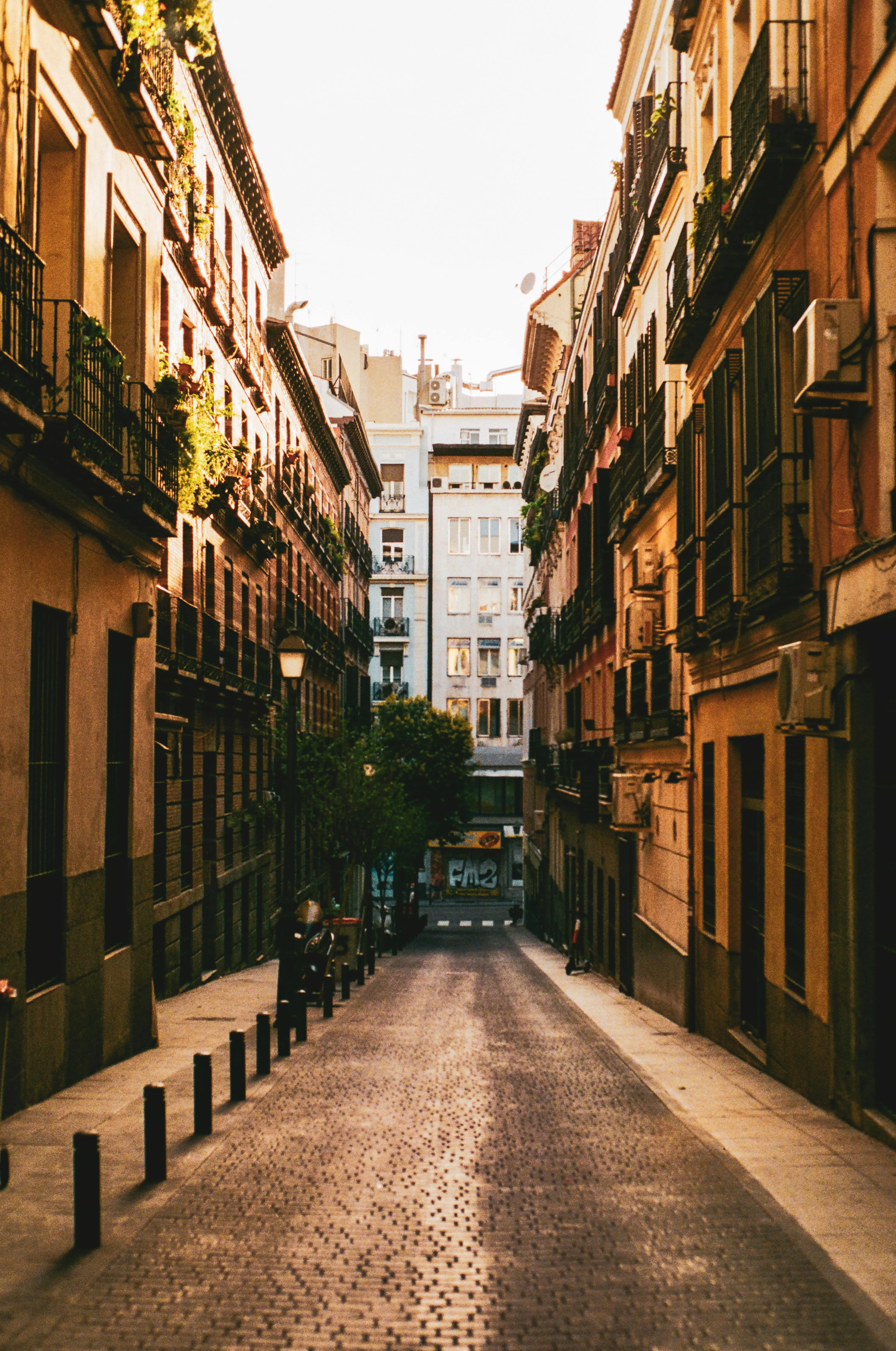
Conde Duque is built for people who want to live in Madrid, not perform the experience of being there.
Mid-to-long-term residents who need a central address without the tourist-facing theatre of Malasaña or La Latina
Remote workers who want Metro access, reliable WiFi in furnished apartments, and a neighbourhood that functions rather than spectacles
Couples or small families settling for three months or more who prioritise day-to-day comfort over social density
Expats who want Spain at a liveable pace — not Spain constantly performing itself at you
The neighbourhood's best quality is that it works quietly in the background, which is exactly what long-stay residents need and what short-stay tourists never notice.
Conde Duque offers something Malasaña no longer can — genuine quiet after midnight — which makes it a better fit for professionals with early commutes than for people chasing Madrid's nightlife.
Who Should Look Elsewhere
Conde Duque has real trade-offs, and pretending otherwise wastes your planning time.
Visitors staying three weeks or fewer who want maximum social density and walkable nightlife — Malasaña or Chueca will serve you better
Families whose daily logistics hinge on proximity to international schools — the international school cluster sits further north, making Conde Duque an awkward commute
Travellers who need the neighbourhood itself to do the work of keeping them entertained
Anyone who conflates a quiet street with a lacking one — this area reads as understated, not underprovided
If your anchor is an international school run or a packed social calendar from day one, Conde Duque will feel like the wrong gear.
Expats who choose Conde Duque over Chueca typically cite the lower foot traffic and the ability to find a two-bedroom flat under €1,600 as the deciding factors — both of which are harder to guarantee just two streets east.
Starting Your Search in Conde Duque
When the neighbourhood fits your situation, the practical case for Conde Duque is genuinely difficult to argue against.
Fully furnished apartments in Conde Duque typically include utilities and WiFi, which removes the most painful logistics from your first 90 days
The Metro is close enough to be genuinely useful rather than theoretically accessible
A central Madrid address here carries none of the premium you would pay in Salamanca or the noise you would absorb in Sol
Browse fully furnished apartments in Spain and filter by Conde Duque to see current availability with bills included
Most people who settle here stop questioning the choice within a fortnight — the neighbourhood simply gets out of the way and lets you get on with being in Madrid.
Making the Move to Spain: Your Conde Duque Relocation Guide
Conde Duque rewards the kind of expat who wants to live in Madrid rather than visit it indefinitely. The neighbourhood has enough infrastructure to make daily life straightforward, enough character to make it interesting, and enough distance from the tourist trail to let you settle into something that feels genuinely yours. That combination is rarer than it sounds in a city this popular.
The practical steps — finding an apartment, sorting utilities, registering at the local padron office — are all manageable from this neighbourhood, and the central location means you are never far from anything you need. Most people who move here intend to stay six months and end up renegotiating their lease. That is probably the most honest endorsement the area has.
If you are still weighing your options across the country, it is worth browsing fully furnished apartments in the country to compare what different cities and neighbourhoods offer before you commit. But if Conde Duque is already on your shortlist, it rarely disappoints on closer inspection.