











Budapest for Digital Nomads 2026: The White Card, Real Rents, and What a Year Costs
Budapest's White Card gives remote workers a year in the EU, with rents 36 percent below Vienna. What it costs and where it breaks down.
Budapest has been on remote workers' shortlists for years, mostly as a cheap weekend city with good coffee and better nightlife. The reason to look again in 2026 is less romantic: it is the rare European capital that issues a one year residence permit to remote workers while charging rents roughly a third below Vienna's.
That gap matters. Vienna, two and a half hours away by train, has no digital nomad permit at all. Prague has one, but a one bedroom in the centre runs about $1,118 a month against Budapest's $817. What Hungary does have is a permit with real conditions, and a few exclusions that only become obvious when you read the immigration office's own factsheet instead of an agency landing page.
This guide covers the permit mechanics, what a month actually costs, which districts work for a six month stay, and where the plan falls apart.
What the White Card actually is
The White Card is a residence permit, not a visa with extra paperwork. Hungary's National Directorate-General for Aliens Policing (NDGAP) issues it to third country nationals in one of two situations: you hold a verified employment relationship with a company registered outside Hungary and work remotely from Hungarian territory using digital technology, or you own a share in a foreign company with verified profits and manage it from Budapest.
It runs for a maximum of one year and can be extended once, for another year. That is the ceiling. There is no third renewal, and no route from the White Card into permanent residence.
Two limits define the whole programme. You cannot pursue gainful activity in Hungary, and you cannot hold a share in a Hungarian company. Do either and NDGAP withdraws the permit. The official factsheet says this twice, in different sections, which tells you how often applicants get it wrong.
The exclusions nobody puts in the headline
No family reunification. A spouse or child cannot get a residence permit on the basis of your White Card. The single exception is a child born in Hungary during the permit's validity, who can then receive a family reunification permit.
No switching purposes. During the validity of the permit, and after it expires, Hungarian law does not allow an application for a residence permit for another purpose. The White Card is not a bridge into a local job, a Hungarian company, or a student permit.
No long term status. Holders cannot be granted a national residence card, which means the two year maximum really is the maximum. If your plan involves settling in Hungary, this permit is the wrong tool, and no amount of renewals changes that.
What the paperwork requires
The income test is the part people underestimate. You need a monthly legal income of at least EUR 3,000 net, proven for at least six months before entry, and maintained for the entire stay. Bank statements for those six months or an employer certificate are accepted. At today's rate that is a little over $3,300 a month.
Beyond income, the file needs a certified employer statement covering the employer's activity, the remote work provision and its authorised duration, and your duties and position. Add proof of Hungarian accommodation (a lease, courtesy accommodation, ownership, or a reservation with payment), proof of comprehensive health insurance or funds to cover healthcare, a valid passport, onward travel capacity, and one photograph.
Where you apply depends on your passport. If you need a visa to enter Hungary, you apply at a consulate before travelling. If you come from a visa exempt country, you can apply inside Hungary through the Enter Hungary platform or in person at the NDGAP regional directorate for your address. The D visa issued after approval is single entry, valid three months, and authorises a stay of 30 days, which is your window to enter and complete the residence process. Fail to enter within three months and the approval lapses. Extensions go through Enter Hungary only, must be filed no later than 30 days before expiry, and require proof that you spent at least 90 days in Hungary within any 180 day period before applying.
The authority decides within 30 days, with a 21 day procedural period. Fees are around HUF 24,000 online and HUF 39,000 in person, roughly $73 and $119, with consular filings around EUR 110 according to visa trackers. One number circulates in guides but not on the factsheet: Enomads and Immigrant Invest both report that officers expect roughly EUR 10,000 in savings and health cover of at least EUR 30,000. Treat that as working practice rather than published rule, and budget for it anyway.
What a month costs
Nomads.com puts Budapest at $3,973 a month for a nomad lifestyle, against $1,163 for a local. The same dataset lists a one bedroom in the centre at $817, a coworking hot desk at $135 a month, dinner at $14, a coffee at $3, a half litre of beer at $4 and a three kilometre taxi ride at $5.
Those numbers add up to a city where rent is the only line item that hurts, and even that is modest by Western European standards. The tax side is less forgiving. Hungary runs a flat 15 percent personal income tax, tax residency kicks in after 183 days, and Nomads.com estimates an effective bill of $15,501 on $50,000 of income and $27,701 on $100,000 once contributions are counted. If you are staying under six months, get an accountant's view on your position before you sign a lease, not after.
Where the rent saving actually sits
The headline comparison is the useful one. On the same day, NomadList showed a centre one bedroom at $817 in Budapest, $1,118 in Prague, $1,186 in Warsaw, $1,269 in Vienna, $1,593 in Lisbon and $1,677 in Barcelona. Budapest is 36 percent below Vienna and 51 percent below Barcelona for the same category of flat.
The catch is contract length, not price level. Budapest's rental market is built around one year leases and short term tourist lets, and the middle ground is thinner than in Lisbon or Prague. That is where furnished mid term stock matters: a six month contract priced monthly beats both a twelve month lease you cannot exit and an Airbnb that reprices every week.
Which district to pick
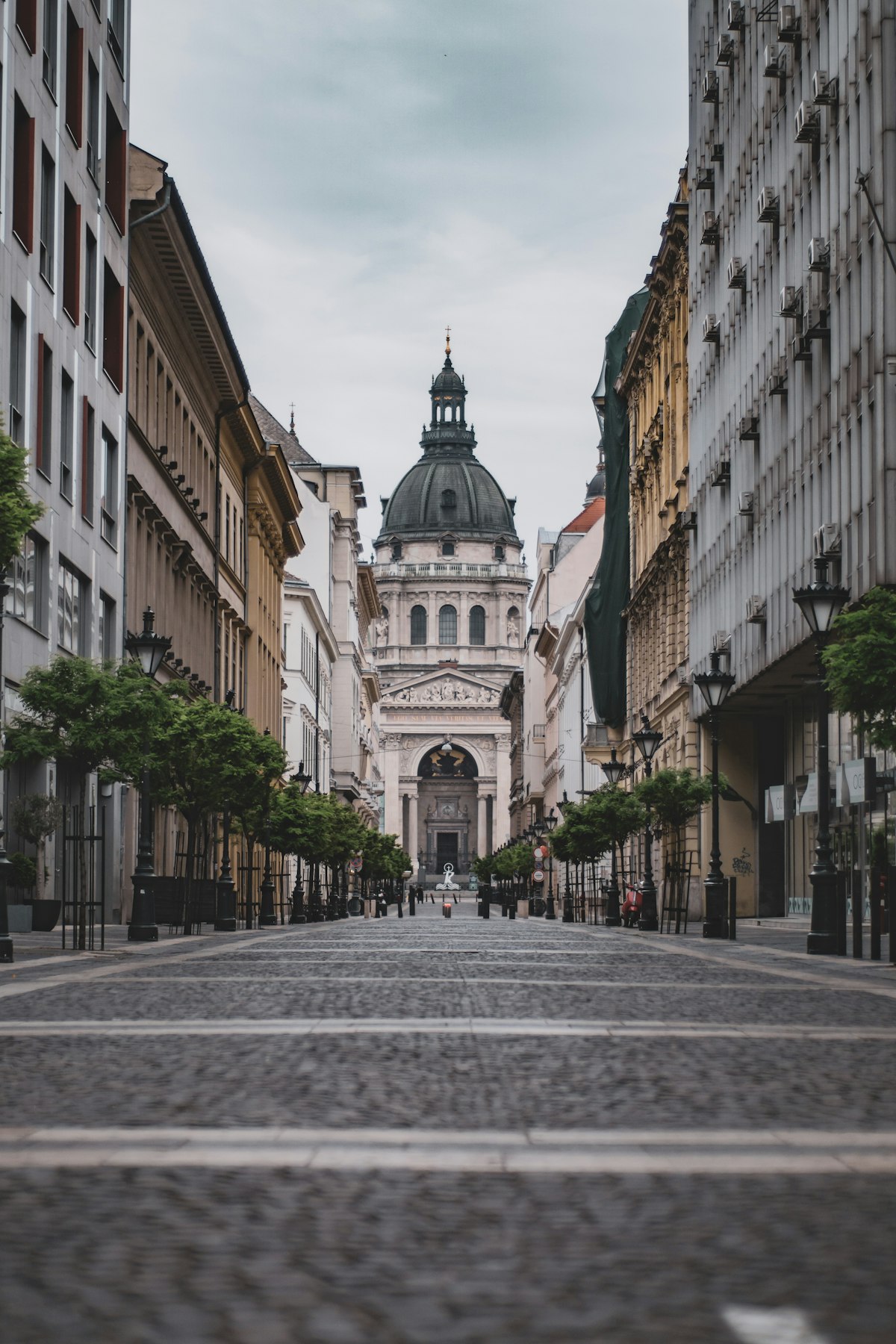
District V, Belváros, is the postcard: Parliament, St Stephen's Basilica, the Danube promenade. It is also the most expensive and the loudest.
District VI, Terézváros, runs along Andrássy Avenue with the theatres and the museums. Central, elegant, and priced accordingly.
District VII, Erzsébetváros, is the Jewish Quarter and the ruin bar belt. Great for a month if you like noise, less great if you need to be on a call at nine in the morning.
District VIII, Józsefváros, holds the Palace Quarter and the National Museum, and it is where the value sits on the Pest side. You trade a few minutes on the tram for a rent that is visibly lower.
District IX, Ferencváros, has the Great Market Hall and the National Theatre, a short walk from the river and well connected by tram.
District XI, on the Buda side, is greener and quieter, with Gellért Hill on the doorstep, but every trip into Pest costs you a river crossing.
District XIII, Angyalföld, sits next to Margaret Island and its galleries, and suits anyone who wants a park within walking distance more than a ruin bar.
Getting around, and out
Public transport is cheap enough that the maths is easy. A single ticket is HUF 500, about $1.50, a block of ten is HUF 4,500, and the monthly Budapest-pass is HUF 8,950, roughly $27, and works on MÁV trains and the suburban Volán buses as well as trams, buses and metro. A 24 hour card is HUF 2,750 and a 72 hour card is HUF 5,750. Inspectors do check, and the fine is HUF 25,000, or HUF 12,000 if you pay it immediately.
From the airport, the 100E express runs to Deák Ferenc tér every 7 to 15 minutes during the day and every 30 minutes overnight, taking 30 to 40 minutes for HUF 2,500. The cheaper route is bus 200E to Kőbánya-Kispest plus metro line 3, about 25 minutes for HUF 500. Budapest has no direct flights to North America, so long haul means connecting through London, Amsterdam or Paris.
Within the region, the Railjet to Vienna takes about 2 hours 40 minutes and runs roughly hourly, which makes a day trip or a visa run genuinely practical.
Coworking and the working day

Coworking is the weakest part of the Budapest offer, and the prices explain why people still manage. Impact Hub Budapest charges HUF 8,255 for a day pass, about $25, HUF 69,850 a month for unlimited access, about $213, and HUF 20,320 for 20 hours. Loffice runs a daily pass at HUF 9,500 and a flexible day pass at HUF 7,500, with a fixed desk package at HUF 90,000 a month, roughly $275, plus VAT. The Nomads.com median hot desk is $135.
The reviews are consistent about the gap: locals and nomads alike describe coworking infrastructure as thinner than in comparable cities, and most people end up splitting the week between one paid desk and two or three cafes. If you need a fixed meeting room and a receptionist, budget for Loffice or a serviced office rather than improvising.
Food, coffee, and the bath habit

Eating well here is not a budget exercise. Wikivoyage puts a budget lunch at around EUR 4, a mid range evening meal at EUR 8 to 14, and anything above EUR 20 per person in expensive territory. One translation note worth having: what foreigners call goulash is pörkölt, a stew, while gulyás is the soup.
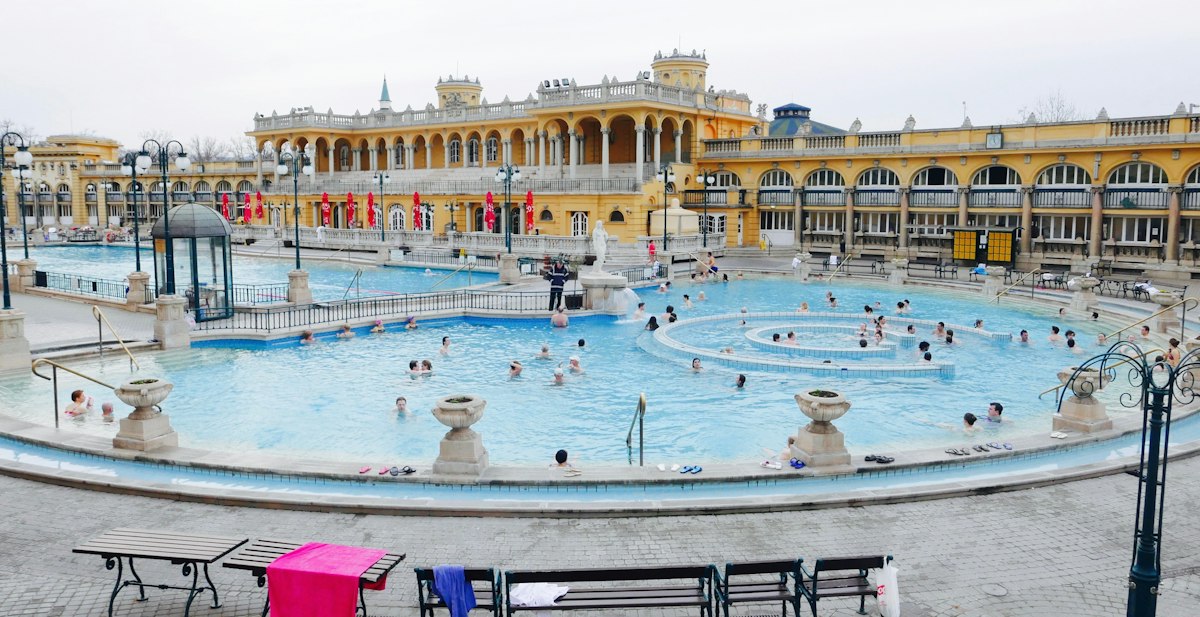
The bath habit is the part of Budapest that changes how a winter feels. Széchenyi publishes 2026 prices: a morning ticket valid for entry before 9am is HUF 10,500 on weekdays, a daily ticket with locker is HUF 13,200 Monday to Thursday, HUF 14,800 on Fridays and weekends and HUF 15,800 in peak season, with online fast track tickets at HUF 15,200 to 17,800. A full day in hot water for around $40 is the best value in the city.
The honest downside
Winter is the real cost. January averages a high of 3C and a low of -2.5C with very little sun, and the grey arrives quickly in November. Internet averages 41 Mbps, which is fine for calls but behind Prague at 66 and Warsaw at 76.
Nomads.com rates the city 3.85 out of 5 overall, ranked 60th, with quality of life scored good and community scored only okay. The recurring complaints in its reviews are a cold service culture, heavy smoking, tourist crowds in District VII and a thin nomad scene. Read those as a profile rather than a warning: Budapest is a working city that happens to be cheap, not a nomad theme park. If you want a dense expat bubble, look at Lisbon. If you want to live somewhere ordinary Hungarians also live, this is the better trade.
Who it suits
The White Card fits a specific person: a solo remote worker with a foreign employer or foreign clients, income above EUR 3,000 net a month, a stay of one or two years, and no plan to work locally or bring dependants. For that person, Budapest in 2026 is the cheapest credible EU base with a permit attached.
It does not fit families, anyone angling for Hungarian employment, or anyone who needs a path to permanent residence. Those cases belong with Portugal, Spain or Czechia, and the numbers look different.
For the accommodation side, Rent Remote's furnished apartment listings cover Budapest and the wider European mid term market, with monthly pricing rather than nightly rates. If you are still weighing cities, the Lisbon comparison page is a useful benchmark. The Seoul guide covers the opposite case, a six month permit in a far more expensive city. Our guides to Prague, Athens and Cyprus cover the neighbouring options in the same depth.