

















Sharing a Monthly Apartment: Plan for Two Different Routines
Share a monthly apartment comfortably with practical checks for calls, sleep, storage, shared space and time apart.
One of you finishes work at five. The other has calls until nine. You would like to cook dinner; they need the kitchen table for another meeting.
Sharing an apartment for a month can be a lovely way to experience somewhere new. It also brings ordinary domestic decisions into a space neither of you knows yet.
Whether you are travelling with a partner, a friend or a colleague, choosing the right home starts with understanding how you will both use it. A second chair is useful. Enough room for two different days is better.
Compare your schedules before comparing apartments
Start with a typical working week, including the hours you expect to keep in the destination.
Write down when each person usually wakes, works, takes calls and goes to bed. Add the things that make a day feel comfortable: cooking breakfast, exercising, reading quietly or having friends over where permitted.
Then look for the overlaps that could affect your choice of home.
If you both speak in meetings at the same time, you may need separate rooms with doors. If one person works late, consider whether they can reach the bathroom or make a drink without walking through the other's sleeping area.
This is not about predicting every hour. It is about spotting the few recurring situations that the apartment needs to handle.
Read the layout as carefully as the photographs
An attractive living room does not tell you whether two people can comfortably spend a working day there.
Ask for a floor plan if one is available. Otherwise, use the photographs to identify what remains unclear and request specific answers.
Consider:
- Whether the bedroom has a door that closes.
- Whether reaching the bathroom requires crossing another person's working area.
- Whether the dining table is also the only practical place for a laptop.
- Whether there is somewhere to sit comfortably while the other person works.
- Whether the sleeping arrangements suit both occupants.
A separate bedroom may create useful flexibility, but it does not establish sound insulation. Ask about what is known rather than assuming a closed door will keep a meeting private.
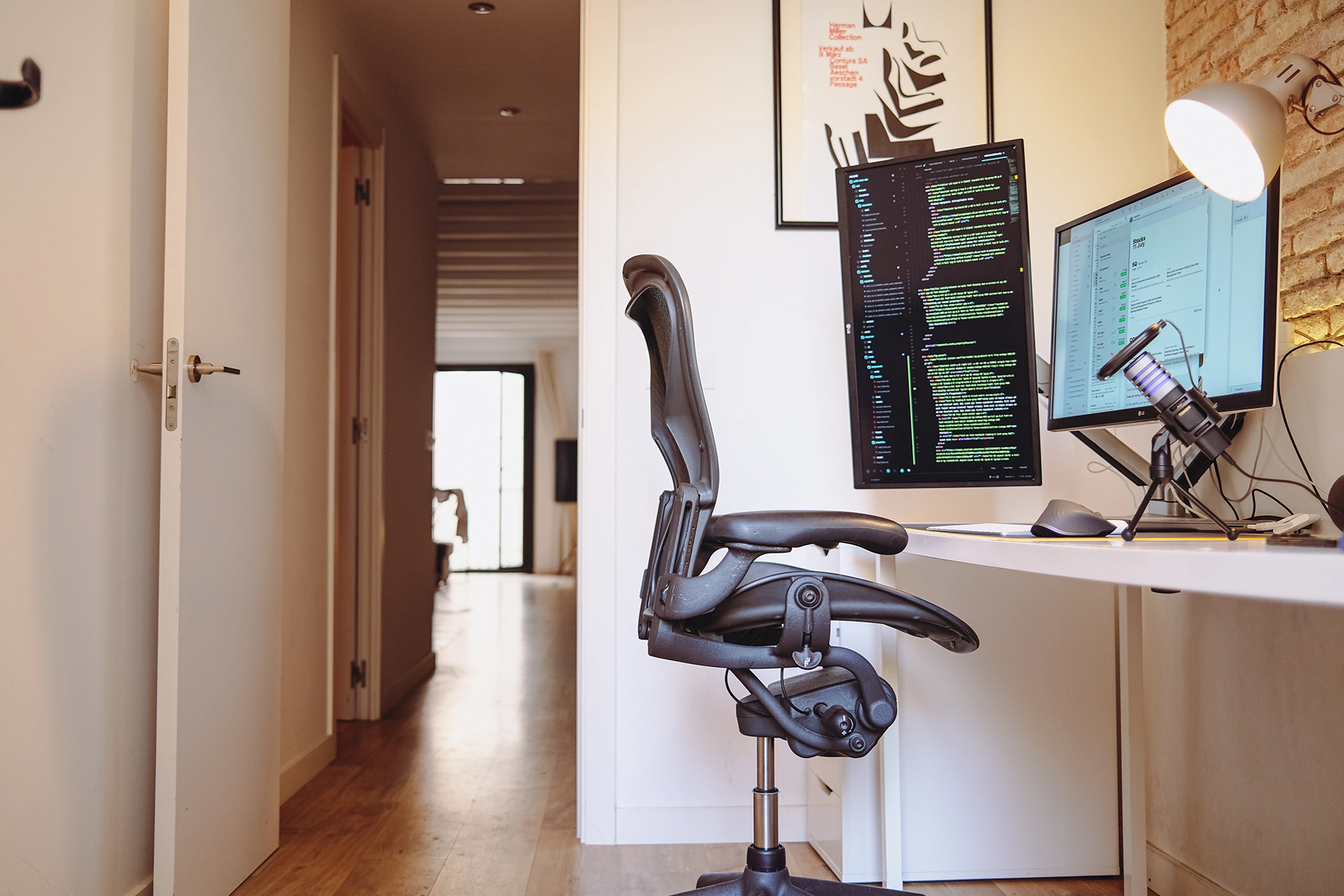
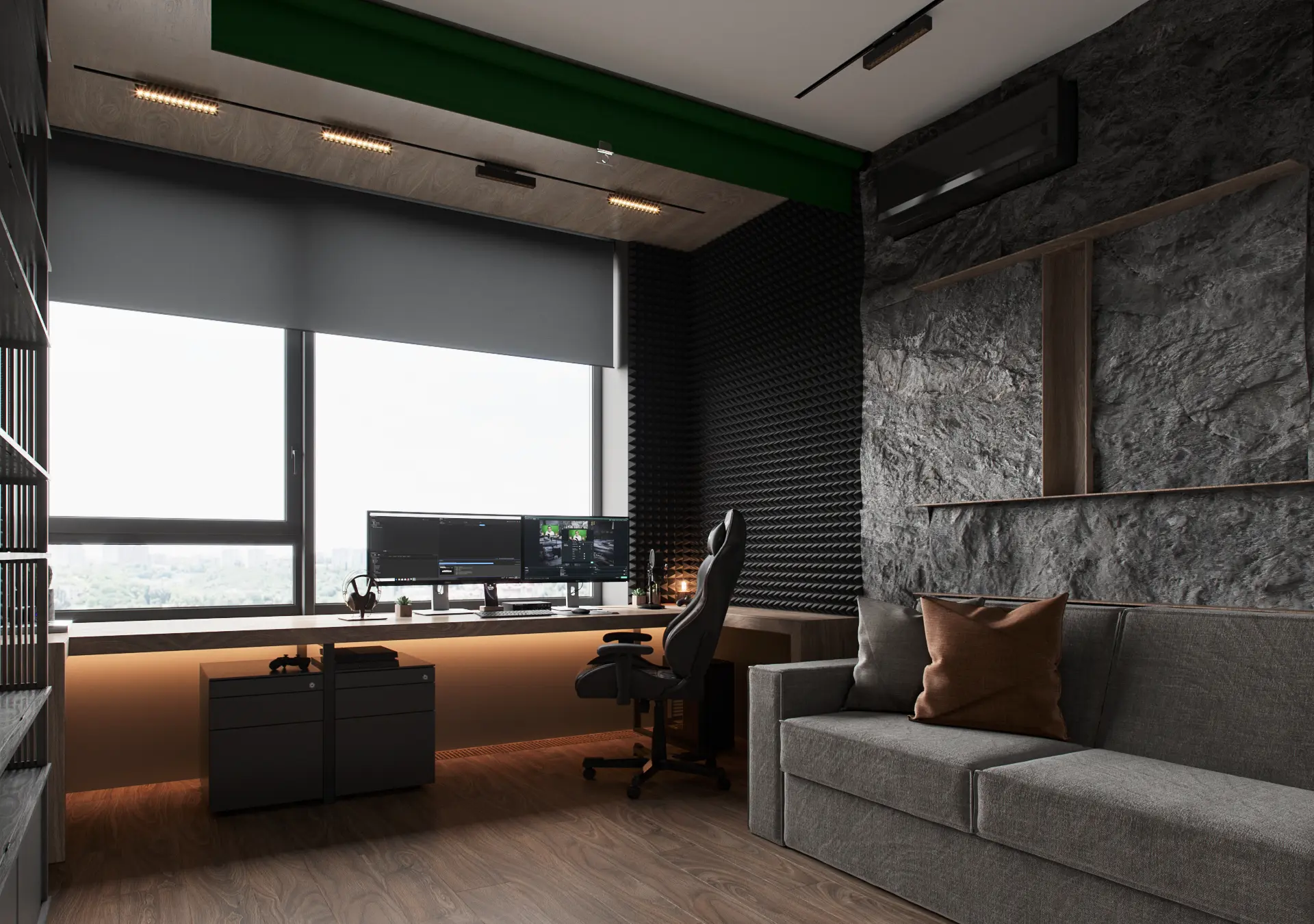
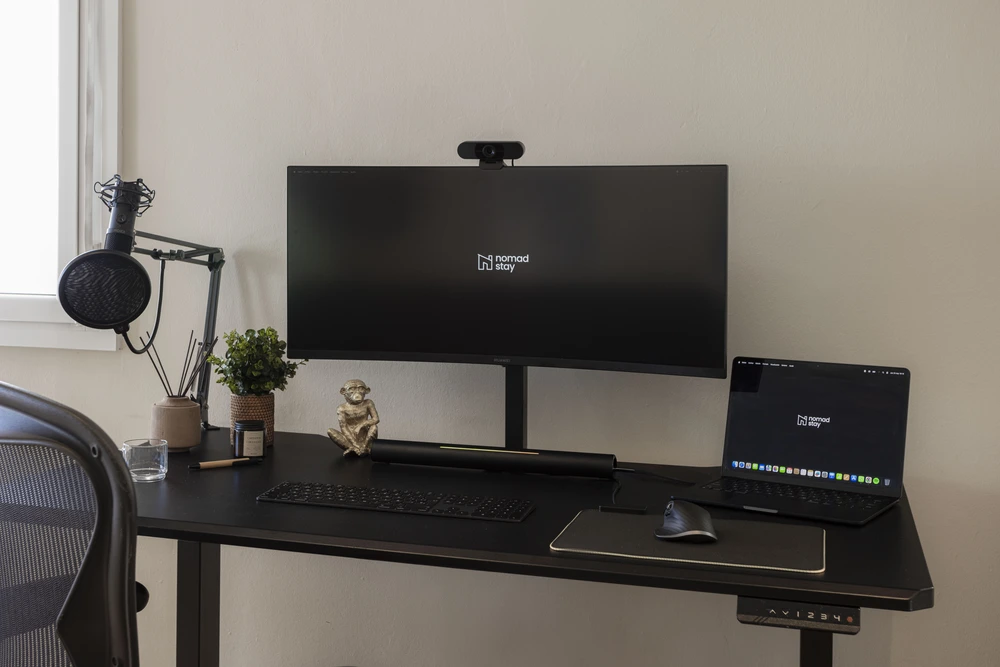
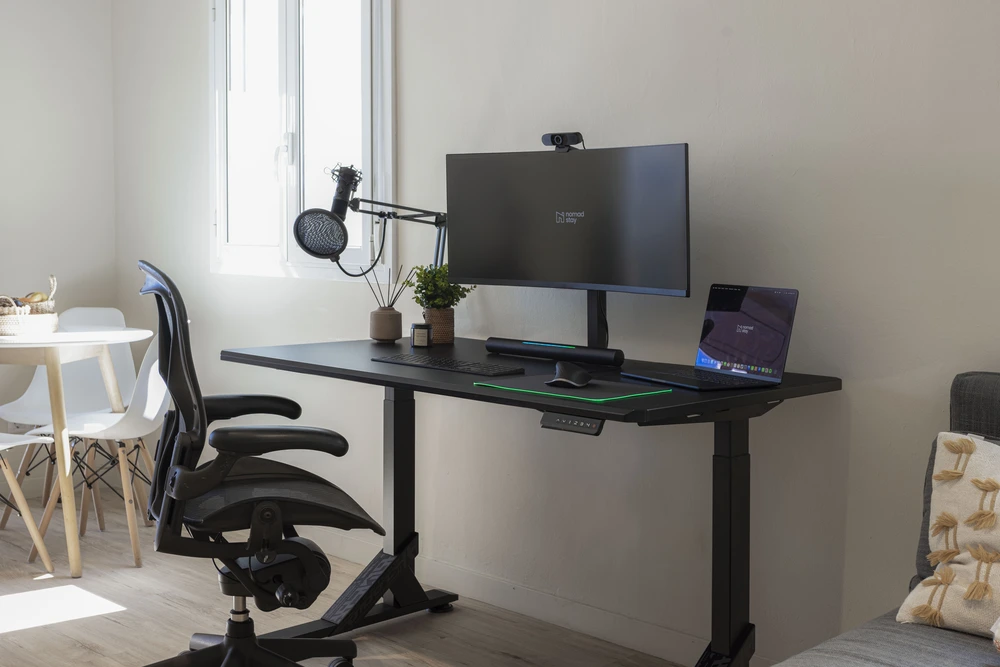
If both of you require dedicated work setups, confirm the equipment and its location for the individual property. A listing photograph showing one desk does not establish that a second setup is available.
Keep everyday spaces available for everyday life
A home can feel smaller when every surface becomes a workstation.
Before booking, think about where meals, work equipment and personal belongings would go. Can you eat together without dismantling someone's setup? Is there somewhere to leave a laptop safely at the end of the day? Can the person who finishes first relax without sitting beside an ongoing call?
You may decide that moving a laptop before dinner is perfectly manageable. The useful part is agreeing on that arrangement before it becomes a daily negotiation.
For a month-long stay, storage deserves attention too. Ask about wardrobe space, drawers and somewhere suitable for luggage. Two open suitcases can occupy much of the floor in an otherwise comfortable room.
Look for a layout that supports the way you actually live, rather than one that works only while everything remains staged for a photograph.
Agree on a few shared-space habits
You do not need a household rulebook. A few clear agreements can make the first week easier.
Discuss how you will handle overlapping calls, quiet periods, cleaning and meals. Decide how to signal that a meeting needs privacy and what happens when both people need the same space.
For example, you might agree that the dining table is clear for dinner at seven, or that early calls happen outside the bedroom while the other person sleeps.
Keep the plan realistic. An arrangement that requires one person to leave the apartment every afternoon may be inconvenient, especially if there is no confirmed alternative nearby.
Revisit these decisions after a few days. Living in the space will reveal things that were difficult to judge before arrival.
Make room for separate time
Travelling together does not mean spending every available hour together.
Talk about what each person would enjoy doing independently. One might want a regular class; the other might prefer an evening walk or time to read at home.
Include staying in as a valid option. Separate time should not always depend on someone buying a coffee or finding somewhere else to sit.
When assessing an apartment, ask whether one person can enjoy a quiet evening while the other does something different. A comfortable chair, a separate room or a practical division between living and sleeping areas may matter more to you than a larger television.
The aim is to make togetherness a choice throughout the stay.
Clarify occupancy, access and costs
Confirm that the booking is arranged for the intended number of occupants and that both people meet any applicable registration requirements for the property.
Ask how access works. Will you have separate keys or individual access credentials? What is the procedure if you arrive at different times? Do not assume that a photographed lock or an earlier guest's review describes the current arrangement.
Read the individual property's visitor rules if you expect to invite anyone over.
Agree between yourselves how you will divide shared expenses. Keep accommodation charges, refundable deposits, groceries and optional activities distinguishable. If only one person makes the booking, both should still understand the relevant terms.
Also discuss what happens if one person's plans change. An early departure does not automatically change the price or release either traveller from an agreement.
Run the busiest-day test
Before choosing, imagine the most demanding ordinary day of the stay.
You both have work. One meeting runs late. Someone needs lunch, a delivery arrives and the other person wants a quiet break.
Where does each activity happen? Which space is shared? What would require a compromise you are comfortable making?
If the answer depends on a feature you have not confirmed, ask about it before booking.
When exploring monthly stays with RentRemote, evaluate the individual home's layout and conditions against both people's routines. The right apartment should give you somewhere to spend time together and enough flexibility to enjoy the month in your own ways.