

Korea Opens Its Door to Remote Workers, and Seoul Is the Obvious Base
Korea launched its F-1-D workation visa nationwide in July 2026. The income bar, what a month in Seoul costs, where to live and how to work there.
For three years, South Korea treated remote workers as an experiment. In July 2026, it made them policy.
The country launched its digital nomad visa, formally the F-1-D and commonly called the workation visa, nationwide with looser eligibility rules, the Korea Herald reported. The change gives foreign professionals a legal way to live in Seoul for up to two years while working for employers abroad.
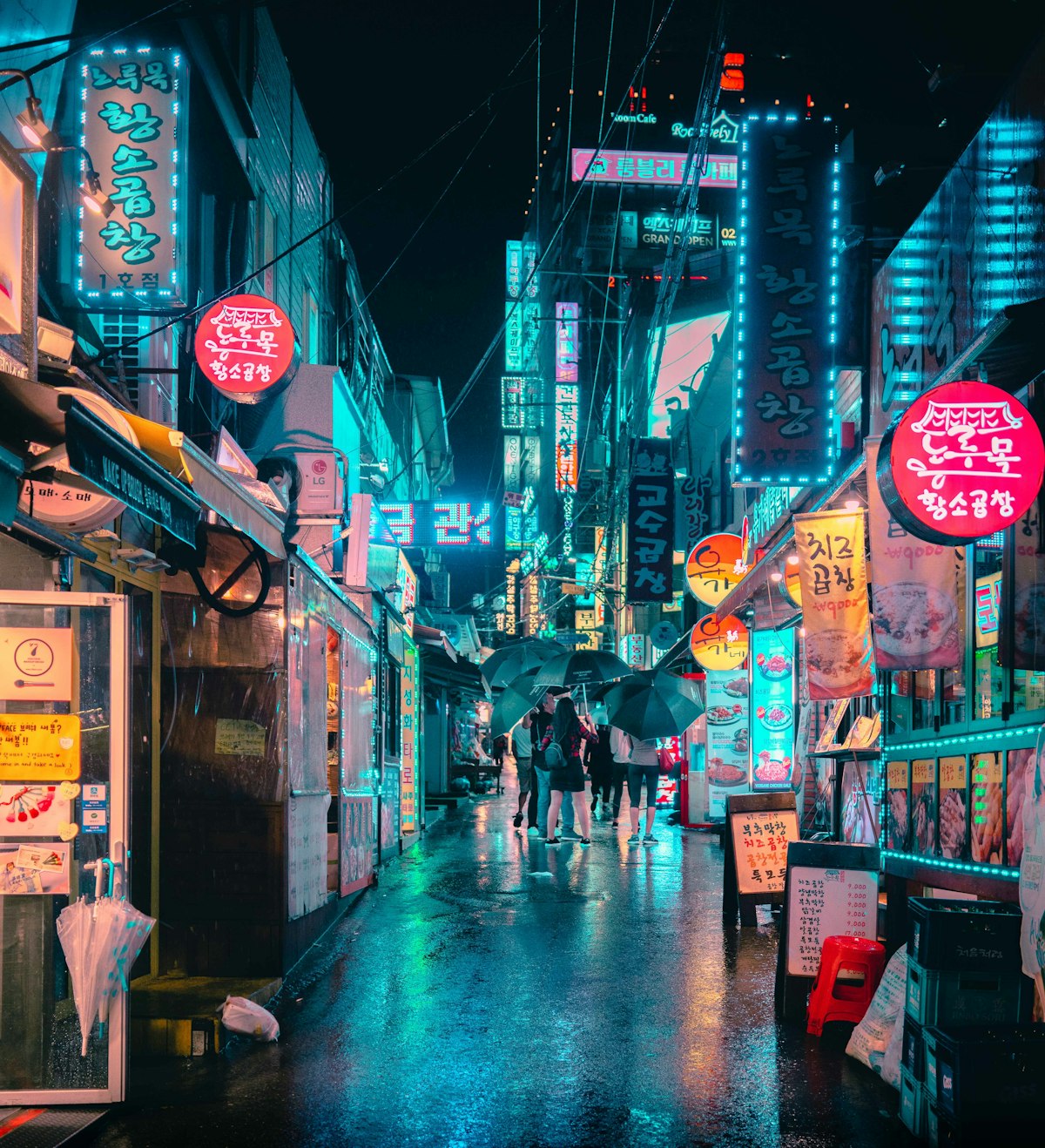
Korea had been an outlier in the region. Thailand reworked its visa-free stays, Japan courted remote workers through Fukuoka, and Taiwan ran one of Asia's smoother programs. Korea, by contrast, ran a pilot whose income requirement drew more attention than applicants. That is starting to change, and the island province of Jeju is now moving to lower the bar further on its own workation track.
What follows covers the visa's requirements, what a month in Seoul costs, where remote workers live and work, and what the city does well and less well.
The F-1-D visa
The F-1-D allows a foreign remote employee or business owner to live in Korea for one year, renewable once, for a maximum of two years. Family members can accompany the holder on their own visas. Applications go through a Korean embassy, consulate or visa application center, and processing takes 10 to 15 business days.
The main hurdle is income. Applicants must show annual earnings of at least 88,102,000 won, roughly $65,000 to $68,000 at current exchange rates. The threshold is pegged at about twice Korea's gross national income per capita, so it moves with the calculation year, which is why some coverage has cited a figure closer to 85 million won. The income must belong to the primary applicant alone. A spouse's salary does not count.
Applicants must also be at least 18, have a year or more of experience in their field, hold a clean criminal record and carry private health insurance covering hospital treatment and repatriation in Korea, with at least 100 million won, or about $76,000, in coverage.
There is an important exclusion. Freelancers without a company affiliation do not qualify. Applicants must be employed by a foreign company or own a business registered outside Korea. The visa fee is about $45 for American citizens and varies by nationality. European applicants report paying about €225 once visa center service fees are included.
The tax treatment is relatively favorable. Korea treats people as tax residents after 183 days in a year, with progressive rates from 6 to 45 percent. F-1-D holders who remain nonresidents for tax purposes are generally not taxed in Korea on income earned abroad. Americans are also covered by the U.S.-Korea tax treaty. Guidance is still developing, and a consultation with a Korean tax adviser before filing is worth the cost.
Korea came late to what we have called the two-speed visa world, but it arrives with a favorable exchange rate and a transit system that few cities can match.
What changed this year, and what may change next
Three developments matter.
The first is the nationwide launch. Through 2024 and 2025, the F-1-D existed largely on paper, and the number of approvals was low enough that Korean media treated the visa as a curiosity. The July 2026 launch came with eased eligibility rules, according to the Korea Herald, and subsequent coverage described longer stays and simpler procedures.

The second is Jeju. In May 2026, the Korea JoongAng Daily reported that the province is moving to halve the salary requirement and triple the permitted stay for participants in its workation program, part of an effort to attract foreign talent. The Korea Herald reported the same plan. If it takes effect as described, a Jeju permit would be among the more accessible remote-work visas in developed Asia. Anyone planning around it should wait for an official announcement.
The third is lighter entry paperwork for short visits. Passport holders from the United States, Britain, Canada, Australia and most of Europe can stay up to 90 days without a visa, needing only a K-ETA, Korea's electronic travel authorization. It costs 10,000 won, about $7 to $8, on the official site, k-eta.go.kr, and is typically processed within 72 hours. Unofficial lookalike sites charge several times as much. Many remote workers use the 90-day window to try the city before applying for the F-1-D from home.
What a month costs
NomadList puts the monthly cost of living in Seoul for a remote worker at about $3,581, including a central one-bedroom apartment at about $883 and coworking at about $74. That places Seoul above Kuala Lumpur, roughly level with mid-tier Southern European cities and well below London. The exchange rate helps: a dollar bought about 1,339 won in October 2026.
Rent is the largest variable. A serviced one-bedroom in Mapo or Yongsan typically costs $700 to $1,000 a month, while Gangnam and Seocho run above $1,300. Many newcomers overlook officetels, compact furnished studios in mixed office and residential towers that rent for less and come with internet installed.
A leaner budget is possible. Rent of $700 to $900, food at $350 to $500, transit at $40 to $60, a workspace at $80 to $120 and $200 to $300 in other spending adds up to roughly $1,400 to $1,900 a month. Sharing an apartment or living farther out can bring that below $1,200.

Food is cheaper than many visitors expect. Wikivoyage notes that a full meal with side dishes can cost 5,000 won or less in department store food halls. Casual restaurants serve gimbap and stews for 7,000 to 10,000 won, and convenience store meals run 4,000 to 8,000 won. Coffee is the exception: specialty cafes charge 5,000 to 7,000 won a cup.
Compared with Medellín or Buenos Aires, Seoul is expensive. Compared with Barcelona, it is reasonable, and central rents for comparable quality come in below Lisbon's. What the extra cost buys is infrastructure that works around the clock and a level of personal safety, rated 4.25 out of 5 by NomadList, that lets people leave a laptop on a cafe table while they order.
Where to work
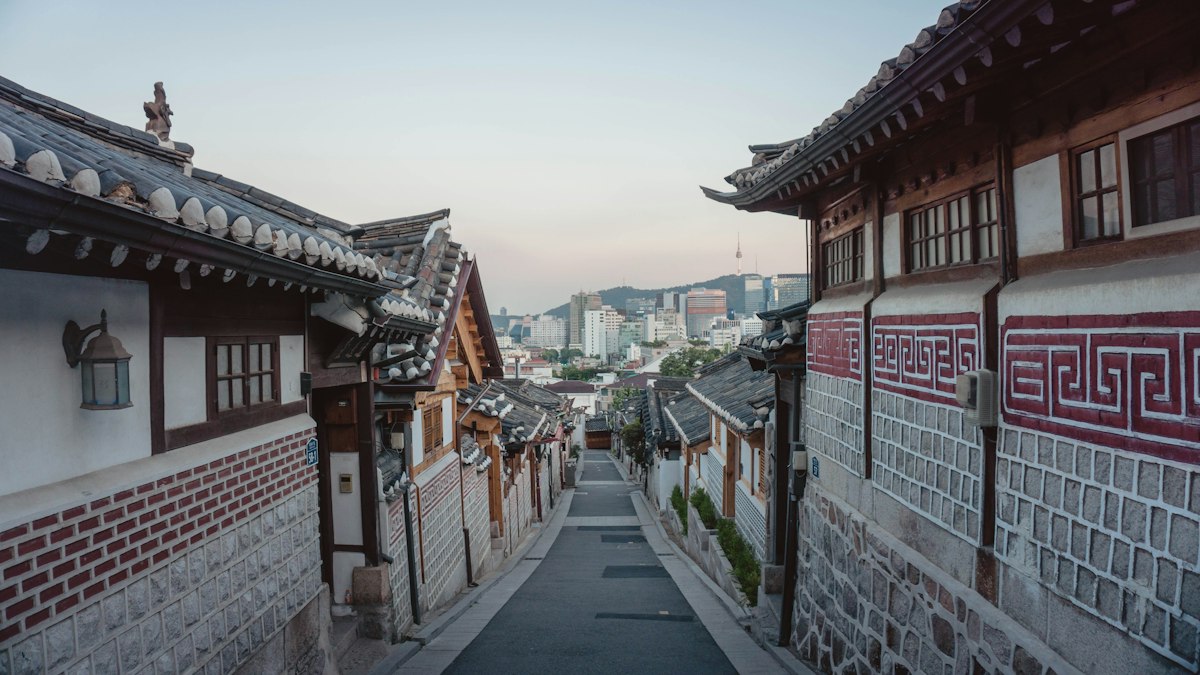
Korea's internet speeds are among the fastest anywhere. The Speedtest Global Index ranks Korean fixed broadband fifth in the world, with a median of 378 megabits per second, and mobile at 318. Home connections commonly reach several hundred megabits, and cafe Wi-Fi is generally reliable. The main exception is the traditional hanok houses of Bukchon, where thick walls rather than the network are the problem.
Cafes. Seoul's cafe culture is among the strongest in Asia, and many cafes are designed for long stays. The Laptop Friendly Cafes directory lists vetted options across the city, including Alver Coffee in Gangnam, Anthracite Coffee in Hapjeong, Fritz Coffee Wonseo, Namusairo Coffee, Mouse Rabbit Coffee and Center Coffee at Seoul Forest. The usual etiquette is to order something every couple of hours. Some independent cafes offer Wi-Fi but switch off their power outlets.
Coworking. Seoul Startup Hub in Mapo is a city-backed center with modest rates and incubation programs. Private operators such as FastFive, Heyground and WeWork charge about 200,000 to 400,000 won a month, depending on location and desk type. Several run quiet floors where calls are not allowed, which matters for anyone on video meetings, so a day pass before committing is sensible.
A fallback. PC bangs, Korea's internet gaming cafes, are on nearly every block and charge 800 to 2,000 won an hour for fast, wired machines. They are poorly suited to calls but useful in an emergency.
Where to live
Hongdae and Sinchon, in Mapo. The university district is the center of the city's youth culture, with cheap food, live music and late nights. Rents are among the lowest near the center, with studios from about $600, and Gangnam is 30 to 40 minutes away on Line 2. It suits people who want nightlife nearby.
Jongno and Gwanghwamun. The historic core has the royal palaces, the hanok lanes of Bukchon, the craft shops of Insadong and the quickest airport access, via the AREX train from Seoul Station. It is quieter at night. Studios cost $650 to $900. It is a good choice for a first few months.
Itaewon and Yongsan. Seoul's most international district has English menus, Western food and laptop-friendly cafes. Some residents value the social scene, and others find it insular. One-bedrooms cost $800 to $1,100. It suits people who want English-language services from the start.
Gangnam and Seongsu. South of the Han River is the city's corporate and startup center. Seongsu, a former shoe-manufacturing district, is now known for coffee roasters in converted warehouses and pop-up shops. Rents run $900 to $1,400. It suits founders and employees who want to be close to investors and offices.
If Seoul is out of budget, Busan is an alternative. NomadList puts its baseline monthly cost at about $3,094, with internet around 75 megabits per second, and it is two and a half hours from Seoul by KTX high-speed train.
Getting around
A car is unnecessary in Seoul. The subway is one of the largest in the world, with trains every two to four minutes on main lines and English signage throughout. The base fare has been 1,550 won for up to 10 kilometers since mid-2025. A T-money card, sold at convenience stores for 2,500 to 4,000 won, works on the subway, buses and taxis and gives free transfers between bus and subway within 30 minutes.
Regular commuters should look at the city's Climate Card, which offers unlimited subway and bus rides for a fixed monthly price. The city has adjusted the program several times in 2026, including a unified pass launched on Sept. 1, and a seven-day option is available. Anyone riding daily will usually recover the cost within two weeks.
Taxis start at 4,800 won, and most trips across the central city cost under 15,000. KakaoTaxi is the standard app, and Uber operates as Uber Taxi. All taxis accept cards and T-money.
From Incheon International Airport, the AREX express reaches Seoul Station in about 43 minutes for 9,500 won. The all-stop train takes about an hour and costs 4,750 won. Limousine buses run to neighborhood stops for 9,000 to 15,000 won. After the last train, around 11:30 p.m., a taxi into the city costs 30,000 to 70,000 won.
The subway stops running between roughly 1 a.m. and 2 a.m. Night buses cover the main routes, and late-night taxis cover the rest.
What works, and what does not
Seoul's strengths are clear: a high level of personal safety, transit that covers a metropolitan area of some 25 million people, food at every price point, a cafe culture that suits remote work and internet fast enough that video calls rarely lag. It now also has a legal path for long stays.
The drawbacks are real. English is limited outside Itaewon; NomadList scores it at 2.14 out of 5, and many residents find the Papago app more reliable than Google Translate for Korean. The rental market favors 12-month leases and Korean speakers, which is where furnished mid-term rentals earn their premium. Air quality can be poor during spring dust episodes. And the F-1-D income requirement excludes many applicants, which is the policy's intent, and is why Jeju's lower threshold is worth watching.
Who should go
Seoul makes sense for remote workers who earn above roughly $65,000 a year, are employed by or own a foreign company, and want a large, efficient city with strong infrastructure. It is particularly suited to people whose colleagues or clients work in Asian time zones, founders who want access to Seoul's startup community and anyone combining Korea with stays in Japan, Taiwan or Southeast Asia.
It is a poor fit for freelancers without a company, people looking for the cheapest possible month and those who want a slower, beach-town pace.
RentRemote does not yet list apartments in Seoul, but a one-year F-1-D stay is the kind of stay furnished mid-term rentals are built for. Browse furnished apartments in the cities we cover, from Barcelona to Mexico City. For more on how the region is changing its rules, see our report on Thailand's 60-day visa rethink.