
Daniel
Productivity & Remote Living Analyst ·
Lisbon earns its reputation — 300 sunny days a year, affordable food, a walkable city centre, and a pace of life that stops feeling like a compromise after about two weeks. But moving to Lisbon in 2026 is not the same calculation it was in 2019. Housing has become genuinely competitive, bureaucracy will test your patience in ways that feel almost theatrical, and the city's popularity means you are arriving into a market shaped by years of foreign demand. None of that makes it the wrong choice — it just means going in clear-eyed.

This guide covers:
What relocating to Lisbon actually costs, month by month
The visa routes available for remote workers and passive-income earners
Which neighbourhoods suit different working styles and budgets
How to open a bank account and register with tax authorities
What the health insurance landscape looks like for new arrivals
The honest trade-offs — what the city delivers and where it falls short
The Good Stuff: Why People Keep Choosing Lisbon Over Other European Cities
Lisbon is a great city in ways that are hard to argue with — and a few that are worth interrogating before you commit.
Great Weather and Quality of Life: What 300 Sunny Days Actually Means
The great weather is real, but it comes with a footnote that most relocation guides skip.
About 300 sunny days a year — comparable to Lisbon's Atlantic position rather than true Mediterranean heat, so summers are warm without being punishing
Winters are mild by Northern European standards — rarely below 8°C — but many Lisbon apartments lack central heating and have poor insulation, which makes January in a badly-converted flat genuinely uncomfortable
The great quality of life comes partly from the pace: the city is not trying to perform busyness the way London or San Francisco does
Ranked consistently among the safest cities in Europe — late nights in Bairro Alto or LX Factory do not carry the same calculation they would in a bigger city
Good weather and safety are infrastructure, not perks — they shape every day, not just weekends.
Great Food and Affordable Food: The Daily Budget Reality
Affordable food is one of the few things in Lisbon that has not been fully eroded by the last five years of price pressure.
A lunch menu at a neighbourhood tasca — two courses, wine, coffee — runs €10–€14 in areas like Taberna da Rua das Flores (Chiado) or the side streets around Zé da Mouraria; expect to pay more if you are eating near tourist corridors
Supermarket costs are reasonable — a week's groceries for one person at Pingo Doce typically runs €40–€60
Costs excluding rent sit around €744 per month for a single person on a careful budget; a couple living comfortably should plan for €2,300–€3,400 all-in including housing
The city is cheaper than Paris, Amsterdam, or Zurich — but not by the margin it was three years ago, and not if you are renting central Lisbon at current rates
The food budget holds up; it is the housing line that resets the overall calculation.

Incredible People, Expat Groups, and New Friends
Portuguese culture rewards patience — locals are warm but not immediately open, and the distinction matters if you are planning to stay more than a few months.
Many expats find their initial social circle through Facebook groups like InterNations Lisbon or digital nomad meetups at Second Home Lisboa — these run weekly and are worth attending in month one
Basic Portuguese goes further than you expect — even a few phrases shifts how locals respond to you in shops, offices, and with neighbours
Being 10–15 minutes late to social gatherings is a cultural norm, not rudeness; adjust your expectations from week one
The expat community is large enough that you will never struggle to find English-speaking company — which is either reassuring or a reason to push yourself harder on the language, depending on your goals
Incredible people are here — building real friendships with Portuguese locals just takes longer than it does with other expats, and that is honest rather than discouraging.
Lisbon also works as a base for travel inspiration well beyond Portugal — TAP Air Portugal flies direct from Humberto Delgado Airport to over 90 destinations, and budget carriers add Seville, Morocco, and the Azores for under €50 return.
Moving to Portugal: Visa Options for Remote Workers in 2026
The visa landscape for moving to Portugal has shifted significantly since 2022, and what worked for someone who visited Lisbon three years ago may not reflect the current rules. There are four realistic routes for most English-speaking arrivals.
The D8 Digital Nomad Visa: Moving to Lisbon as a Remote Worker
The D8 is the cleanest route if your income comes from outside Portugal — but the income threshold is higher than many people expect when they first look it up.
Requires proof of average monthly income of at least €3,680 — four times the Portuguese minimum wage of €920 for 2026
Income must come from employment or freelance work with clients or employers based outside Portugal
Apply through a Portuguese consulate in your home country — allow 8–16 weeks and have all documents notarised before submission
Once in Portugal, you apply for a residence permit through AIMA (formerly SEF), which is a separate process and involves its own queue times
The D8 is the right visa for most remote workers, but the €3,680 threshold eliminates a larger share of applicants than the marketing around it suggests.
The D7 Visa: For Passive Income and Investment Income
The D7 is primarily aimed at retirees or anyone living on investment income, rental income, or pensions — it is not designed for active freelancers.
Minimum income benchmark is linked to the Portuguese minimum wage: €920/month for the main applicant in 2026, with lower thresholds for dependants
Must demonstrate stable, recurring income from outside Portugal — dividends, rental income, and pension payments all qualify; active freelance invoices generally do not
A tourist visa does not count as a D7 starting point — you must apply before arrival or return to your home country to apply properly
The visa process typically takes 60–90 days at the Portuguese consulate; hiring an immigration lawyer or local lawyer cuts the error rate significantly on the first application
If your income is passive, the D7 is a straightforward route — the income threshold is accessible and the path to permanent residency after five years is well-established.

Residence Permit, Dual Citizenship, and Becoming a Portuguese Citizen
The longer arc matters if you are thinking beyond the first few years — and Portugal's citizenship timeline is shorter than most other European countries.
A residency permit (temporary) converts to permanent residency after five years of legal residence — you need to have spent at least 6 months per year in-country to qualify
Dual citizenship is available after five years of legal residence — Portugal allows it, and your home country's rules govern whether you can hold both (US citizens can)
Becoming a Portuguese citizen gives you full EU freedom of movement across other European countries — which is the long-game reason many US citizens pursue it
Document A (the NIF — Número de Identificação Fiscal) is the first thing you need after arrival; you cannot open a bank account, sign a lease, or engage with any Portuguese institution without it — get it at a Finanças office or through a local lawyer within your first week
The D8 Digital Nomad Visa does not legally require you to learn Portuguese, but renewal applications go smoother when you can handle your own Finanças appointment without a translator — a basic A2 level takes about three months at CIAL Lisboa.
Five years feels long when you are planning a one-year stay — but many people who visited Lisbon intending to spend six months end up staying for a few years and reassessing.
Moving to Lisbon: Neighbourhoods, Housing Costs, and What to Actually Expect
The housing market in Lisbon is the part of the relocation picture that most guides underplay. Central one-bedroom apartments typically cost €1,200–€2,000 per month, median property prices are around €5,198 per square metre, and the rental supply is genuinely low — many Portuguese prefer to buy, which means fewer rentals competing for the same volume of demand from foreigners.
Neighbourhood | Monthly Rent (1-bed) | Vibe | Best For | Key Advantage |
|---|---|---|---|---|
Príncipe Real | €1,600–€2,200 | Quiet, affluent, design-conscious | Focused work, couples | Walking distance to everything, without the tourist noise |
Mouraria / Intendente | €1,000–€1,400 | Authentic, mixed, louder | Budget-conscious long-stay | Lower rents; central Lisbon without central Lisbon prices |
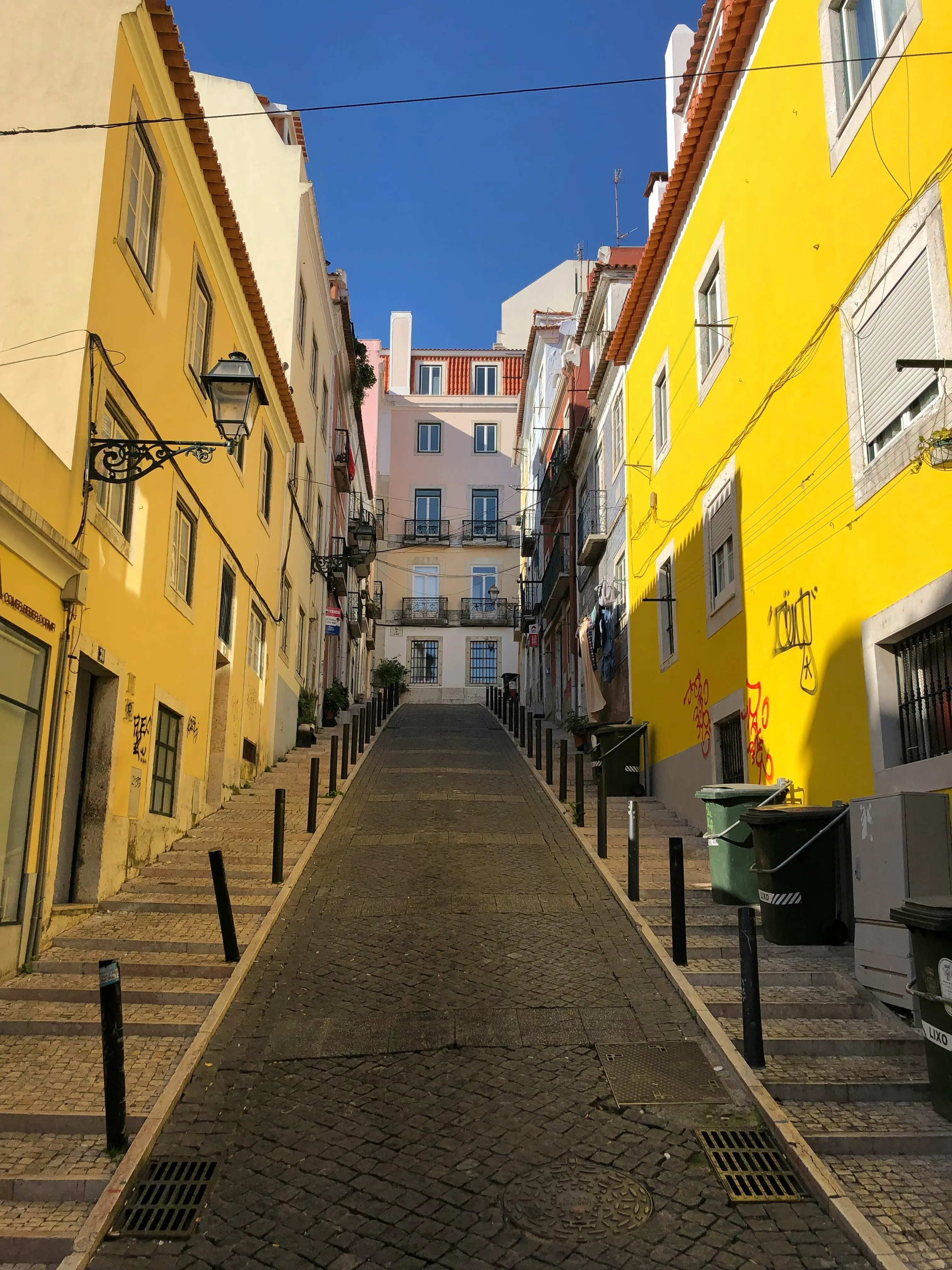
Alfama | €1,100–€1,600 | Photogenic, steep, residential | Short stays, atmosphere seekers | Character — but limited supermarkets and poor insulation common |
Campo de Ourique | €1,200–€1,700 | Residential, calm, local | Families, long-term renters | Genuine neighbourhood feel; near international schools |
Parque das Nações | €1,300–€1,800 | Modern, corporate, planned | Families, corporate relocations | Newer builds with proper insulation and central heating |
Príncipe Real: The Default Base for Most Remote Workers
Príncipe Real is what central Lisbon looks like when it is not trying to perform itself for tourists — and that is exactly why it commands a premium.
Dear Breakfast — reliable WiFi, strong espresso, €3–€5 — go before 10am before it fills with laptop workers and weekend brunch crowds
Studios from €1,200/month, 1-beds from €1,600/month — expect competition; move fast when you find something suitable
Secret Patio Lisbon — day pass €18, quieter than most central cafés, 10 minutes from the neighbourhood's main garden
Public transport connections are solid — monthly pass covers buses, trams, and metro for €40–€42, and most of the city is within walking distance or one metro stop
Most people who use Príncipe Real as a trial month end up extending — the friction of daily life is low enough that you stop noticing it. Explore Lisbon in our neighbourhood guide.
Browse Lisbon homes near this area
Campo de Ourique: For Families Weighing International Schools and Long Stays
Campo de Ourique is the neighbourhood that makes sense once you have a child to factor in, or once you decide you want to live in Lisbon rather than just stay in it.
Close to several international schools — St. Julian's School (Carcavelos, 30 min) and Carlucci American International School are the most referenced among English-speaking expats
Quieter, slower pace than Príncipe Real — the trade-off is fewer cafés suited to long working sessions
1-beds from €1,200/month; 2-beds from €1,700/month — better value per square metre than Chiado or Príncipe Real
Mercado de Campo de Ourique — the best daily market in the city for affordable food shopping without the tourist markup
It is not the most obvious base, but many expats with families end up here after a month of trying to make a smaller, noisier flat in central Lisbon work.
Príncipe Real gives you all the conveniences of a walkable city centre — specialty coffee, a weekend organic market, and a Pingo Doce within five minutes — without the tourist density of Baixa.
Find your base with fully furnished apartments in Lisbon — filtered by neighbourhood, available on monthly terms.
Browse Lisbon homes near this area
Bank Account, Health Insurance, and the Job Market: Practical Setup After Arrival
Portugal's administrative systems have a reputation — not entirely undeserved — for conflicting information, long queues, and processes that make you wonder whether the goal was to discourage people. The classic example is showing up at a Finanças office with every document you were told to bring, and being sent away for one you were not told about. Plan for this rather than being surprised by it.

How to Open a Bank Account as a New Arrival
Opening a bank account in Portugal requires your NIF first — everything else depends on having it.
Millennium BCP and ActivoBank are the most straightforward for non-residents and new arrivals — online account opening available for some nationalities
You will need: NIF, valid passport, Portuguese address (a short-term rental contract works), and proof of income for some account types
Many expats use Wise or Revolut as a bridge for the first 4–8 weeks while the bank account processes — this is practical, not a workaround
Some banks require an appointment weeks in advance; branch walk-ins work at ActivoBank branches in the Baixa area more reliably than at larger banks
The bank account step is not difficult — it just requires the NIF to exist first, and that means the Finanças visit is genuinely your first task after finding somewhere to sleep.
Health Insurance: Private Health Insurance vs. the Public Health System
The public health system (SNS — Serviço Nacional de Saúde) is available to legal residents, but access and quality vary depending on where you register and how long the queue is.
Private health insurance for a single person in their 30s runs €50–€120/month from providers like Fidelidadeor Médis — this covers most specialist appointments and avoids SNS wait times
The D7 and D8 visa applications require proof of health insurance before the residence permit is issued — private health insurance satisfies this; SNS registration alone does not at the application stage
The public health system is usable for emergencies and registered residents — the challenge is that centro de saúde (health centre) appointment availability varies enormously by district
Most long-stay expats carry private health insurance for the first few years and reassess once they have permanent residency and understand how their local SNS centre operates
The combination of private health insurance plus SNS registration after arrival is how most people navigate this — the private policy covers day-to-day needs while the SNS gives you a safety net for serious care.
Opening a Caixa Geral de Depósitos account early matters if you plan to buy property, since Portuguese banks typically require a 20–30% down payment and will want to see 12 months of local transaction history before approving a mortgage.
Portuguese Taxes, the Job Market, and the NHR Question
The job market in Lisbon is relevant if you are not a pure remote worker — and the tax question is relevant regardless.
Portuguese minimum wage is €920/month in 2026 — local salaries in tech and creative industries are higher but remain below Northern European equivalents, which is why most long-stay expats are either remote workers or running their own businesses
The NHR (Non-Habitual Resident) tax regime — a flat 20% rate on Portuguese-source income for ten years — was reformed in 2024; the new IFICI scheme replaced it, with eligibility now tied to specific professions and activities rather than blanket application
Pay taxes in Portugal once you spend more than 183 days in-country per year — this interacts with your home country tax treaty, and US citizens in particular need to understand FEIE and the US-Portugal tax treaty before making decisions
An immigration lawyer who also understands Portuguese taxes is worth the €200–€400 consultation fee before you commit to a visa route — the interaction between visa type, tax residency, and home country obligations is not something to guess at
The job market question and the tax question are often the same question if you are earning remotely — how you structure your work and where your income is sourced shapes both your visa eligibility and your tax position from day one.
Getting Around Lisbon: Public Transportation, Walking, and What Nobody Tells You
Lisbon's public transportation network is good enough to live without a car — but the hills mean you will quickly learn which routes to avoid at 8am with a laptop bag.

The Metro, Trams, and the Navegante Card
The Lisbon Metro is fast, clean, and covers most of the city you will actually use — but it does not cover Alfama or Mouraria, which is worth knowing before you choose a neighbourhood.
Marquês de Pombal metro station — central hub on the Blue and Yellow lines, €1.65 per single trip or €40/month with a Navegante card covering all modes
The Navegante card covers Metro, buses, trams, and urban train lines — load it at any metro station ticket machine, it pays for itself within a week of regular use
Tram 28E is a tourist attraction, not a commute — if you need to get somewhere on its route during the day, take a bus or walk
Uber and Bolt work well for hill neighbourhoods not served by Metro — Bolt tends to be cheaper, fares rarely exceed €8 within the city
If you are based in Príncipe Real, Campo de Ourique, or Estrela, you will use public transportation differently than someone in Arroios or Intendente — the Metro-adjacent neighbourhoods remove a layer of daily friction that the hilltop ones add back in.
Lisbon functions like a big city for public transport costs — a monthly Navegante pass covering all metro, bus, and tram lines is €40, which is less than a single week of Uber rides across the same distances.
Walking Lisbon With a Laptop: What the Hills Cost You
Lisbon is more walkable than it looks on a map, until you realise that "walkable" in this city sometimes means a 12% gradient with cobblestones.
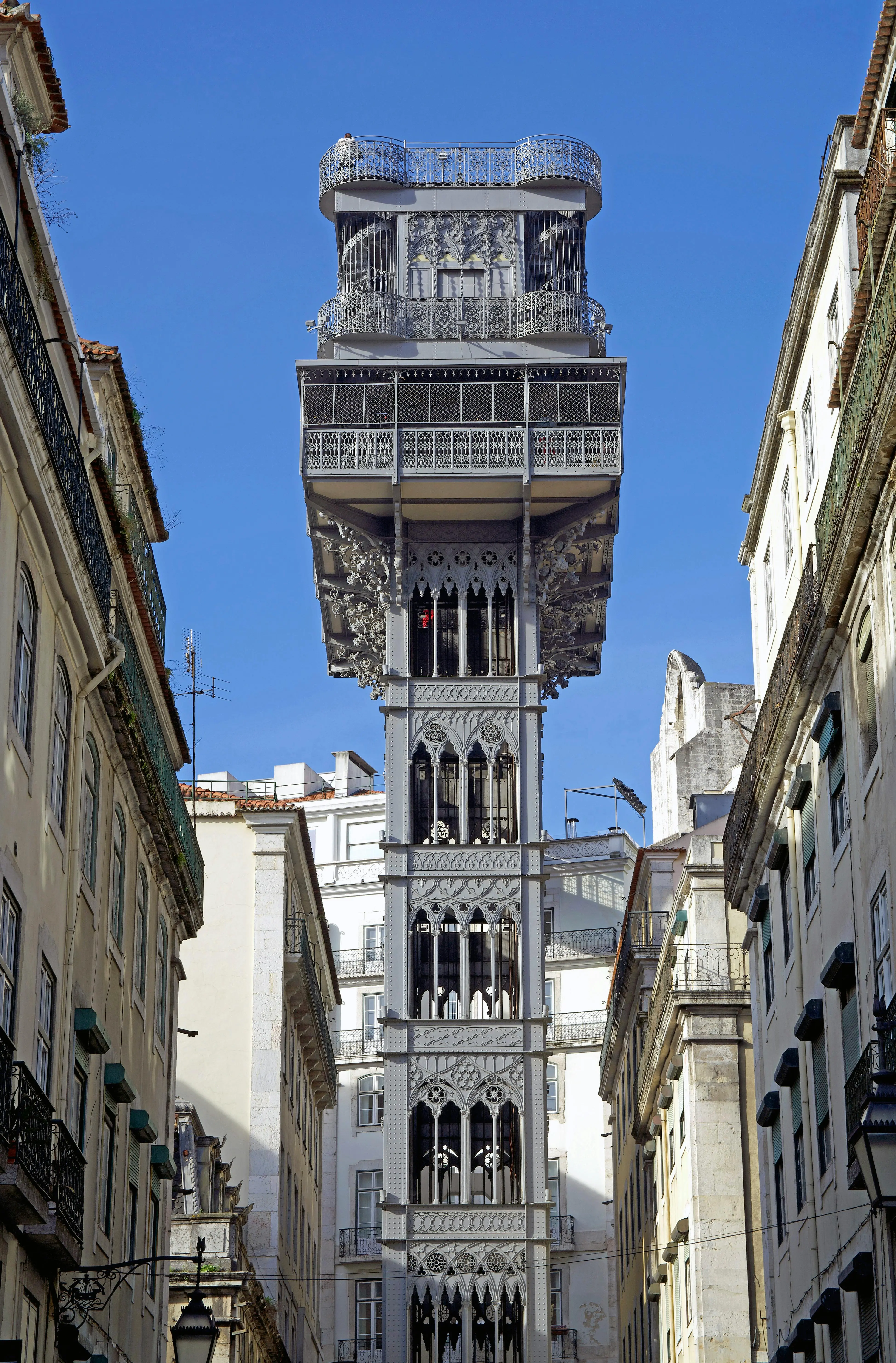
Baixa to Chiado is a 10-minute walk but involves the Calçada do Carmo stairs — the elevador at Elevador da Bica (€4.10 round trip, tourist surcharge applies) exists precisely because the alternative is unkind
Alfama to anywhere useful is at least 20 minutes on foot — the neighbourhood is beautiful and impractical in equal measure
Santos and Cais do Sodré are genuinely flat and well-connected — underrated as a base if you want to work remotely from cafés without the elevation problem
Cycling is possible but not natural here — e-bikes change the calculus, and Gira, Lisbon's public bike scheme, has e-assist stations citywide at €2/30 minutes
Where you live shapes how much your daily movement costs in energy and time — and in a city that rewards exploration, that calculation matters more than it does in a flat city.
Daily Costs, Food, and What Your Budget Actually Buys
Lisbon offers a cost of living that is genuinely lower than London, Amsterdam, or Paris — but the past couple of years have closed the gap faster than most people expect, especially on rent.
Restaurant Meals, Markets, and Cooking at Home
You can eat well here on almost any budget, but the price you pay depends almost entirely on how far you walk from the tourist corridor.
A prato do dia (daily lunch special) at a neighbourhood tasca costs €7–€10 with wine included — Tasca do Chico in Madragoa is the kind of place where this still holds on a Tuesday
Restaurant meals in Chiado and Bairro Alto run €20–€35 per person with a drink — good quality food but you are partly paying for location
Mercado 31 de Janeiro in Arroios is a functioning neighbourhood market — vegetables and fish at local prices, not a food hall designed for Instagram
Cooking at home cuts your monthly food spend to €250–€350 comfortably — a kilo of cod is €6, a bottle of decent Alentejo wine is €4 at a supermarket
The difference between eating like a tourist and eating like someone who lives here is mostly about which street you turn down — in Lisbon, that difference is often just one block.
Coffee, Coworking, and the Cost of a Working Day
A full working day in Lisbon — coffee, lunch, coworking space — costs less than half what it costs in other Western European cities, and the infrastructure is good enough that you rarely feel the compromise.
A bica (espresso) costs €0.80–€1.20 almost everywhere outside the tourist centre — Café A Brasileira on Rua Garrett charges €1.50 and is worth it once for the history, not daily
Coworking day passes at LACS in Santos run €20–€25; monthly hot-desk memberships start at €120 — faster internet than most cafés and actual meeting rooms
A flat white exists here but takes effort to find — most cafés serve galão (milky coffee) or meia de leite; if the distinction matters to you, Specialty Coffee shops in Príncipe Real and Mouraria now serve it without confusion
Monthly broadband at home runs €25–€35 for fibre — most furnished apartments for rent include it, which removes the sim-card juggling of the first few weeks
A two-bedroom in Almada across the river costs around €1,100 a month and still gives you all the conveniences of central Lisbon via the 15-minute Cacilheiro ferry from Cacilhas to Cais do Sodré.
Groceries at Mercado de Campo de Ourique run roughly €60–€80 a week for two people — noticeably cheaper than other cities like Amsterdam or Dublin where the same basket easily hits €120.
Visas, Residency, and What "Moving Here" Actually Requires
The visa question is the first one most people get wrong — not because the options are complicated, but because the right answer depends on details about your income, nationality, and plans that no single article can resolve for you.
Visa Options by Nationality
An EU citizen can enter Portugal and stay indefinitely — but everyone else is navigating a set of visa options that have changed meaningfully in the past couple of years.
EU/EEA/Swiss nationals register at the local Câmara Municipal within 90 days of arrival — no residency visa required, bring proof of address and bank statements showing sufficient funds
The D8 Digital Nomad Visa is the standard route for non-EU remote workers who work online for foreign clients — minimum income threshold is approximately €3,480/month (four times Portuguese minimum wage) and you will need proof of employment or contracts to apply
The D7 Passive Income Visa suits those with pension income, rental income, or investments — lower income threshold than D8 but requires demonstrable passive income rather than active remote work
American expats and many Americans who work remotely are increasingly using the D8 route — many countries' citizens who previously relied on the Golden Visa programme now consider D7 or D8 as the primary path, since the Golden Visa was substantially restructured in 2023
Whatever route you take, apply before you enter Portugal where possible — processing times at SEF/AIMA have been long enough in recent years that arriving and waiting creates real uncertainty about your legal status.

After Arrival: Residency, NIF, and Social Security
The first few weeks involve a specific sequence of bureaucratic steps — get them in the right order and everything else follows; get them wrong and you are restarting from the middle.
NIF (tax number) first — you cannot open a bank account, sign a lease, or register for social security without one; get it at any Finanças office or through a fiscal representative before you arrive if your visa allows it
Bank account after NIF — Caixa Geral de Depósitos and Novo Banco both open accounts for legal residents; bring your NIF, passport, proof of address, and bank statements from your home country bank
Social security registration (Segurança Social) is required if you are working as a self-employed resident — most expats moving here who work remotely register as independentes and pay contributions on a sliding scale based on declared income
AIMA (formerly SEF) appointment for residency card — book online as early as possible, waiting times in Lisbon run 2–4 months; your visa entry stamp and acknowledgement of application serves as interim proof of legal stay
English is widely spoken at most of these offices in Lisbon, which removes the language barrier for the paperwork itself — but having a Portuguese-speaking contact for the phone calls and letters that follow is still worth arranging.
Tax Residency and the Obligations That Come With It
Becoming a tax resident in Portugal is not automatic, but it happens faster than most people realise — and the interaction with your home country obligations is where most expats moving here underestimate the complexity.
You become a tax resident after 183 days in Portugal in any 12-month period, or if you have a habitual residence here — this triggers obligations to file a Portuguese tax return annually
The IFICI regime (successor to NHR) offers a flat 20% rate on Portuguese-source income for qualifying professions — check current eligibility lists, as the approved activity categories have been narrowed significantly since 2024
US citizens who work remotely remain liable for US taxes regardless of where they live — the US-Portugal tax treaty prevents double taxation but does not eliminate filing obligations, and most American expats here use a US-qualified accountant with international experience
A new life in a new country does not reset your tax obligations to your previous one — the first year's accountancy fees are an investment, not an overhead
Most expats who have been here a few months and got this right say the same thing: the setup cost in legal and accounting fees in year one is real, and the people who skipped it spent year two fixing problems that cost considerably more.
Is Lisbon Right for You? An Honest Assessment of Its Great Quality of Life
Who Lisbon Actually Works For
Lisbon suits remote workers who want Western European quality of life without Western European prices — provided they are willing to do the bureaucratic work that living here properly demands.
Strong fit for people who want walkable neighbourhoods, serious food culture, and a city that rewards long-term presence over short-term convenience
Works well if your income is in dollars, pounds, or euros earned outside Portugal — the cost gap still meaningfully favours you
Harder fit if you need a dense single-nationality expat community to feel settled quickly
English is widely spoken in professional and social contexts, but the city runs on Portuguese terms — administratively and culturally
The rhythm here is Portuguese first, and that is precisely what makes it worth the effort for people who want to actually live somewhere rather than hover above it.
Where the Friction Lives
Lisbon's bureaucratic processes are slow, sometimes opaque, and completely indifferent to the fact that you have deadlines — understanding this in advance is the difference between a manageable arrival and a miserable one.
AIMA processing times for residency applications have been unpredictable; build a longer runway into your timeline than you think you need
Paperwork is in Portuguese regardless of how good the English is around you — budget for a reputable local lawyer or relocation specialist
The rental market has tightened considerably since 2022; expect more competition and higher asking prices in central neighbourhoods
IFICI tax regime eligibility rules have shifted — what applied two years ago may not apply to your income category today
None of this disqualifies Lisbon, but arriving with a romantic idea of frictionless relocation will cost you time and money that a realistic plan would not.
If you have been priced out of your own city — whether that is London, Amsterdam, or San Francisco — Lisbon's average long-term rental of €1,400 for a one-bedroom in Arroios will feel like a genuine reset rather than a compromise.
How to Know If It's Actually Right for You
One month in Lisbon tells you whether you like being a tourist here; three months tells you whether you want to stay.
Verify current income thresholds, current IFICI eligibility, and current AIMA processing times before committing to any timeline — a guide from 2022 will lead you wrong
Give yourself a minimum of three months in a fully furnished apartment in Portugal before making longer-term commitments
For most people working online at a reasonable income, the financial case still holds up clearly when you run current numbers
The city rewards people who stay long enough to build local routines — the quality of daily life at month three looks nothing like month one
If the numbers work and you have the patience for the paperwork, Lisbon consistently over-delivers on what it actually promises.