
Daniel
Productivity & Remote Living Analyst ·
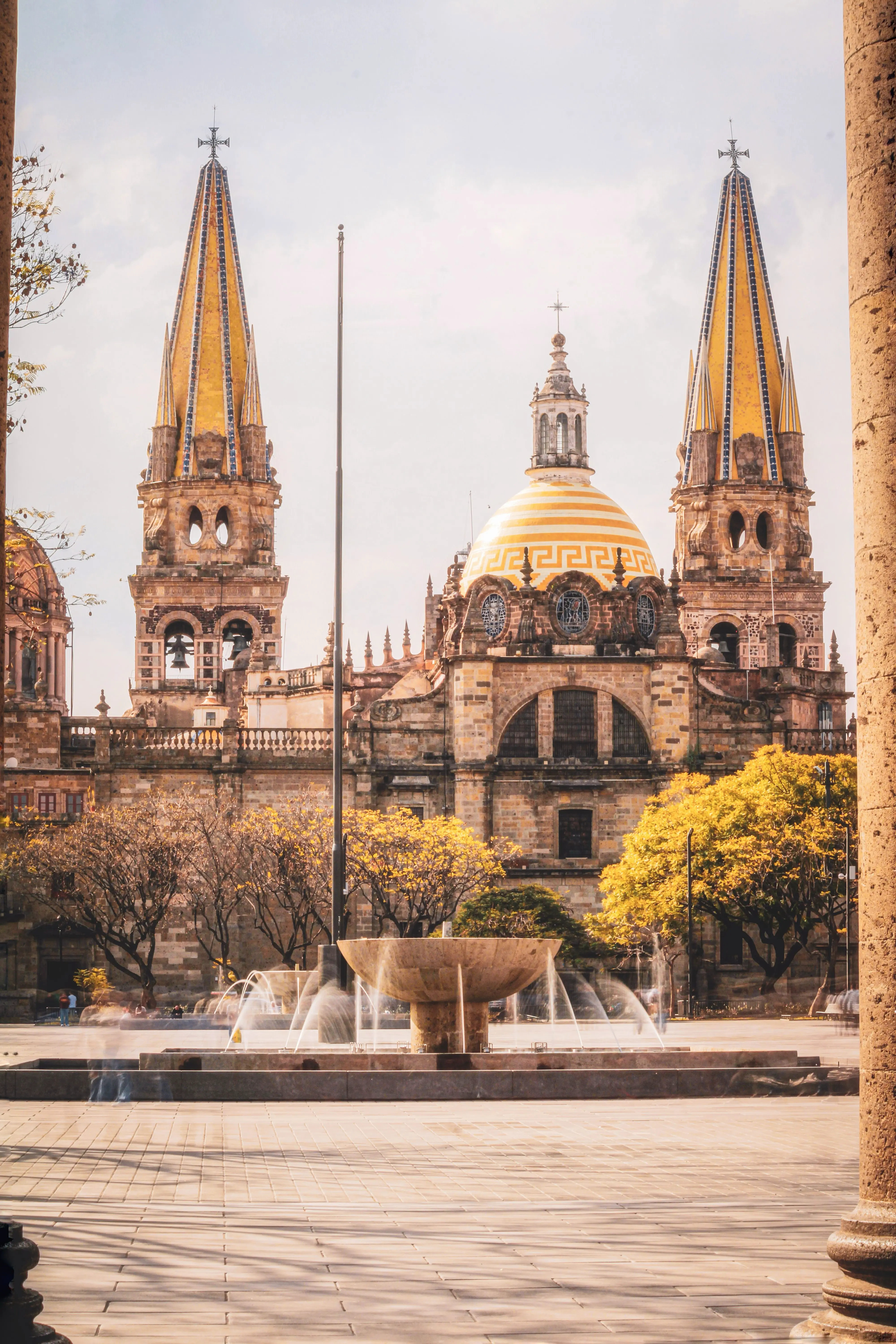
Guadalajara rewards people who give it time. The first week you notice the traffic and the heat; the second week you find your taquería and your coffee spot; by the third week you understand why so many people who came for a month are still here two years later. It is not Mexico City — it is slower, cheaper, and easier to navigate socially — but it is still a large city with real infrastructure, a serious food scene, and a tech sector that has attracted Mexican companies and international firms alike. The trade-off is that it asks something of you: you will need to speak Spanish to live here, not just to visit.
This guide covers:
Why Guadalajara works as a base for remote workers and expats moving from other countries
The best neighborhoods and what each one actually costs
Safety by area — what the data and expat experience actually say
Visas, residency, and what the Mexican government requires
Healthcare, schools, and the practical infrastructure of daily life
What living in Guadalajara costs month to month, with real numbers
Why Moving to Guadalajara, Mexico Makes Sense in Latin America
What Guadalajara Gets Right
Guadalajara has spent thirty years building a city that actually works, and most people outside Mexico are only just noticing.
Direct flights to the US from Guadalajara International Airport make the logistics straightforward — no connection through Mexico City required
Colonia Americana was named the coolest neighbourhood in the world in 2022, and the restaurants, coffee shops, and street life back that up on any given Tuesday
The Guadalajara International Book Fair is the largest in the Americas, and the city hosts over 800 cultural events annually — this is not a city that closes at 9pm
The metropolitan area holds roughly five million people, giving you real city scale without Mexico City's traffic paralysis
The cultural infrastructure here is not aspirational — it already exists, and you can walk into it on day one.
Where Guadalajara Will Push Back
The single thing most likely to derail your first three months in Guadalajara is arriving without Spanish, and you should plan around that honestly.
Tapatíos — as locals call themselves — do not widely speak English outside tourist areas, so banking, housing, and healthcare all require at least functional Spanish
If you are actively learning Spanish, Guadalajara is a better classroom than Mexico City: the pace is slower, the accent is clear, and people are genuinely patient with learners
The tech sector is real — Oracle, IBM, and Intel all have regional offices here — but the city does not feel like a tech campus, so do not come expecting a sanitised startup bubble
Guadalajara rewards people who came prepared to live in a Mexican city, not people who came prepared to live in a Mexico-flavoured version of somewhere else.
How the Geography Works in Your Favour
Guadalajara's location is underrated as a practical asset, not just a weekend bonus.
Lake Chapala, Mexico's largest freshwater lake, sits forty-five minutes south — a genuine escape that does not require a flight
Puerto Vallarta is four hours by road, which means a long weekend at the Pacific coast is a realistic option, not a production
The city's size means neighbourhoods like Colonia Americana and Zapopan feel distinct and walkable rather than swallowed by sprawl
The difference between visiting Guadalajara for a month and committing to a year often comes down to realising how much is reachable before you ever get on a plane.
Guadalajara is a great city for people who want cultural depth without Mexico City's traffic and pollution — the historic Centro Histórico, the Cabañas UNESCO World Heritage Site, and a thriving craft beer and food scene all exist without the two-hour commutes.
Best Neighborhoods in Guadalajara: Big City Living for Every Budget
Where you live in Guadalajara determines almost everything else: your commute logic, your grocery options, your social circle, and how much you pay. The neighborhoods below are where expats living here actually concentrate — not because they are the only options, but because they solve the most problems at once.
Neighbourhood | Monthly Rent (Studio) | Vibe | Best For | Key Advantage |
|---|---|---|---|---|
Colonia Americana | $800–$1,100 | Cafés, nightlife, walkable | Digital nomads, young expats | Highest café and coworking density |
Providencia | $750–$1,000 | Quiet, residential, green | Couples, longer stays | Two parks, calmer streets |
Lafayette | $700–$950 | Between Americana and Providencia | Remote workers who want balance | Good value, walkable to both zones |
Zapopan | $600–$850 | Suburban, modern, safe | Families, long-term expats | Parque Metropolitano, infrastructure |
Centro Historico | $400–$700 | Dense, loud, cultural | Budget-conscious, culture-first | Cheapest rents, maximum history |
Colonia Americana: The Coolest Neighborhood and the Default Base
Colonia Americana earns the density of cafés and restaurants that makes it work as a remote base — but the weekends are loud, and you will know it.
Café Berlín — espresso from MXN 55, reliable WiFi, good tables before noon
Mercado del Mar — street food stalls from MXN 50, best on weekday lunchtimes
Studios from $800/month on Calle Marsella and adjacent streets
WeWork Guadalajara — day pass around MXN 350, strong WiFi, corporate crowd
If you want all the amenities within walking distance and can tolerate Friday noise until 2am, Americana is your neighbourhood; if you need quiet to function, it is not.
Browse Guadalajara homes near this area
Centro Historico: Budget Living Inside the City Center
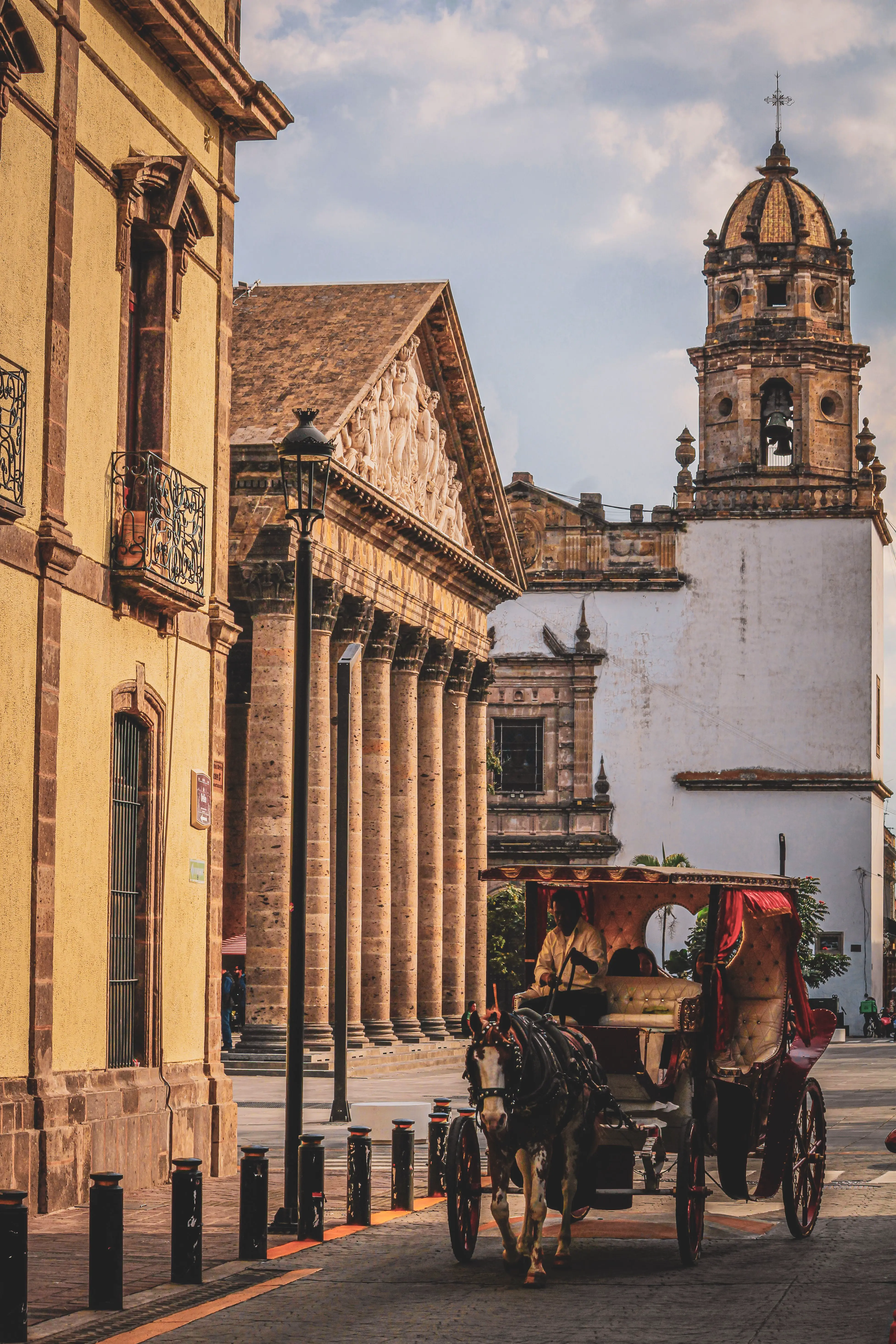
Centro Historico is where Guadalajara's cultural weight is concentrated — the Hospicio Cabañas UNESCO murals, the Cathedral, mariachi music spilling out of Plaza de los Mariachis every evening — but living here requires tolerating noise and accepting that it is not a polished expat bubble.
Rent starts around $400/month in the city center — the lowest in any desirable zone
Mercado San Juan de Dios — the largest indoor market in Latin America, tacos from MXN 30
Street food at every corner: tacos de canasta for MXN 15, jugos for MXN 25
Nightlife and cultural events within walking distance, every weekend without exception
Centro Historico works if you prioritise low rent and cultural immersion over tranquility — it does not work if you have early morning calls or light sleep.
Puerta de Hierro in northern Zapopan is the neighborhood where modern amenities are most concentrated — the Plaza Andares shopping center, a Cinépolis IMAX, multiple international grocery chains, and a cluster of English-language pediatric and dental clinics are all within a 10-minute walk.
Browse Guadalajara homes near this area
Zapopan and Providencia: Where Expats Moving with Families Tend to Land
Providencia's two parks and quieter residential streets make it the neighbourhood where people who tried Americana for three months often end up; Zapopan goes further toward the suburban end, with Parque Metropolitano as its anchor and the most consistent safety perception of any zone in the Guadalajara metropolitan area.
Providencia studios from $750/month — close enough to Americana to walk in twenty minutes
Zapopan studios from $600/month — lower density, better parking, quieter building types
Plaza Andares in Zapopan — international brands, food court, consistent WiFi in the food areas
International schools concentrated in Zapopan — relevant if children are part of the decision
Zapopan is the trade-off neighbourhood: you get safety and infrastructure, and you give up walkability and spontaneity.
The vast majority of expats living in Providencia, Chapalita, and Zapopan report feeling safe enough to walk to restaurants and grocery stores at night — the problems are concentrated in specific peripheral neighborhoods that most residents simply never visit. Thinking of moving to the fastest growing city in Mexico? Find fully furnished apartments in Guadalajara.
Is Guadalajara Safe? What Expats Actually Report Living Here
Guadalajara safe is a question that depends almost entirely on which part of the city you are asking about. The expat neighbourhoods — Americana, Providencia, Lafayette, and the Zapopan corridor — have the kind of safety profile that most people from major European or North American cities would find unremarkable. Phone theft is the most commonly reported incident; Guadalajara has a high incidence of it, and you will hear about it in every Facebook group within your first week. That is not a minor point — it shapes how you carry yourself, where you keep your phone, and whether you take it out on certain streets after dark.
The broader picture is more nuanced. Safety perception in Guadalajara fluctuates significantly by neighbourhood. The tourist areas around Centro Historico are generally fine during the day and tolerable in the evening if you stay on main streets. Women living alone report that late-night walking — even in Americana — is something to think twice about. That is not unique to Guadalajara among major cities in Latin America, but it is honest context that some guides leave out.
Practical Safety for Digital Nomads Day to Day
Basic situational awareness covers most of what you need — this is not a city where you need to restructure your life, but it is one where you pay attention.
Keep your phone in your pocket on busy streets; do not use it while walking in crowds
Use Uber at night — it is cheap (MXN 60–120 for most cross-neighbourhood trips) and removes most street-level risk
Expats report feeling safe in Providencia and Americana during the day without reservation
Avoid flashing expensive equipment in markets or on public transport
The local people in Guadalajara are, by wide consensus among expats living here, genuinely welcoming — the safety calculus is about context and neighbourhood, not about hostility toward foreigners.
Visas and Residency: What the Mexican Government Actually Requires
Most expats moving to Guadalajara enter Mexico on a tourist visa, which is valid for 180 days and issued on arrival. That gives you six months to decide whether you want to formalise things — plenty of time to find an apartment, open a bank account, and figure out whether Guadalajara is where you want to be for the next year.
If you stay beyond the tourist visa or want to work legally, the Temporary Resident Visa is the standard path. The Mexican government requires proof of economic solvency: currently monthly income of $3,700 to $4,300, depending on the Mexican consulate processing your application. The visa can be renewed annually for up to four years, after which permanent residency becomes an option. Processing time runs between three and ten weeks, so start the application at your home country consulate before you arrive — the paperwork is simpler from outside Mexico.
Air Quality, Climate, and What the Rainy Season Actually Means
Air quality in Guadalajara is a genuine consideration that most guides bury in a footnote — it varies significantly by season and by neighbourhood proximity to traffic corridors.
Average temperature of 67°F (19.2°C) year-round — genuinely mild by the standards of other Mexican cities
Rainy season runs June to October; July averages 24 rainy days — afternoon thunderstorms, not all-day grey
Heavy rains during summer can cause localised flooding — ground-floor apartments in older buildings are the ones to avoid
April and May reach the high 80s (°F) — the hot months, before the rains reset temperatures
The rainy season makes the city green and keeps afternoon temperatures manageable; the flooding risk is real but avoidable if you choose your building carefully.
Guadalajara's immigration office handles significantly fewer applications than Mexico City's, so the wait times are shorter — a real advantage of processing your residency paperwork in a big city that is not the capital.
International Schools and Family Infrastructure
International schools in Guadalajara are concentrated in Zapopan and the western suburbs — if schooling is a deciding factor, your neighbourhood shortlist shortens quickly.
Colegio Británico de Guadalajara — British curriculum, fees from $6,000/year, Zapopan location
American School Foundation of Guadalajara — US curriculum, largest international option in the city
English speakers at both schools — staff bilingual, student body internationally mixed
Most international schools require residency documentation and a deposit equivalent to one semester's fees
If you are moving with children, Zapopan stops being a trade-off and starts being the obvious answer — the international schools, the parks, and the safety profile make the case without much argument.
Healthcare, Safety, and the Realities of Daily Life in Guadalajara
Guadalajara has great healthcare infrastructure by Mexican standards — and by the standards of most cities its size, full stop. The safety picture is more complicated, and anyone who tells you otherwise hasn't spent time here beyond the curated expat corridors.
Private Healthcare: What It Costs and Where to Go
Private healthcare in Guadalajara is genuinely good and genuinely affordable — the gap between what you pay here versus what you'd pay in the US is significant enough to change how you think about medical care.
Hospital Country 2000 — private hospital in Providencia zone, GP consultations from MXN 600, English-speaking staff available
Médica Sur Guadalajara — specialist referrals, imaging, and labs under one roof; MRI from MXN 3,500 versus $1,500+ in the US
Dental work is where most expats notice the difference first — a crown runs MXN 4,000–6,000 (roughly $230–$350)
Private health insurance for a healthy 35-year-old runs $80–$150/month from Mexican insurers — BUPA and AXA both operate here
Most expats who work online end up paying out of pocket for routine care and carrying insurance only for emergencies — at these prices, that maths actually works.
One practical reality of living in Guadalajara is that the IMSS public health system is technically accessible to legal residents, but wait times at public clinics can stretch to three or four hours — most expats opt for private insurance plans running 3,000 to 5,000 MXN a month instead.
Safety: Phone Theft, Neighbourhoods, and What Actually Requires Caution
Phone theft is the most common crime affecting expats in Guadalajara — it happens in crowded markets, on public transport, and at outdoor restaurant tables, and it happens fast.
Keep your phone in a front pocket or bag in Centro Histórico and on the light rail — not on the table at street-level restaurants
Tlaquepaque and Tonalá are fine during the day; avoid arriving after dark without local company
Colonia Americana and Providencia have low street crime — the risk profile is closer to a mid-sized European city than the version of Mexico City most people imagine
Gated community buildings in Zapopan add a layer of security if that matters to your setup — most of the newer apartment complexes in the west side operate this way
The city is not danger-free, but the areas where most expats actually live are navigable with basic awareness — the people who struggle are usually the ones who treat the whole metropolitan area as interchangeable.
Private hospitals like Hospital Country 2000 in Zapopan deliver big city amenities — MRI scans, English-speaking oncologists, same-day appointments — at roughly 30 to 50 percent of what you would pay out of pocket in the United States.
Real Life Admin: Banking, SIMs, and Getting Set Up
The administrative friction of arriving in a new city is real, and Guadalajara has a few specific bottlenecks worth knowing before you land rather than after.
BBVA and Santander both operate here — opening a Mexican bank account requires your visa document and a proof of address; it takes 1–2 weeks and is worth doing early
Telcel and AT&T Mexico offer prepaid SIMs from MXN 200/month with solid 4G coverage across the city — pick one up at any OXXO on day one
Google Translate gets you through the first few weeks of paperwork, but it won't get you through a landlord negotiation or a lease dispute — Spanish matters here in real life, not just in cafés
Most utility bills arrive via email and can be paid at OXXO or online — the system is more functional than newcomers expect
None of this is impossible — it just requires front-loading the admin in week one rather than discovering problems in month two.
Because Guadalajara is known as Mexico's Silicon Valley, the city attracts tech companies offering legitimate local employment contracts — which can actually smooth your residency application by giving immigration officers a clear economic reason for your stay.
Visas, Residency, and Working Legally in Guadalajara
Mexico's visa system is more structured than most people expect, and the path from tourist entry to permanent residency follows a clear sequence — but only if you start it correctly.
Temporary and Permanent Residency: The Sequence That Works
Most expats who stay longer than six months need temporary residency — and the difference between applying correctly and having to restart the process is usually a single missing document.
Temporary residency (Residente Temporal) allows stays of 1–4 years and requires proof of monthly income — INM's current threshold is roughly $1,620/month for individuals
After four consecutive years on temporary residency, you qualify for permanent residency — no further income proof required at that stage
Apply through a Mexican consulate in your home country before arriving — the in-country process is slower and more complicated, and the consulate route exists precisely to avoid that
A few years of tax returns or bank statements showing consistent monthly income will make the application straightforward; inconsistent freelance income is where applications stall
Permanent residency is achievable and worth planning toward from the start — treating it as a distant milestone rather than a concrete sequence is where most people lose time.
Guadalajara is a modern city with a dedicated immigration office on Calle Mimosas in the Centro district where you can complete your temporary residency application in person without hiring a lawyer, though the process typically takes four to six weeks.
Working Remotely and the Job Market for Local Hires
If you work online for a foreign employer, the visa situation is relatively clean — you are not competing in the local job market, and your tax situation sits with your home country until you formalise Mexican residency.
Guadalajara's tech job market is real — Oracle, IBM, Intel, and a diverse mix of startups and mid-sized software firms all have operations here
Local tech salaries run MXN 25,000–60,000/month for mid-level engineers — competitive within Mexico, but remote income in USD or EUR still goes significantly further
Business opportunities in the city's growing startup ecosystem are genuine — Guadalajara's reputation as Mexico's Silicon Valley is a few years old now and has infrastructure behind it, not just branding
Most Mexicans in the tech sector speak functional English in professional contexts — English is widely spoken in that segment, less so in services and logistics
The city's job market is one of the more credible reasons to be here rather than in a smaller Mexican city — but it's not a reason by itself unless you're genuinely plugging into it.
The Japanese Garden inside Parque Agua Azul on Calzada Independencia is open Tuesday through Sunday for just 10 MXN entry — it is a genuinely calm escape from the surrounding urban noise and one of those spots most new arrivals completely overlook for months.
Culture, Leisure, and Guadalajara Mexico's Unmissable Scene
You will not feel bored in Guadalajara — but what the city offers culturally is different from what most expats expect when they arrive, and the difference is worth understanding before you make plans.
Nightlife, Food Markets, and Where Locals Actually Go
The expat-facing restaurant scene in Colonia Americana is solid — but the places where most Mexicans eat and socialise on a regular basis are a different world, and usually a fraction of the price.
Mercado Medrano — neighbourhood market in Zona Medrano, breakfast from MXN 60, no tourist markup, closes by 2pm
Mexica Pulqueria — mezcal bar on Calle López Cotilla, MXN 120–180 per pour, genuinely good selection, busier after 9pm Thursday to Saturday
Plaza de la Liberación — free outdoor events most weekends, worth building into your weekly rhythm rather than treating as a one-time visit
Satellite TV packages in most mid-range and upscale apartments come standard — it's not worth paying a premium for it as an add-on
The city rewards a diverse mix of approaches — some weeks you'll spend evenings in a mezcal bar on López Cotilla, others at a free concert in a plaza, and that range doesn't get old quickly.
Before signing a 12-month lease, spend at least two weeks to visit Guadalajara on a tourist visa — stay in Providencia or Americana so you can walk the neighborhoods and test the commute to wherever you plan to work or study.

Day Trips and the City's Geographic Position
Guadalajara's position in western Jalisco makes it a genuinely useful base — the day trips aren't filler, they're the reason some people extend a one-month stay into a few years.
Tequila Pueblo Mágico — 70km northwest, day return bus from MXN 120, distillery tours from MXN 200; worth doing once, worth skipping the tourist trap packages
Ajijic — 45 minutes south on the Lake Chapala shore, largest North American expat community in Mexico, useful reference point for what long-term expat life looks like in this region
The average temperature makes outdoor day trips viable year-round — the rainy season adds logistical complexity but doesn't close anything down
Tapalpa, a mountain town 2 hours south, runs cold in winter by Jalisco standards — bring a layer, especially November to February
The surrounding region adds genuine variety to long-term life here — you are not limited to what the city itself offers, which matters more after month three than it does in week one.
Being 45 minutes from Lake Chapala — Mexico's Largest Freshwater Lake — means weekend escapes are genuinely easy, and the villages of Ajijic and Chapala have their own established expat communities if you eventually want a slower pace.
Is Living in Guadalajara the Right Move for You?
Who Actually Thrives Here
Guadalajara rewards a specific kind of person, and that person is usually honest with themselves before they arrive.
Remote workers who want real infrastructure — fibre internet, co-working spaces, and reliable power — without Mexico City prices
People willing to learn Spanish, not just survive without it
Expats who plan to stay six months minimum and build a life rather than collect an experience
Anyone who wants a city that functions on its own terms, not one that has been softened for foreign consumption
The people who stay have almost universally stopped thinking of it as temporary.
Who Should Look Elsewhere
Guadalajara will frustrate you faster than you expect if you arrive with the wrong assumptions.
English is not widely spoken outside of upscale restaurants, international offices, and select neighbourhoods in Zapopan
There is no single visible expat enclave where newcomers naturally cluster and orient themselves
The city does not smooth its edges for people who treat it as a short-term experiment
If your plan is to sample it for a month, you will likely leave before the city has made any sense to you
The people who leave after a month usually knew within two weeks that they hadn't given it a real chance.
If your goal is to stretch a remote income as far as possible, Guadalajara still rewards that ambition — a comfortable monthly lifestyle in Zapopan costs around 25,000 MXN total, which is a small town budget by any North American standard.
Making the Commitment
The only version of Guadalajara that works is the one you stay in long enough to earn.
Choose a lease length that forces you past the adjustment period — six months is a floor, not a ceiling
Live in a neighbourhood that puts you near Mexican residents, not just other foreigners
Accept that the culture will push back on you before it opens up — that friction is the point
Browse fully furnished apartments in Mexico and start with a lease long enough to matter
The monthly cost of living does not require financial gymnastics — but the city does require genuine commitment.