


Tirana for Digital Nomads 2026: The Lowest Visa Bar in Europe, Before the Rules Change
Tirana runs about $2,813 a month and Albania's Unique Permit asks a fraction of what Spain or Greece do. What to know before you go.
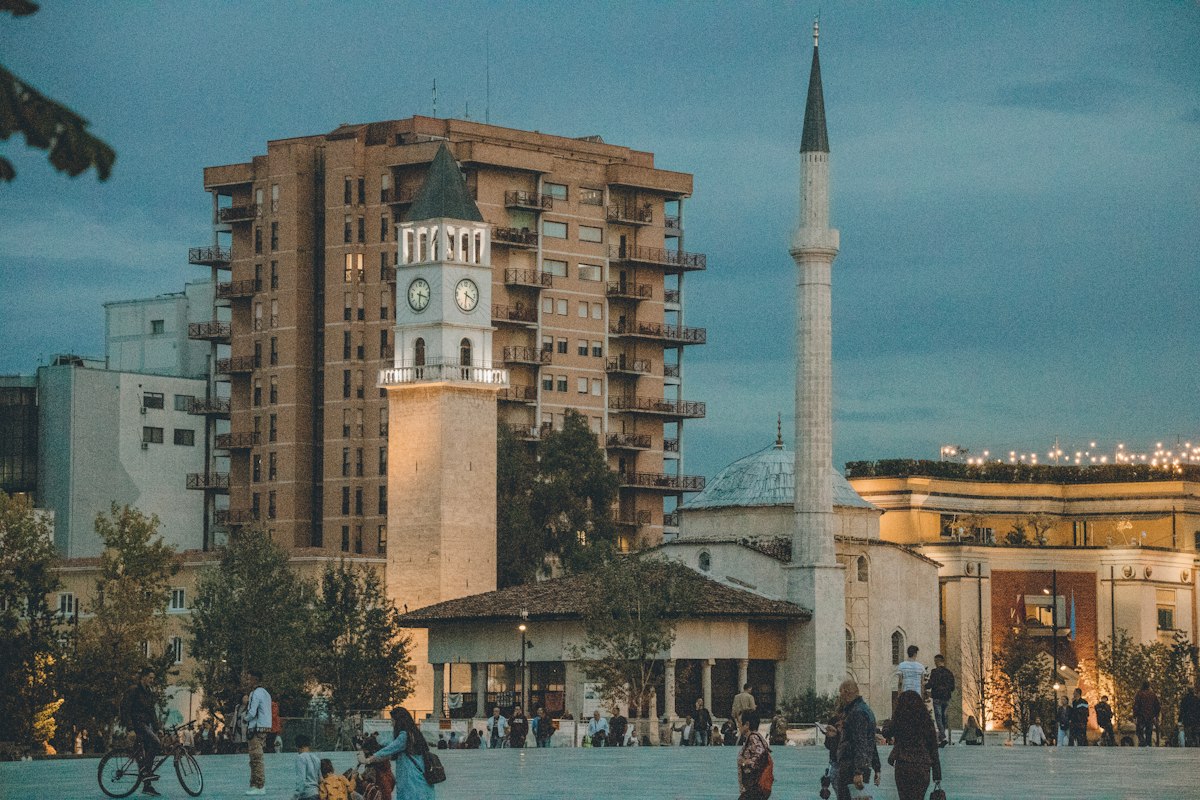
Albania's capital does not present itself as a bargain. Skanderbeg Square is polished, the cafes in Blloku are full, and new towers go up faster than the pavements get repaired. Then you look at the numbers. NomadList puts the monthly cost for a remote worker in Tirana at about $2,813, against $4,683 in Lisbon and $4,583 in Prague in the same October 2026 reading. Rent splits the two cities even further: a one bedroom in the centre averages $837 here, against $1,598 in Lisbon.
The visa is the bigger story. Albania runs a residence route for remote workers with an income benchmark around EUR 817 a month, roughly a quarter of what Greece asks for its digital nomad visa, and it sits inside Europe rather than across the world. There is a catch, and it is a reasonable one: the country is negotiating to close EU accession talks by 2027, and immigration rules like this rarely survive that process unchanged.
What Tirana costs against the rest of Europe
The comparison that matters is against the other European capitals a remote worker can afford for a season. Using the same NomadList snapshot from late October 2026, the monthly figure for a single remote worker lands at $2,813 in Tirana, $3,093 in Bucharest, $3,248 in Belgrade, $3,351 in Sofia, $3,746 in Athens, $4,583 in Prague and $4,683 in Lisbon.
Tirana wins that table, but by less than the visa gap suggests. The number that should get your attention is rent. Homezone, an Albanian listings portal that publishes a monthly rent report from its own inventory, put the median asking rent across 18,591 Tirana listings at EUR 700 when it updated on 26 October 2026, with the middle half of the market between EUR 580 and EUR 1,000. Small apartments are cheaper than the headline: one bedroom plus living room units (listed locally as 1+1) sit at a median of EUR 600, and 2+1 units at EUR 800.
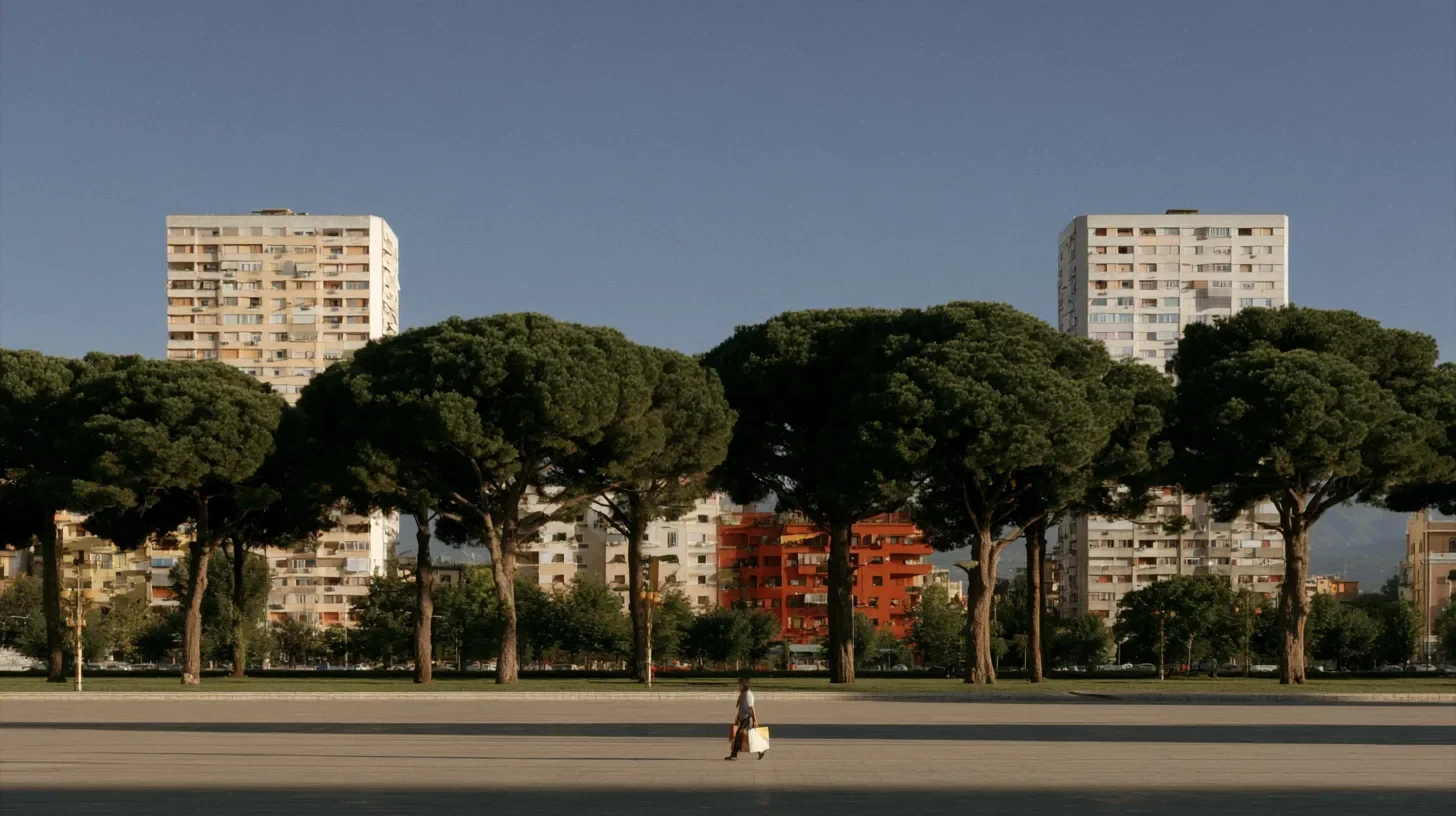
What EUR 700 buys in the centre is usually an older flat in a concrete block, a balcony if you are lucky, and a boiler you will learn to negotiate with. NomadList's own review sample is blunt about this: Tirana is cheap, walkable and friendly, with heavy traffic, litter in places, and winters that are uncomfortable indoors because most buildings have no central heating. Budget for a flat with proper heating, or pack a second jumper.
The permit: how low the bar actually is
Albania's route is called the Unique Permit for digital mobile workers, in Albanian Leje Unike për Punëtorë Digjitalë Nomadë. It comes from Article 68 of Law No. 79/2021 on aliens, and it bundles residence and work authorisation into a single document. It has been running since January 2022, and it now covers freelancers and remote employees, not just IT.
The numbers need care, because the guides disagree and the law is thin. There is no fixed statutory minimum income written into Article 68. IMI Daily, which links the law text on the Interior Ministry site, reports that consultants and caseworkers use a benchmark of roughly EUR 9,800 a year, or about EUR 817 a month. Citizen Remote, updated in February 2026, lists a requirement of around 40,000 lek a month, roughly $500, and notes that officers prefer to see a higher, stable income. Those two figures are not the same thing, so build your file around the higher one and show three to six months of consistent statements.
The rest of the pack is standard but unforgiving on paperwork. You need a contract with an employer or clients registered outside Albania, proof you actually work remotely, health insurance with at least EUR 30,000 of cover for the full stay, an apostilled criminal record certificate, proof of accommodation, and passport photos. The long stay Type D visa costs EUR 50, the residence card runs about EUR 20 to EUR 50, and legalisation and translation fees sit on top. Enomads puts Type D processing at 7 to 15 business days, and the full path from documents to residence card at one to two months.
The permit is issued for a year and is renewable. Permanent residency becomes available after five years of continuous legal stay with stable activity, and citizenship after seven, which is a genuinely short ladder by European standards.
One shortcut deserves a mention, with a warning attached. United States citizens can enter Albania and stay up to one year without a visa or a residence permit, per the US Embassy in Tirana. British, EU, Canadian and Australian passport holders get 90 days within any 180 day period and then need a long stay visa or a permit. A visa free entry is not work authorisation, though. If you want your status documented, the Unique Permit is the clean route.
The part nobody mentions: tax residency at 183 days
The Unique Permit is a residence document, not a tax deal. Albania treats you as a tax resident once you spend 183 days in the country in a calendar year, and residents are taxed on worldwide income. Below that line, foreign source income generally stays outside the Albanian net, which is why short seasons are common.
Compare that with the neighbours. Cyprus and Greece both attach tax relief to their remote worker offers, and Malta sells a formal residency programme with a flat rate. Albania gives you a cheap, easy permit and then expects you to sort out your own tax position. If you plan to stay past 183 days, talk to an Albanian accountant before you sign a lease, not after. Albania has double taxation treaties with a long list of countries, which helps, but it does not remove the filing obligation.
Rent by neighbourhood, with real numbers
Tirana rents change fast enough that any figure older than a quarter is fiction, so this uses the Homezone report updated on 26 October 2026 and the median asking rent for apartments in each area with the most listings.
Liqeni i Thatë, the artificial lake district, is the most expensive of the central options at a median of EUR 1,000, and it buys you park space, a lake loop for running and a 20 minute walk to the centre. Rruga Mine Peza and Kompleksi Delijorgji also sit at EUR 1,000, both new build territory with lifts and parking. Rruga e Elbasanit is EUR 850, Rruga e Kavajës, Zogu i Zi and Komuna e Parisit sit at EUR 800, and Rruga Myslym Shyri at EUR 750 if you want the old street grid. Rruga Don Bosko is EUR 650, Rruga 5 Maji EUR 550, and Astir, out by the ring road with a bus dependency, EUR 520.
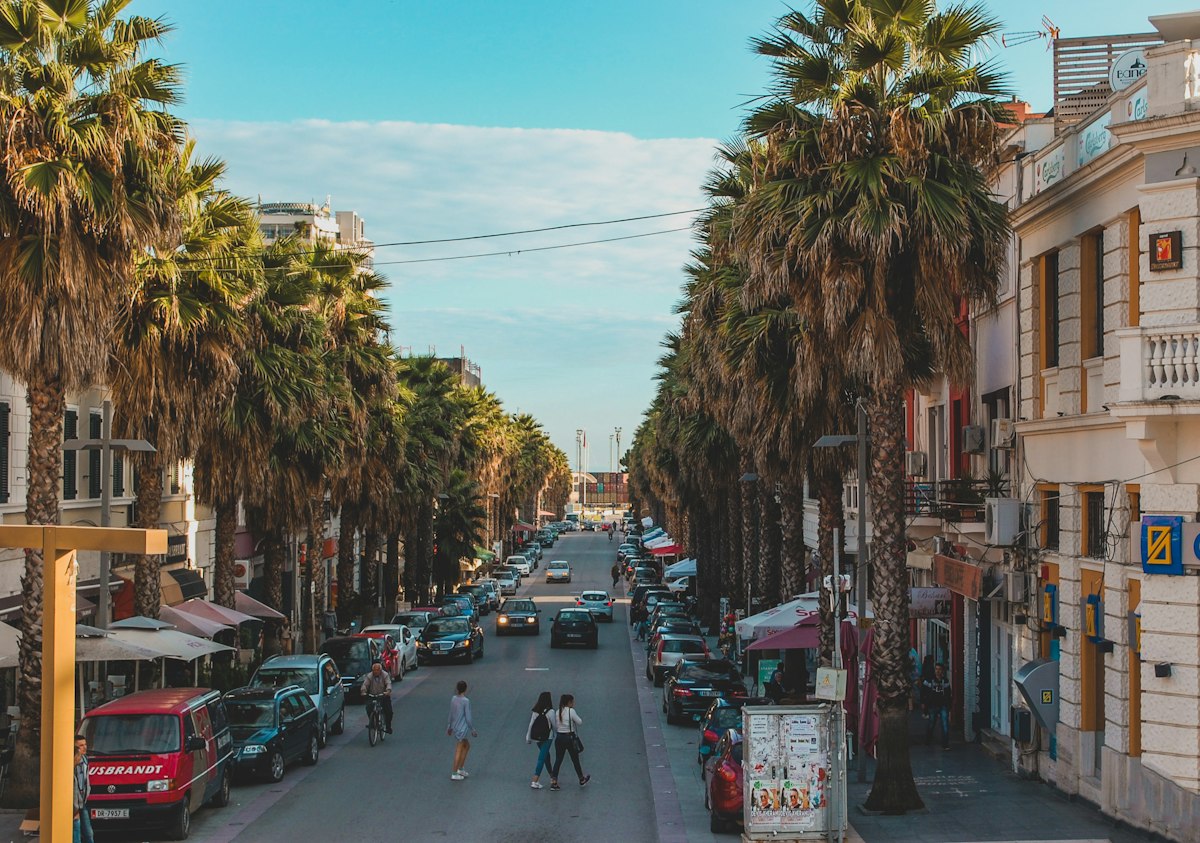
Blloku, the old communist leadership quarter turned cafe district, does not appear because its stock is small and mixed, but expect a premium for the convenience and the noise. If you want quiet and cheap, look towards Don Bosko or 5 Maji and accept a 25 minute walk or a 40 lek bus ride.
The practical obstacle is furnishing and commitment, not price. Most Tirana listings are long term and unfurnished, landlords commonly ask for one or two months deposit, and agencies charge around a month's rent as a fee. Signing a twelve month lease to test a city you have never lived in is a bad trade.
Coworking, wifi and the honest connectivity picture
The coworking scene is small but functional and much cheaper than Western Europe. Innospace Tirana runs a 560 square metre space on Rruga Pjetër Bogdani in Blloku with call booths, a bookable meeting room, a kitchen and a 70 square metre veranda. A day pass is 1,500 lek, a week is 6,000 lek, and members get 24/7 access. Social Hub sells a daily pass at EUR 10 and a weekly pass at EUR 50, the cheapest structured week in town. Booking platforms list Tirana Business Club at about $145 a month, and NomadList's city figure for a monthly coworking desk is $247.

The honest caveat is the connection. NomadList's measured median for Tirana is 11 Mbps, which is low for a city courting remote workers, and it reflects older buildings and copper lines more than the fibre that newer blocks have installed. Ask any landlord for a speed test screenshot before you sign, keep a local prepaid SIM as a backup, and treat cafe wifi as a bonus rather than the plan. If your work depends on large uploads, test the specific apartment, not the city average.
Getting in and getting around
Tirana International Airport, Nënë Tereza, sits about 17 km outside the city. The Rinas Express bus is the default arrival: roughly 30 minutes to the centre near the Opera and Ballet Palace, 400 lek, departing hourly. The airport page lists service from 06:00 to midnight while the operator, Luna Travel, advertises an hourly 24/7 line, so check the schedule for your landing time. A taxi from the airport runs on a set fare of around 2,500 lek.
Inside the city there is no metro and no tram. The centre is compact and genuinely walkable, though pavements end abruptly and street names are not how anyone navigates, so learn landmarks. City buses cost 40 lek for a single journey, paid on board to a conductor, with the fare reconfirmed in September 2026. Short metered taxi rides in the centre run 300 to 600 lek.
Coffee, byrek and the everyday cost of living
Day to day, Tirana is cheap in the way southern Italy used to be. A byrek from a bakery counter is 50 to 80 lek, a sufllaqe or doner is 200 to 300 lek, and at the exchange rate on 26 October 2026, one euro buys about 91 lek. Groceries are dominated by very cheap local produce and dairy, and restaurant prices climb mainly in the Blloku places aimed at visitors.
Where the budget stretches less is anything imported: electronics, specialist supplements, imported coffee beans, gym memberships in the new chains. The bigger variable is how you live. Cook at home most nights and take a coworking desk three days a week, and the city runs well under the NomadList average of $2,813, which assumes a full social calendar.

What to know before you commit
The first thing to understand is that Albania's immigration rules are on a clock, but not a fast one. In September 2026 the European Commission moved to back the government's goal of completing EU accession talks by 2027, as reported by European Western Balkans. Completing talks is not the same as joining, and joining is not the same as changing residence categories overnight. What it does mean is that the direction of travel is towards alignment with EU norms, and today's very low income benchmark is the softest part of the Albanian system. Do not build a five year plan that assumes it stays exactly as it is.
Second, the politics are livelier than guidebooks suggest. Protests under the Flamingo Revolution banner have run since May 2026 against proposed luxury development near the Narta Lagoon, mostly peacefully, with a handful of violent episodes. Wikivoyage's Tirana page, last edited in July 2026, advises avoiding large gatherings and government buildings. That is travel hygiene, not a reason to cancel a season.
Third, the softer costs. Air quality in the valley is poor in winter, traffic is aggressive, the digital nomad community is small enough that you will know most of it within a month, and English is common among younger Albanians but thinner elsewhere, so learn a little Albanian.
How Rent Remote fits a Tirana stay
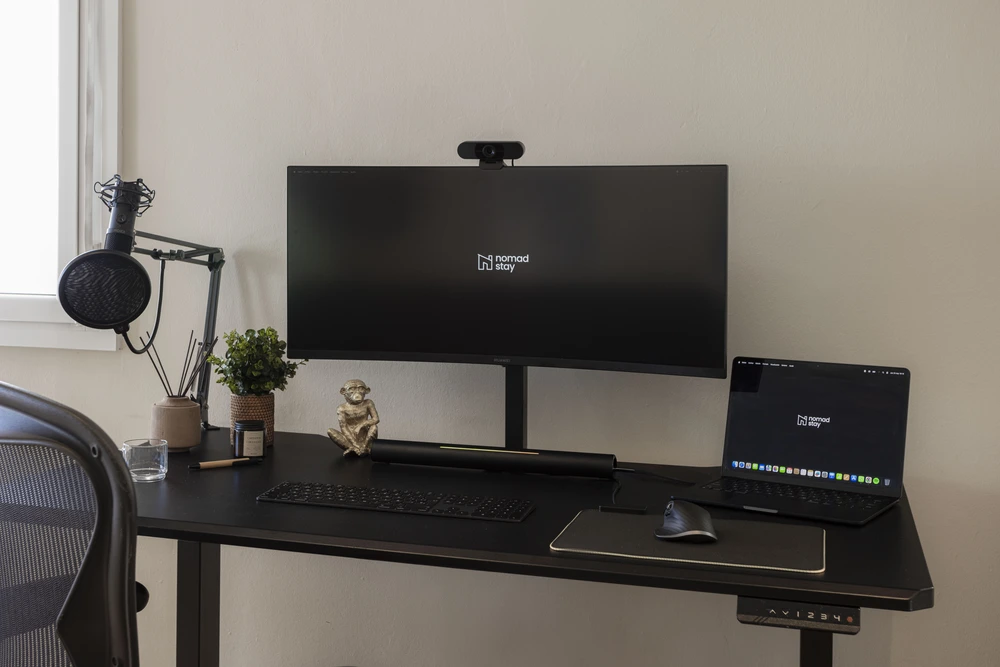
Tirana is not yet on the Rent Remote city list, so there is no dedicated page to send you to. What we do have is a catalogue of furnished, work ready apartments built for a month or three in a city, with a desk, a kitchen and a proper chair, without a twelve month lease or a local guarantor. You can browse the full set of furnished apartments and filter by city and dates.
If the point of Albania for you is a low cost European base while you decide where to settle, it is worth reading the two closest analogues we have covered. Our Athens guide covers a similar low cost visa play with far better infrastructure but a Greek income threshold around EUR 3,500 a month. Our Prague piece explains what a mature EU capital costs once you stop optimising for cheapness.
For a regional comparison, our Bucharest, Sofia and Belgrade city pages show what a furnished month looks like across the Balkans, and Athens is there for the Mediterranean version.
The bottom line
Tirana is the cheapest capital base in Europe that comes with a legal residence route, and the permit bar is low enough that most remote professionals clear it without changing their income. The costs are real, the infrastructure is improving unevenly, and the rulebook is likely to get stricter as EU accession talks advance. That combination makes 2026 a good year to try it and a bad year to assume the terms will still be there in 2029.