
Daniel
Productivity & Remote Living Analyst ·
Zug is ranked the most expensive city in Switzerland — and Switzerland is already in the top 0.1% of the most expensive places on earth. That is not a caveat. It is the whole context. Living in Zug costs more than living in Zurich, more than Geneva, more than Basel. What you get in return is the lowest tax rate in the country, a compact lakeside city with almost no crime, and an economy so concentrated in tech and finance that a software engineer here earns CHF 128,438 on average. The question is not whether Zug is expensive. It is whether what you earn here makes the number bearable.

This guide covers:
What a realistic monthly budget looks like for a single person in Zug
How rent breaks down by apartment type and location
Health insurance premiums and what the mandatory system actually costs you
The tax advantage — and what it's worth in real CHF
Food, transport, and daily spending with specific price anchors
Who Zug financially works for, and who it probably doesn't
The Cost of Living in Zug Switzerland: The Honest Monthly Number
A single person needs between CHF 4,500 and CHF 6,000 per month to live in Zug without cutting corners. That range is not a wide estimate — it reflects the real gap between renting in a shared housing situation on the edge of the city versus renting a one-bedroom apartment near the city center. Gross monthly income of CHF 5,500 to CHF 7,500 is what most financial advisors here consider the floor for a single person renting alone.
Cost Breakdown: What Each Category Actually Takes
Your monthly spend in Zug depends heavily on where you live, where you shop, and how often you eat out.
Rent (1-bed, budget): CHF 2,300/month — farther from center, older buildings, no lake view
Rent (1-bed, mid-range): CHF 2,715–3,200/month — closer to center, newer builds, lake views push costs higher
Groceries (budget): CHF 450–500/month — shopping at Migros and cooking most meals at home
Groceries (mid-range): CHF 600–700/month — Coop or specialty shops, less cooking frequency
Living in Switzerland already demands a significant salary adjustment compared to most European countries, but Zug's flat cantonal tax rate of 22.2% for middle incomes means your take-home pay goes further here than in almost any other Swiss canton.
Living in Switzerland is expensive by any global standard, but Zug's low cantonal tax rate of around 22% for high earners means your take-home pay stretches further than it would in Geneva or Basel.
Rent in Zug: Living in Zug Costs More Than the Swiss Average, and Here Is Why
The Swiss national average rent is CHF 1,400 per month. In Zug, a one-bedroom apartment averages CHF 2,715. That gap — nearly double — is driven by two forces that do not resolve easily: high demand from high income professionals relocating for work, and a housing stock that simply has not kept pace. Over 30% of Zug's residents are foreign nationals, many arriving with job offers from the crypto, fintech, and finance sectors that have concentrated here. When that many well-paid people compete for a small city's rental market, landlords hold the leverage.
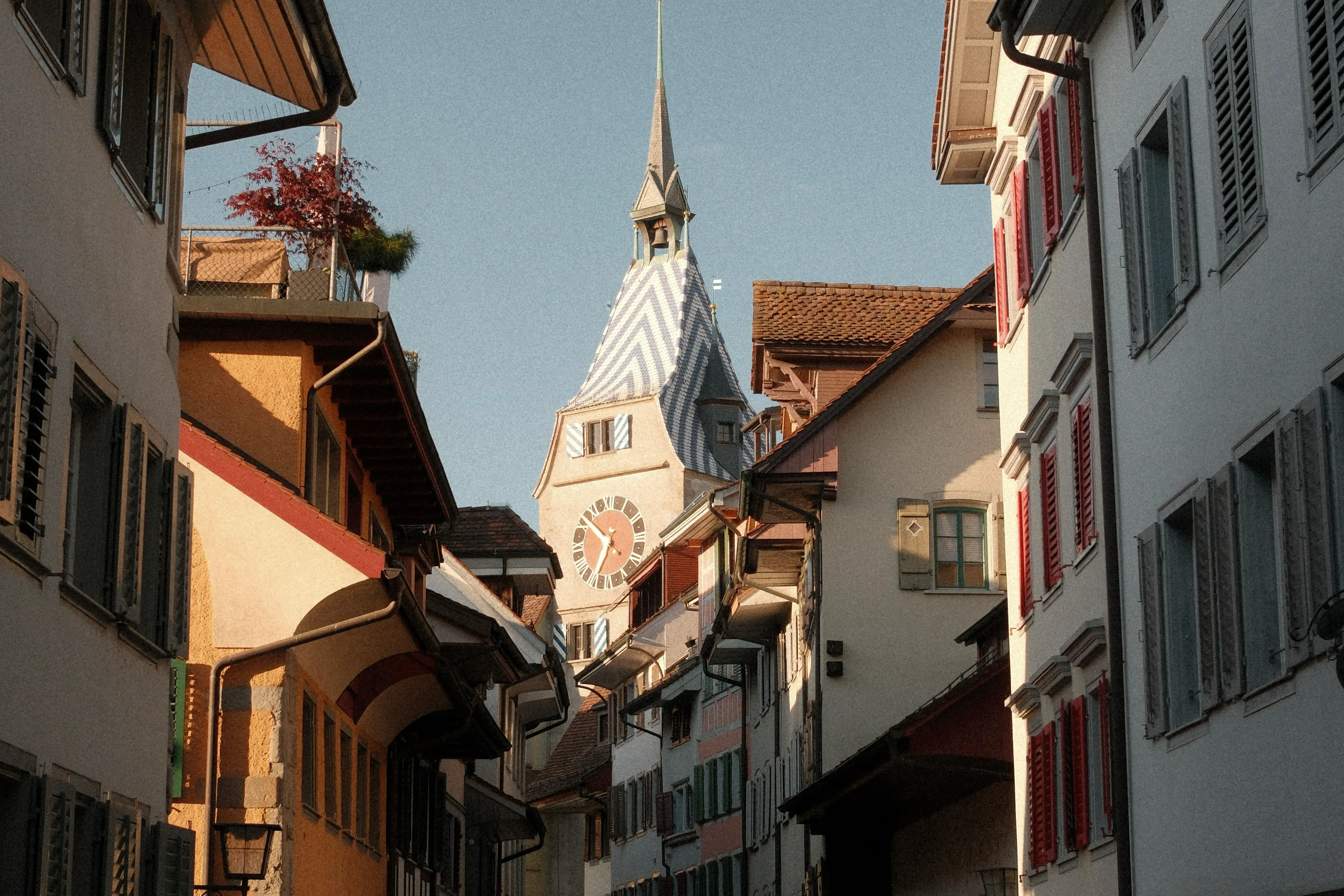
One-Bedroom Apartments: What CHF 2,300 to CHF 3,200 Gets You
A one-bedroom apartment in central Zug runs CHF 2,300 on the low end — and that unit will have applicants within 48 hours of listing.
Altstadt (Old Town) — CHF 2,800–3,200 for a 1-bed; older building fabric, walking distance to everything, very high demand and rarely vacant
Neustadt / city center fringe — CHF 2,300–2,700; newer builds, more available, less character — this is where most recent arrivals land first
Baar (adjacent municipality) — CHF 1,900–2,300; technically outside Zug city but same tax canton, 10-minute drive or bus, meaningfully cheaper if you have flexibility
Three-bedroom apartments in Zug average CHF 6,667 monthly — relevant if you are sharing, because splitting that three ways lands each person close to what a studio costs elsewhere in Switzerland
Finding a home in Zug is competitive enough that many renters arrive with a full dossier — salary slips, references, credit check — before they even view a property. If you are relocating without an established Swiss credit history, shared housing is often the realistic first step, not a compromise.
Shared Housing: The Practical Entry Point for New Arrivals
Shared housing in Zug is not a student arrangement — it is how many professionals manage the rent-to-income ratio while they establish themselves.
A room in a shared flat near Zug Bahnhof runs CHF 900–1,300 per month, utilities sometimes included — the all-in number matters more than the headline rent
Platforms like RentRemote list Zug rooms, but turnover is slow — set alerts and respond the same day listings appear
Shared housing in Baar or Cham drops to CHF 750–1,000 and still keeps you in the Zug canton tax bracket
If your income is on the lower end of the range for this city — entry-level tech positions pay CHF 60,000 to CHF 90,000 annually — shared housing is not a temporary fix. It is the arrangement that makes the monthly budget work until income climbs.
Rental costs vary significantly depending on which side of the canton you land in — a three-bedroom flat in central Zug Stadt runs around CHF 3,500 per month, while the same layout in Baar or Cham can come in CHF 400 to CHF 600 cheaper.
Rent is the number that determines everything else in your monthly budget. Once you know what you are paying per month on housing, the rest of the costs are manageable — though not cheap. Browse fully furnished apartments in Zug to understand what the furnished market currently looks like before committing to an unfurnished lease.
Health Insurance Premiums in Zug: Mandatory, Consequential, and Lower Than Most Cantons
Health insurance in Switzerland is mandatory for every resident. There is no opting out, no employer plan that replaces it, no grace period beyond three months of arriving. What Zug offers — and this matters — is some of the lowest health insurance premiums in the country. The annual average premium in Zug sits around CHF 5,826, which breaks down to roughly CHF 486 per month. That is meaningfully lower than Zurich or Geneva, where premiums run CHF 600 to CHF 750 monthly for comparable coverage.
How the Swiss Health Insurance System Works for New Residents
The mandatory insurance system is standardised — every provider covers the same basic package — but the premium you pay varies by canton, provider, and the deductible you choose.
Standard deductible of CHF 300 per year means higher monthly premiums — around CHF 490–550 in Zug for a standard adult plan
Raising your deductible to CHF 2,500 (the maximum) drops your monthly premium to roughly CHF 350–380 — the right call if you are healthy and rarely use outpatient services
Accident coverage is included automatically if you work more than eight hours per week for a Swiss employer; if you are self-employed or freelancing, you need to add it explicitly — the cost difference is around CHF 30–50 per month
Providers like CSS Versicherung and Helsana both operate in Zug — compare via Priminfo.ch, the federal comparison tool, before selecting
Zug's lowest health insurance premiums relative to other cantons are a real financial advantage — at CHF 120–200 per month less than what Geneva residents pay for equivalent cover, that gap compounds to CHF 1,440–2,400 annually before you have considered the tax difference.
Children under 18 qualify for reduced rates on mandatory health insurance in Zug — typically between CHF 80 and CHF 110 per month depending on the insurer — which makes a material difference to the monthly outgoings of families with two or more children.
Supplemental Coverage and What It Costs to Expand Beyond Basic Health Insurance
The mandatory insurance covers hospital stays, emergencies, and general practitioner visits — but dental, optical, and alternative medicine are excluded unless you add supplemental cover.
Basic dental supplemental coverage adds CHF 30–80 per month depending on scope — worth it if you have ongoing dental work, borderline otherwise
A semi-private hospital room (your own room, doctor choice) adds CHF 60–150 per month; many high income professionals in Zug carry this, particularly those with families
Zuger Kantonsspital is the main public hospital — exceptional quality by any international standard, covered under basic insurance for emergency and standard treatment
The annual average premium for a standard adult policy in Zug with a CHF 300 deductible sits around CHF 5,400, which is noticeably higher than the national average and worth budgeting for before you sign a lease.
Most single arrivals start with the high-deductible basic plan and add supplementals once they have assessed their actual usage — that sequencing saves money in the first year while you learn the system.
Average Salary in Zug and Whether Your Income Actually Works Here
Zug does not have an average salary that applies broadly — it has clusters. The city hosts over 1,000 blockchain and fintech companies, which has pushed compensation in tech far above what equivalent roles pay in Zurich or Bern. A software engineer earns CHF 128,438 on average here. That number is real, but it is also sector-specific. If you are arriving with a job offer in crypto, finance, or corporate services, the salary benchmarks are genuinely high. If you are freelancing or working remotely for a company paying in another currency, the cost of living in Zug will require honest arithmetic before you commit.
What Different Income Levels Actually Cover in Zug
The monthly budget requirement shifts significantly depending on your household situation and whether you are sharing costs.
CHF 60,000–90,000 gross annually (entry-level tech) — works in Zug only with shared housing; after tax and mandatory insurance, take-home leaves CHF 300–600 of discretionary income per month if you are renting alone
CHF 100,000–130,000 gross annually — the range where living in Zug becomes genuinely comfortable for a single person; rent, health insurance, groceries, and a social life are all coverable without tracking every franc
CHF 150,000+ gross annually — Zug's low tax rate starts delivering real compounding advantages; after tax, the take-home difference versus the same salary in Geneva or Zurich is substantial enough to fund meaningful savings
Remote workers earning in EUR or USD face currency exposure — CHF has strengthened consistently against both; run the conversion at current rates, not at the rate when you signed your contract
The city rewards high income professionals in a way few places in Europe do — but the threshold for "comfortable" is higher than most people expect before they price out the rent.
A software engineer earning CHF 130,000 gross in Zug pays roughly CHF 22,000 in combined federal and cantonal tax, which leaves enough headroom to enjoy life — covering a two-bedroom flat, dining out twice a week, and a ski season pass — without feeling squeezed.
Low Tax Rate: What Zug's Tax Advantage Is Actually Worth in Numbers
Zug's maximum personal income tax rate is 22.7%. Geneva's is 48%. That is not a marginal difference — on a CHF 150,000 salary, that gap represents over CHF 37,000 per year in take-home income.
Zug's low tax rate for families sits at 3.54% at the bottom of the income scale — one of the lowest in any developed economy
The low tax rate applies at the cantonal level; federal tax still applies, but the combined effective rate for a CHF 120,000 earner in Zug is around 18–20% total — versus 30–35% in other cantons
The tax burden difference versus Zurich canton on a CHF 150,000 salary is roughly CHF 8,000–12,000 per year — enough to cover four months of rent
High earners benefit most; the relative tax advantage narrows at lower income levels where both rates converge toward minimal amounts anyway
The low taxes in Zug are not an abstract perk — they are a concrete reason why many residents accept the rent premium, because the annual net calculation still favours Zug once you run the numbers honestly against other cantons.
What You Actually Spend in Zug: A Realistic Monthly Budget
The number that matters is not what Zug costs in the abstract — it's what you'll spend in the first 90 days before you've optimised anything. Most people arrive having underestimated at least one major category. Usually two.
Food and Groceries: Where the Gap Between Budget and Reality Opens Up
Groceries in Zug cost roughly twice what you'd pay in Germany and about 40% more than in France — and that's before you've set foot in a restaurant.
Lidl Zug — the cheapest option in the canton; a weekly shop for one runs CHF 80–100 if you stick to basics and avoid imported goods
A sit-down lunch at Rathauskeller Zug costs CHF 28–38 per person, without wine — this is not a special occasion price, it's the standard midday market rate
A coffee at most cafés in the center runs CHF 4.50–5.50; buying one a day adds CHF 130–165 to your monthly food budget without you noticing
Cooking at home six days a week and eating out once brings the food category to roughly CHF 600–800/month for one person — CHF 1,100–1,400 for two
The honest move is to treat groceries as a fixed expense and budget restaurant meals separately — the categories blur otherwise and the monthly total surprises you.
Utilities, Insurance, and the Costs Most People Forget to Account For
Health insurance in Switzerland is mandatory and in Zug it will cost CHF 350–500 per month for a standard adult policy — this is not optional and it is not cheap.
Concordia offers competitive premiums for Zug residents; a basic model with a CHF 2,500 deductible runs approximately CHF 360/month for a healthy adult under 40
Utilities (electricity, heating, water) in a 1-bed apartment add CHF 150–200/month on top of rent — most listings quote rent excluding these
Internet runs CHF 50–80/month through Salt Fiber; speeds are fast and reliable, which matters if you're working remotely and have client calls across time zones
A combined services and insurance line item of CHF 600–800/month is realistic for a single remote worker — budget it before you calculate whether the salary is enough, not after
Health insurance is the expense most people from the EU or US are least prepared for — it lands in month one before you've received your first Swiss paycheck, and the amount is non-negotiable regardless of how little you use the system.
Transportation: The Case for Skipping the Car Entirely
Zug's public transportation network is efficient enough that a car is a cost centre, not a convenience — and the savings are large enough to affect your monthly budget meaningfully.
A regional GA travel pass covering all zones in the Zug area costs approximately CHF 3,860/year or around CHF 320/month — it covers trains, buses, and connections to Zurich
The train from Zug to Zurich HB runs every 30 minutes and takes 24 minutes; the fare without a pass is CHF 14.60 each way, which adds up to CHF 580+ a month for a daily commuter
Car ownership in Switzerland adds CHF 600–1,000/month when you account for insurance, parking (CHF 150–250/month in central Zug), fuel, and annual service costs
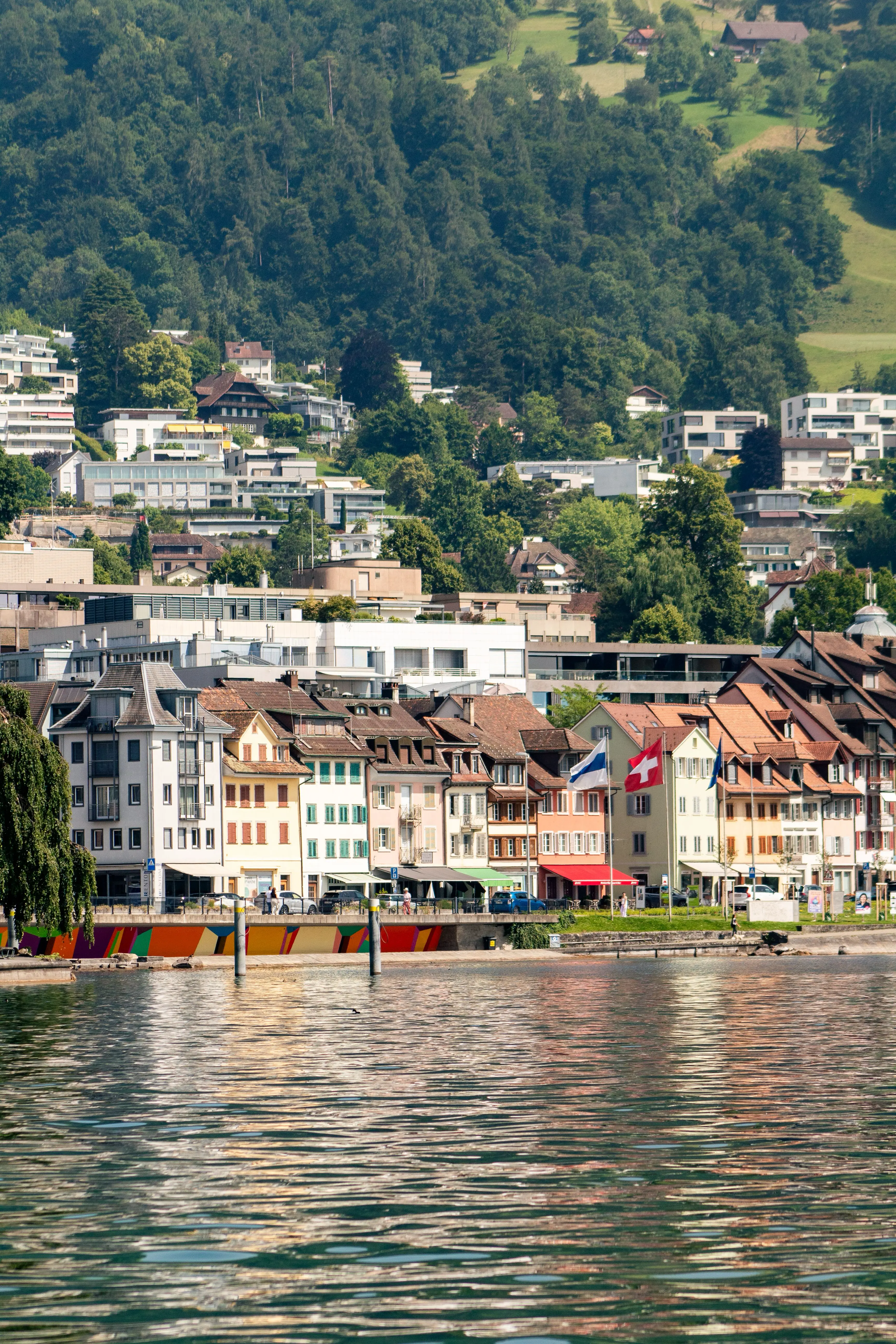
If you live along the Zug Lakeshore near Zug Seebahn, cycling to most destinations in the center is realistic nine months of the year
The GA pass pays for itself the moment you start making regular Zurich trips — and for remote workers with no fixed commute, the math still works because you're paying for freedom of movement across the entire country.
To give a concrete example, a single professional renting a one-bedroom flat near Zug Bahnhof, cooking at home five nights a week, and commuting to Zurich by train should budget roughly CHF 4,800 per month all-in before tax — not including holidays or car costs.
Category | Budget (Monthly) | Mid-Range (Monthly) | What Drives the Difference |
|---|---|---|---|
Rent (1-bed) | CHF 1,900 (Baar fringe) | CHF 2,700 (city centre) | Distance from lake and Altstadt; listing scarcity |
Food and Groceries | CHF 600 | CHF 1,000 | Cooking frequency; restaurant vs. bar seating; Lidl vs. specialty shops |
Health Insurance | CHF 350 | CHF 500 | Deductible level chosen; age; supplementary coverage |
Utilities | CHF 130 | CHF 220 | Apartment size; heating type; season |
Transportation | CHF 100 (bike + occasional train) | CHF 320 (GA pass) | Commute frequency; Zurich access needs; car ownership |
Leisure and Lifestyle | CHF 200 | CHF 600 | Dining out frequency; weekend travel; fitness memberships |
Total (single person) | CHF 3,280 | CHF 5,340 | Location, insurance deductible, and transport mode drive most of the variance |
Zug for Families and Long-Term Residents: What the Lifestyle Actually Costs
The cost of living in Zug for a family is a genuinely different calculation — not just the single-person number multiplied by two. Children introduce a new set of fixed expenses that don't scale down regardless of how carefully you manage everything else.
Zugerberg Mountain is accessible by a short funicular ride from Schönegg for CHF 8 return, and its network of maintained hiking trails means families can fill a Sunday without spending anything beyond the ticket — a practical reason long-term residents cite for staying in Zug.
Childcare and Education: The Expense That Reshapes Every Family Budget
Childcare in Zug costs more than rent in most European cities — and this is not an exaggeration designed to shock; it is the number you need before you plan a family move here.
Full-time Kita (daycare) at centres such as Kita Regenbogen Zug runs CHF 2,200–2,800/month per child under five — some subsidies exist but eligibility is income-tested and often excludes high earners
International schooling at Institut Montana Zugerberg costs CHF 30,000–45,000/year in tuition — families relocating from abroad often underestimate this relative to state school systems they've left behind
Swiss public schools are free and high quality; children who speak German integrate into the cantonal system without fees, but language support for non-German speakers varies by school
After-school care (Hort) adds CHF 800–1,200/month per child — this is separate from school fees and is means-tested with limited availability in central Zug
A family with two young children in full-time childcare is looking at CHF 4,500–5,500 in childcare costs alone, before rent — which is why the salary floor for comfortable family life in Zug sits significantly higher than the CHF 150,000 gross figure that works for a single professional.
Daycare centers in Zug charge between CHF 120 and CHF 160 per day for full-time placement, but the canton's income-based subsidy system can reduce that to under CHF 60 per day for households earning below CHF 80,000 — a meaningful saving for dual-income expat couples.

Leisure, Top Attractions, and What You Can Do Without Spending Much
Zug's top attractions are largely free, which provides a real offset against the expense of daily life — but only if you use them consistently rather than treating them as occasional breaks from screen time.
Alpenquai Zug— the lakeshore path runs 4km from the city center; swimming in summer costs nothing, and the water is clean enough to use daily from June through September
Kunsthaus Zug — permanent collection is CHF 10 entry; temporary exhibitions are often free on the first Sunday of the month
Day trips to Zurich, Lucerne, or Rigi by train are the primary weekend option most residents use; the Rigi summit via train from Arth-Goldau costs CHF 68 return without a pass
A fitness membership at a standard gym in Zug runs CHF 80–130/month; outdoor swimming infrastructure along the lake is free and replaces this cost for much of the year
The lifestyle in Zug is not about consuming services — it's about access to landscape, and most of what makes it liveable doesn't appear on a receipt.
Zug is home to great schools including the Karl Vogt School and the International School of Zug and Luzern (ISZL), where annual fees run between CHF 25,000 and CHF 35,000 — a real line item that families moving from cheaper cantons consistently underestimate.
Zug vs. Zurich: The City Center Cost Comparison That Surprises Most Expats
Most people weighing up Zug are also considering Zurich. The comparison is worth running with real numbers — because the two cities are 24 minutes apart by train and the cost profile is more different than the proximity suggests.
Rent and Housing: Where Zug Is Cheaper, and Where It Isn't
Zurich's average 1-bed rent is CHF 2,400–2,600 in a central neighbourhood — which makes Zug's CHF 2,715 average look more expensive on a pure housing basis, but the tax differential changes the net calculation immediately.
A CHF 120,000 earner in Zug pays roughly CHF 6,000 less in cantonal and communal tax per year than the same earner in Zurich city — that's CHF 500/month that offsets the rent premium entirely
Zurich's housing market is tighter; vacancy rates in Zurich city hover around 0.1%, versus roughly 0.3–0.5% in the Zug canton — in practice, finding a flat in Zug is still difficult, but marginally less impossible
Remote workers who don't need to be in Zurich daily often find that living in Zug and commuting occasionally is the better financial plan — the GA pass covers it and the net savings are real
The Zug Neustadt market area around Kolinplatz has apartment stock that ranges from CHF 1,800 (older buildings, no lift) to CHF 3,500 (renovated lake-view) — more variety than most people expect before they search
The honest answer is that Zug is not cheaper than Zurich in most day-to-day categories — it is more expensive on rent and roughly equivalent on food and services — but the tax saving at professional salaries makes the total annual cost of life in Zug lower for anyone earning above CHF 100,000 gross.
Unlike most major cities in Switzerland, Zug has no municipal income tax surcharge above the cantonal rate, which is why a household earning CHF 150,000 keeps roughly CHF 8,000 more per year here than they would in Bern or Basel.
Savings Potential: What Actually Stays in Your Account at the End of the Month
The question that matters is not what Zug costs — it's what you can actually save there, and the answer depends heavily on income bracket and lifestyle discipline.
A software engineer on CHF 128,000 gross in Zug takes home approximately CHF 8,800–9,200/month after tax and social contributions; a mid-range single-person budget of CHF 5,500 leaves CHF 3,300–3,700/month in potential savings
A couple where both partners work professionally can accumulate CHF 5,000–8,000/month in savings while maintaining a high standard of living — this is not common in most European cities at any income level
Remote workers earning in USD or EUR at US or European salary rates face a harder calculation; a USD 90,000 remote salary converts to approximately CHF 80,000 at current rates — after mandatory costs, the savings margin is thin and currency risk is real
The Zuger Kantonalbank on Bahnhofstrasse offers basic savings accounts; Swiss savings accounts pay modest interest but CHF-denominated savings preserve purchasing power better than EUR accounts given historical currency trends
Zug's savings potential is genuinely exceptional for high earners — but it assumes your income is in CHF or adjusted for CHF parity, because a European or American remote salary at European rates does not survive Swiss costs without subsidy.
Zug remains an attractive destination specifically for finance and crypto professionals because the cantonal tax rate on capital is among the lowest in Europe, and the commute to Zurich's financial district by train takes just 25 minutes.
Is Zug Worth It? Who Should Move Here and Who Shouldn't
Who Zug Actually Works For
Zug delivers on its promise, but only for a narrow profile of earner — get that wrong and the numbers don't recover.
Professionals earning CHF 120,000 or above see a genuine tax advantage that compounds meaningfully over three to five years
Those who prioritise physical infrastructure, safety, and alpine access over nightlife or urban density will find the trade-off straightforward
High earners with stable Swiss-franc compensation have real savings potential that can change long-term financial outcomes, not just monthly comfort
Anyone ready to commit to at least 12 months gets the most from the low cantonal tax rate — short stays rarely justify the relocation friction
The lifestyle is quiet, orderly, and expensive — if that combination sounds like a compromise rather than a preference, Zug will grind on you within six months.
If you work remotely and value outdoor access, Lake Zug puts swimming, kayaking, and waterfront running trails within a 10-minute walk of most central apartments — a lifestyle perk that Zurich's lakefront crowds simply cannot match on a Tuesday morning.
Who Should Look Elsewhere
Remote workers earning in EUR or USD at home-market rates are the most common mismatch — Zug's costs are Swiss even when your income is not.
Salaries benchmarked to Berlin, Lisbon, or New York don't stretch to cover CHF rents without meaningful sacrifice to savings rate
Frugality doesn't resolve the currency mismatch — only CHF-equivalent compensation or a cheaper base city does
Zurich is not significantly cheaper than Zug, but cities in Vaud or Bern canton offer lower rents and comparable rail connectivity
Without Zug's tax advantage to offset costs, those cantonal alternatives often produce a better net outcome for mid-range earners
If renegotiating to CHF compensation isn't on the table, relocating to Zug specifically is a lifestyle decision dressed up as a financial one.
Moving Quickly When You're Ready
The Zug rental market does not wait — available units rarely sit for more than two weeks, and quality furnished apartments move faster than that.
Build a shortlist before you arrive: showing up to search in person puts you behind applicants who submitted remotely
Landlords typically require proof of Swiss employment or a local guarantor, so have documentation ready before enquiring
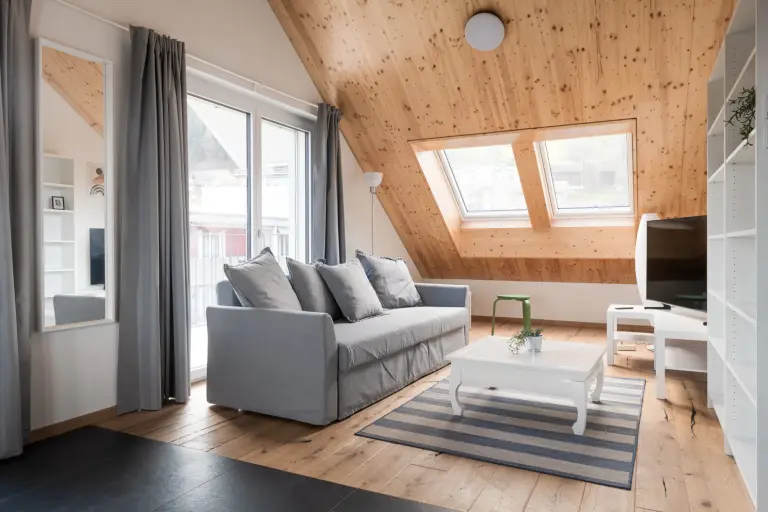
Explore fully furnished apartments in Switzerland to compare Zug options against nearby cantons while the market is still open
A 12-month minimum commitment signals seriousness to landlords and is often the informal filter on competitive listings
In a market this tight, the shortlist you build before committing is worth more than the negotiation you try to have after.