
Daniel
Productivity & Remote Living Analyst ·
Monterrey is not the Mexico most expats picture before they arrive. There are no colonial plazas draped in bougainvillea, no beach towns, no slow afternoons. What you get instead is a northern Mexican city built around industry, money, and proximity to the U.S. border — and for the right person, that is exactly the point. The trade-off is real: Monterrey moves fast, costs more than most Mexican cities, and demands more Spanish than you might expect. But the infrastructure, the salaries, and the quality of life in the better neighborhoods are genuinely difficult to find elsewhere in Mexico.
This guide covers:
What daily life actually feels like for expats in Monterrey
Which neighborhoods to live in — and which to avoid
What housing costs, and where the value is
Healthcare, insurance, and the medical system
Getting around without a car
How to build a social life and find your community

What Life Is Actually like in Monterrey for Expats
Most expats who move to Monterrey arrive through work — a multinational transfer, a cross-border role, or a remote position with a U.S. salary. That shapes everything about how the city functions for foreigners. This is not a backpacker circuit stop or a retiree haven. It is a business city, and the expat experience here reflects that: more polished, more expensive, and more socially structured than you might find in Oaxaca or Mérida.
The Culture Gap Is Smaller Than You Think — but It Exists
Monterrey sits 220 kilometres from the U.S. border, and the cultural proximity is tangible in ways that make the transition easier for North Americans specifically.
English is spoken in corporate environments, international schools, and upscale areas like San Pedro Garza García — but not reliably in markets, government offices, or working-class neighborhoods
Mexican culture here skews more conservative and family-oriented than Mexico City; weekend life centres on family gatherings, not bar crawls
The regio identity — what locals call themselves — is distinct from broader Mexican identity: proud, hardworking, and occasionally guarded with newcomers
Spanish fluency above tourist level opens the city; without it, your social world stays within the expat bubble
Expect a few months before Monterrey starts to feel like home rather than a work assignment — that timeline shortens considerably if you make the effort with the language.
The Lifestyle Runs on a Different Clock
Monterrey does not follow the leisurely pace you might associate with Mexican lifestyle culture — meals are earlier, nights end sooner, and the city empties on Sundays.
Dinner at El Tío in Garza García starts at 8pm, rarely later — this is not Mexico City's midnight dinner culture
The weekend escape is the mountains: Parque Nacional Cumbres de Monterrey is 40 minutes from the centro and genuinely worth it
Shopping malls function as social infrastructure — Centro Santa Fe and similar complexes are where families spend Saturday afternoons, not just where people shop
The heat from May through September is serious: 38°C days are normal, and outdoor life moves indoors accordingly
If you are relocating from a European or coastal Mexican lifestyle, the rhythm here will take adjustment — it rewards structure more than spontaneity.
Summers in Monterrey regularly hit 40°C, and outdoor plans frequently get cancelled due to the heat — most locals and expats shift their errands and social life to early mornings or evenings from June through August.
Best Neighborhoods for Expats Moving to Monterrey
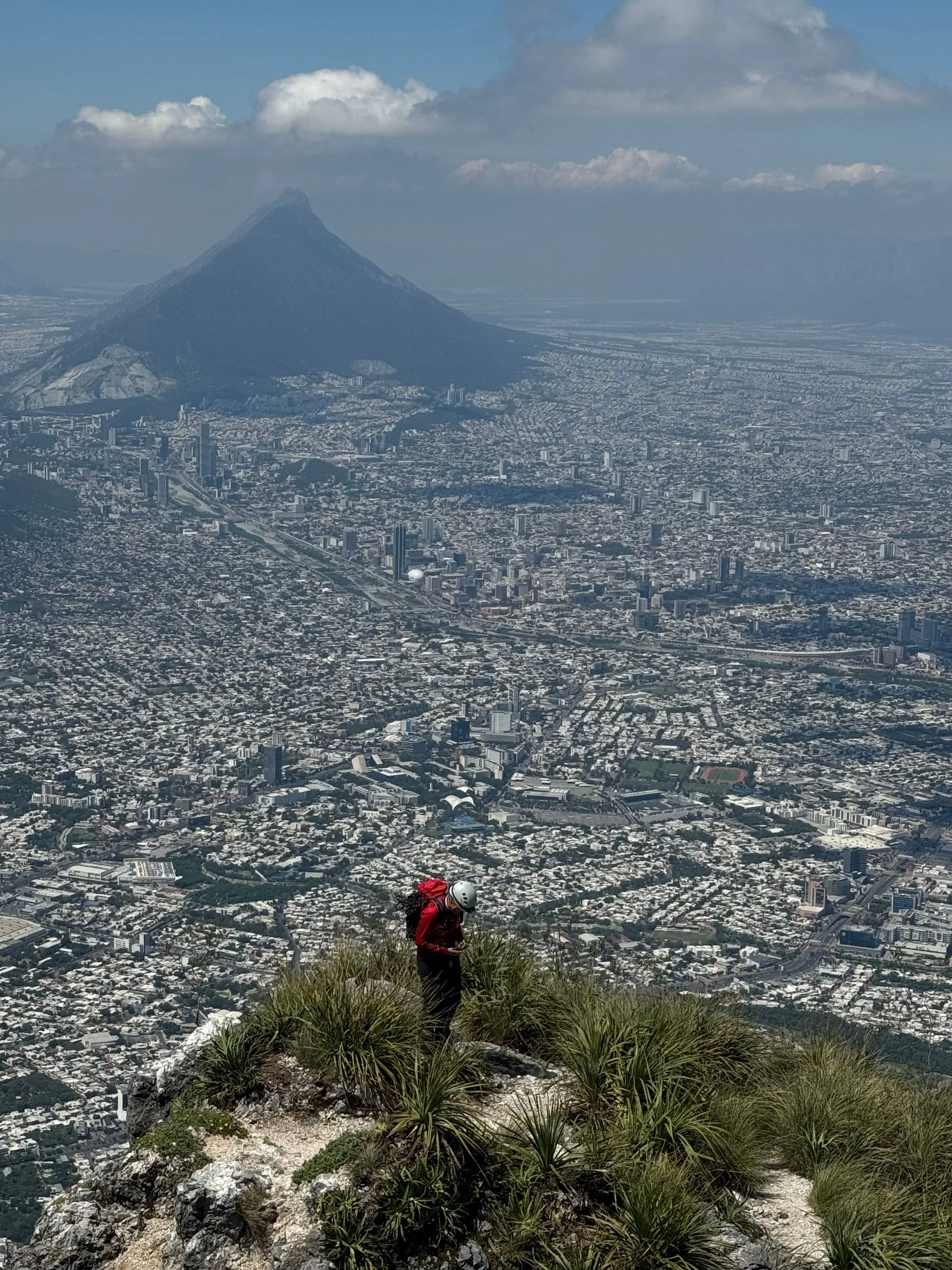
Where you live in Monterrey determines almost everything else: your commute, your social circle, your grocery options, and your monthly budget. The city sprawls across a valley ringed by mountains, and the quality and character of neighborhoods vary enormously within short distances. Most expats end up in the southern suburban corridor — and there are real reasons for that, not just herd mentality.
Neighbourhood | Monthly Rent (1-bed) | Vibe | Best For | Key Advantage |
|---|---|---|---|---|
San Pedro Garza García | $900–$1,800 USD | Corporate, polished, safe | Families, corporate expats | International schools, walkable retail |
Valle Oriente | $700–$1,200 USD | Modern, high-rise, transient | Young professionals, solo expats | New builds, close to business district |
Zona Rosa / Obispado | $500–$900 USD | Mixed, urban, more local | Budget-conscious expats, creatives | Lower cost, more authentic street life |
Cumbres | $450–$750 USD | Suburban, residential, quiet | Families prioritising space | Large apartments, school access |
Monterrey Centro | $300–$550 USD | Urban, dense, unfiltered | Adventurous solo expats only | Cheapest rent in the city |
San Pedro Garza García: Where Most Expat Families Land
San Pedro Garza García is technically its own municipality — separate from Monterrey proper — and it functions like a city within a city, with its own services, security, and social ecosystem built largely around the international business community.
Fully furnished apartments in Calzada del Valle run $1,100–$1,600/month; unfurnished drops to $700–$900 for the same footprint
The American School Foundation of Monterrey is here — the default choice for expat families with school-age children
Groceries at HEB San Pedro run roughly 20–30% cheaper than equivalent U.S. prices and the selection is genuinely good
Safety in San Pedro is real — private security is visible and consistent — but it also means the neighbourhood can feel more gated than urban
San Pedro is comfortable almost immediately, and that comfort is both its strongest selling point and its limitation if you want to actually experience Mexican culture rather than a filtered version of it.
Browse Monterrey homes near this area
Valle Oriente: The Modern High-Rise Option
Valle Oriente is where Monterrey's newer money lives — glass towers, corporate headquarters, and the kind of modern apartment finishes that photograph well on relocation packages.
One-bedroom apartments in modern towers average $800–$1,100/month fully furnished; some buildings include gym, pool, and concierge
The Galerias Valle Oriente mall and surrounding restaurant strip on Av. Batallón de San Patricio handle most daily needs within walking distance
Public transport connections here are weaker than in central neighborhoods — a car or Uber habit is essentially mandatory
The community skews younger and more transient: good for meeting people quickly, less stable for building long-term social roots
Valle Oriente works best as a first landing pad while you figure out whether Monterrey is permanent — it asks very little of you, which is both the appeal and the problem.
Neighborhoods such as San Pedro Garza García and Valle Oriente offer private security, walkable streets, and proximity to international schools — which makes them the default choice for expats arriving with families.
Browse fully furnished apartments in Monterrey
Browse Monterrey homes near this area
What You Need to Know Before You Move to Monterrey: Visas, Legality, and the Basics
Mexico's visa system is more forgiving than most people expect — and the requirements for moving to Monterrey depend almost entirely on how long you plan to stay and whether you are working for a Mexican employer or a foreign one.
Temporary Resident Visa: The Standard Route
If you are staying longer than 180 days, the Temporary Resident Visa is the structure most expats use, and it is worth getting right before you land rather than trying to fix it from inside Mexico.
Apply at a Mexican consulate in your home country before departure — the process cannot be completed entirely from within Mexico
Financial requirements apply: roughly $1,620 USD average monthly balance over 12 months, or proof of employment income above a threshold
The visa is issued for one year initially, renewable up to four years before you qualify for permanent residency
Working remotely for a foreign company in a grey zone — technically tourist visa territory — is widely practiced but carries real legal risk if you stay long-term
The immigration paperwork in Nuevo León is processed through the INM office in Monterrey, and appointment wait times can stretch to six weeks — build that into your relocation timeline.
You will get significantly better deals on apartments, services, and even groceries if you take the time to learn at least conversational Spanish before you arrive — Monterrey is far less English-friendly outside of San Pedro Garza García.
Banking and Financial Life Across the Border
Moving money in and out of Mexico efficiently matters more than expats realise until they are stuck with unfavorable exchange rates and ATM withdrawal limits.
Opening a Mexican bank account requires your visa card and RFC (tax ID) — Banorte and HSBC are most accessible for expats with foreign income
Wise or Remitly for international transfers saves roughly 3–5% over bank wire rates — that gap compounds fast across a year
ATM fees across networks average 50–80 MXN per withdrawal; Citibanamex ATMs are often cheapest for Citi cardholders
The USD/MXN rate matters enormously if you earn in dollars: a 5-peso swing changes your effective monthly budget by several hundred dollars
Sort your banking infrastructure before you move, not after — the first month in a new city is the wrong time to also be debugging your finances.
Healthcare, Hospitals, and Insurance for Expats in Monterrey
Monterrey has the best private healthcare system in Mexico outside of Mexico City — and that is not a small claim. The city's industrial wealth attracted major hospital investment across decades, and the result is a concentration of modern, internationally accredited facilities that most Mexican cities simply do not have. The public system is a different story.
Private Hospitals: What You Are Actually Getting
The private hospital network in Monterrey is the real reason healthcare is not a dealbreaker for expats relocating here, and knowing which hospitals to use matters before you need one.
Hospital Zambrano Hellion — widely considered the best private hospital in Monterrey; international patient coordinators, Joint Commission accredited, specialist waitlists of 2–5 days
Christus Muguerza Hospital Alta Especialidad — a major private hospital system with multiple locations across the city; strong emergency department
Specialist consultations run $800–$1,500 MXN ($40–$75 USD) without insurance — routine care is genuinely affordable out of pocket at this level
The public IMSS system covers Mexican employees and their dependents; most expats working for foreign employers do not qualify without specific setup
The private health infrastructure here is real, but it still requires insurance — a single hospitalisation without coverage will cost more than a year of premiums.
Health Insurance Options That Actually Work
Insurance for expats in Monterrey splits into two categories: international plans that follow you across borders, and local Mexican plans that cost less but tie you to the domestic system.
International plans (Cigna Global, Allianz Care, AXA) run $150–$400/month depending on age and coverage level — necessary if you travel frequently back to your home country
Local Mexican private insurance through GNP Seguros or MetLife México costs $60–$150/month and covers major hospitals including Zambrano Hellion
Many expats on corporate packages receive health insurance through their employer — verify whether it covers dependents and which hospitals are in-network
Dental work in Monterrey is high quality and significantly cheaper than the U.S.: implants run $800–$1,200 USD versus $3,000–$5,000 north of the border
Private hospitals such as Hospital Christus Muguerza and Hospital CIMA charge around 1,500 to 3,000 MXN for a specialist consultation — a fraction of equivalent out-of-pocket costs in the United States.
If you are relocating without employer coverage, a local Mexican private plan covering the major hospitals is the minimum — international coverage is worth the premium only if your life actually crosses borders regularly.
Moving to Monterrey: What Relocation Actually Looks Like on the Ground
Most expats underestimate the logistics of moving to Monterrey Mexico because the city looks organised from the outside — and it is, relative to most of Mexico — but the bureaucratic layer underneath runs on local knowledge more than official process. What follows is what that actually means in practice.
Finding Housing Before You Arrive
The Monterrey real estate market moves faster than most expats expect, and the best apartments in the best buildings rarely sit on international listing platforms long enough to view remotely.
Encuentra24 Monterrey and Lamudi México — the two platforms where local landlords actually post; filter by furnished (amueblado) and expect to move within 48–72 hours of a good listing appearing
Furnished 1-bed apartments in Contry, a residential neighbourhood east of San Pedro Garza, run $500–$800 USD/month — quieter than Valle Oriente, closer to Carretera Nacional
Month-to-month contracts exist but carry a price premium of roughly 15–20% over annual leases — worth it for the first 60 days while you work out which part of the city suits your rhythm
A local real estate agent (corredor inmobiliario) costs nothing to the renter in most cases — the landlord pays the commission — and they will show you buildings that never appear online
The standard advice to arrive and rent an Airbnb for two weeks before committing to a lease is correct — but budget for it, because furnished short-term options in the neighbourhoods worth living in start at $60–$80 USD/night.
Registering at the Centro de Atención a Migrantes in the city center is one of the first administrative steps you will need to complete after your FM3 or FM2 visa is approved.
The Documents You Need Before You Can Sign Anything
Monterrey landlords require a fiador — a Mexican guarantor who owns property in the state — and if you don't have one, you will pay a deposit of two to three months' rent instead, which means having $3,000–$6,000 USD liquid before you sign.
RFC (Registro Federal de Contribuyentes) — your Mexican tax ID; apply online through the SAT portal with your passport and visa, takes 3–5 business days
CURP — the population registry number; required for banking, healthcare registration, and some lease agreements; generated automatically when your visa is processed
A Mexican bank account from Banamex or BBVA México is effectively mandatory — international wire transfers for monthly rent work in theory and fail in practice more often than they should
Proof of income in Spanish — if your employer is foreign, have your most recent three payslips translated by a certified translator; some landlords accept English documents, most don't
None of this is impossible, but it means your relocation timeline is 4–6 weeks minimum from decision to keys — faster only if you have corporate relocation support handling the paperwork.
Healthcare, Private Services, and What Expats Actually Use
Monterrey Mexico has private healthcare infrastructure that is genuinely world-class by regional standards — built around serving a corporate population that cannot afford to wait weeks for care — but navigating it without local knowledge means paying more and waiting longer than you need to.
Private Clinics and Day-to-Day Medical Care
For anything below hospitalisation level, the private clinic network in Monterrey means you rarely need a major hospital — and you will get faster, cheaper care if you don't default to one.
Edificio Medico Sur — private multi-specialty clinic on Av. Revolución; GP consultations from $500 MXN ($25 USD), no appointment needed before 10am on weekdays
Clínica Nova — well-regarded local private hospital in Colonia Cumbres with 24-hour emergency services and a strong reputation for orthopedic and pediatric care
Farmacias del Ahorro and Farmacia Guadalajara both operate in-pharmacy consultation services — a doctor on-site, $80–$150 MXN ($4–$8 USD) — genuinely useful for minor illness, prescriptions, and follow-up care
Mental health services in private practice run $600–$1,200 MXN ($30–$60 USD) per session; English-speaking therapists exist but are concentrated in San Pedro Garza and Obispado — budget for the commute if you're based outside those areas
Health insurance matters less for day-to-day visits — most expats pay out of pocket for routine care — and matters enormously the moment something goes wrong overnight.
Schools, Families, and the Education Question
Monterrey is one of the few cities in Mexico where relocating with a family doesn't mean compromising on schools — but the good options are concentrated in specific corridors and fill up faster than most families expect.
Colegio Inglés Americano — bilingual private school on Av. Lázaro Cárdenas; fees from $8,000–$12,000 USD/year; applications close in February for the following academic year
Instituto Thomas Jefferson — strong bilingual curriculum, more affordable than the American-accredited options at $4,000–$7,000 USD/year, popular with both local families and expat families on tighter relocation budgets
The TEC de Monterrey campus near Eugenio Garza Sada is one of the best universities in Latin America — worth knowing both because it draws international faculty to the city and because it means the neighbourhoods around it have good infrastructure and reliable public services
International schools run waiting lists — contact schools 6–9 months before your planned arrival date, not 6–9 weeks
Both the American-accredited and bilingual private schools in Monterrey are built around families who move regularly — they understand relocation mid-year better than most.
Daily Life, Local Infrastructure, and Getting Around
The version of Monterrey Mexico that expats actually live in day-to-day is not the one in the business district or the weekend hiking trails — it is the commute, the market, the coffee order, and the question of whether driving is worth it.
Getting Around: Driving, Transit, and What the City Assumes
Monterrey is built for cars — not in the aspirational sense, but in the structural sense that the distances and the heat make walking between errands genuinely impractical for most of the year.
The Metro Monterrey Línea 1 runs east-west and covers the city center and university zones adequately — $5 MXN per journey, clean, reliable — but it does not reach San Pedro Garza García or Contry without a connection
Uber operates reliably across Monterrey and Pedro Garza García; average cross-city fare runs $60–$120 MXN ($3–$6 USD); local taxis outside the app are cheaper but require Spanish negotiation and no fixed meter
Driving means dealing with Av. Constitución and Av. Morones Prieto during peak hours (7:30–9:30am and 6–8pm) — budget an extra 30–45 minutes on both ends of the day if your work hours are fixed
A Mexican driver's licence requires your home country licence, your visa, and a visit to the Secretaría de Vialidad y Tránsito office — the process takes one day if your documents are complete
Most expats who stay beyond three months end up with a car — not because transit fails them, but because the distances between the parts of the city they actually use make it the only practical solution.
Local Markets, Food, and Where to Actually Shop
Away from the international supermarkets already covered in Part 1, the local market infrastructure tells you more about how the city actually functions than any shopping mall does.
Mercado Juárez in Monterrey Centro — the city's main public market; produce, dried goods, and local street food; busiest Saturday mornings, quieter and cheaper than any supermarket for staples; open from 7am
City Club (the warehouse format, similar to Costco) on Av. Ruiz Cortines — bulk buying for families or anyone staying 3+ months; annual membership $700 MXN; significantly cheaper per unit on pantry staples, cleaning products, and imported goods
The Menú del Día at local comidas corridas (canteen restaurants) outside the business district runs $70–$100 MXN ($3.50–$5 USD) — soup, main, drink, often dessert — and is the fastest and cheapest way to eat well on a weekday
Most expats keep a car in Monterrey because the metro only covers two lines and leaves large residential areas like Cumbres and Santa Catarina completely unserved.
The budget gap between shopping locally and shopping at international-facing supermarkets in Monterrey is real — close to 30–40% on weekly groceries — and it compounds over a 3-month stay into a number worth caring about.
Is Monterrey the Right Move for You?
Who Monterrey Actually Works For
This city rewards a specific profile — the expat who came for work, needs things to function, and doesn't require charm to feel settled.
Professionals relocating for manufacturing, engineering, or finance roles find the infrastructure matches the job
Families with children benefit from a genuine selection of well-run international and bilingual private schools
Remote workers who want a lower cost of living than U.S. or European equivalents without sacrificing reliable utilities and fast internet
Anyone who can tolerate a city without colonial atmosphere or a coast — Monterrey's nearest beach is a four-hour drive
If your priority list starts with slow mornings and colonial architecture, Monterrey will feel like a compromise before the first month is out.
What the Relocation Actually Involves
Moving to Monterrey is manageable, but it isn't frictionless — the paperwork takes longer than expected and the housing market does not wait for you to decide.
Residency documentation runs on Mexican government timelines, which rarely match the schedule you had in mind
The rental market in desirable areas like San Pedro Garza García moves fast — good units go without warning
Spanish is non-negotiable at the bureaucratic level; the city makes no structural concessions for English-only arrivals
Private healthcare is accessible and affordable, but finding the right clinic or specialist still requires local guidance
Most expats in Monterrey arrived with a fixed timeline and stayed longer than they planned — which is usually the clearest signal that the calculation worked out.
How to Test the Fit Before You Commit
A short-term lease before anything annual is not just practical advice — it's how most people who stayed long-term actually started.
Furnished short-term rentals let you trial neighbourhoods like Contry, Valle, or San Pedro Garza García before locking in a 12-month contract
Arriving with three months of runway gives you time to sort documents, open a local bank account, and find a reliable doctor
The expat community here is built around professionals who made the same calculation — they are a practical resource, not just a social one
Explore fully furnished apartments in Mexico as your starting point and treat the first lease as a scouting period
Monterrey doesn't court you — if your situation fits what it offers, that becomes obvious within the first few weeks on the ground.
Start Your Monterrey Relocation on the Right Foot
Monterrey rewards expats who do their homework before they arrive. The city's mix of economic opportunity, modern infrastructure, and genuine local culture makes it one of Mexico's most underrated destinations for long-term living — but it works best when you match your expectations to what it actually offers rather than what you imagine it might be.
The smartest first move is giving yourself time to explore neighborhoods, test commutes, and get a feel for daily life before locking into a long-term lease. A furnished short-term rental lets you do exactly that — arrive ready to live, not scrambling to assemble a household while still figuring out which part of the city suits you best.
When you're ready to make the move, browse fully furnished apartments in Mexico to find flexible options that fit your timeline and budget. Monterrey has a way of surprising people — most expats who come for a year end up staying for several.