Sophia
Wellbeing & Living Editor ·
Hong Kong works for remote workers in ways that other Asian cities don't — the infrastructure is relentless, the transport is fast, and English gets you everywhere. But it's expensive in a way that surprises people who've lived cheaply across Southeast Asia, and the visa situation requires more planning than most nomads expect. This guide covers what you actually need to know before you commit.
Visa options and entry requirements for digital nomads
The best neighbourhoods for remote work and real daily life
Accommodation options in Hong Kong across different budgets
Coworking spaces worth your time and money
What to budget month-to-month, honestly
How to build a local community faster than you'd expect
Visa Requirements for Digital Nomads Moving to Hong Kong
Hong Kong does not have a dedicated digital nomad visa — that's the first thing to get straight. What it does have is a set of entry and residency pathways that nomads use in different ways depending on how long they want to stay and what their work situation looks like.
Entry Requirements and the Visa-Free Option
Most Western passport holders can enter Hong Kong visa-free for 90 days, which is genuinely useful if you're testing the city before committing to a longer stay.
UK, US, EU, Australian, and Canadian passport holders: 90 days visa-free on arrival
Extensions are possible but not guaranteed — the Immigration Department decides case by case
You cannot work for a Hong Kong-based employer on a visitor entry — remote work for foreign clients sits in a legal grey area, as it does in most countries
No registration or check-in requirement during your stay — just keep your passport and entry stamp accessible
The 90-day window is enough to understand whether Hong Kong fits your life, but it's not a long-term solution if you want stability.
Digital Nomad Visa Alternatives: What Actually Exists
If you want to stay longer than 90 days and do it properly, Hong Kong offers two serious pathways — neither is labelled a digital nomad visa, but both function as one in practice.
Quality Migrant Admission Scheme visa: a points-based system that rewards education, professional experience, and salary history — competitive but achievable for many nomads with strong CVs
Investment as entrepreneurs visa: requires establishing a legitimate business in Hong Kong, with demonstrable economic contribution — not a workaround, a real commitment
Both require a local sponsor or business plan, which takes time to arrange — apply from outside Hong Kong if possible
Processing times run 4–6 months for either route — factor this into your timeline before you book a flight
Neither pathway is quick or cheap, but both offer genuine residency rather than the rolling 90-day uncertainty that wears you down over time.
Quality Migrant Admission Scheme Visa: Who It's For
The Quality Migrant Admission Scheme visa is the most practical long-term option for nomads who aren't starting a business but have a strong professional background.
Two scoring tracks: General Points Test (age, education, work experience, language) and Achievement-Based Points Test (high achievers in specific fields)
No prior job offer in Hong Kong required — you apply on the basis of your profile, not a local employer
Successful applicants get an initial 24-month visa, renewable if you can show you're building a life here
Annual quota applies — the scheme has been expanded in recent years, but it remains competitive
If you've been freelancing or working remotely for five-plus years and have verifiable income, the points often add up better than you'd expect.
Investment as Entrepreneurs Visa: Requirements for Digital Nomads Running a Business
The investment as entrepreneurs visa is worth considering if you're already running a business rather than working as a freelancer — Hong Kong's corporate structure is genuinely one of the simplest in Asia to set up.
Requires incorporation of a Hong Kong company and evidence of active business operations — not just a registered address
No minimum investment threshold is published, but the Immigration Department expects you to demonstrate the business creates local economic value
Annual company registration and accounting requirements add roughly HK$15,000–25,000 (approx. US$1,900–3,200) per year in overhead
The visa ties your residency to your business status — if the business lapses, so does your right to stay
For nomads who want Hong Kong as a genuine operational base rather than a long stop, the business structure is worth the overhead — Hong Kong's banking and international trade access are hard to replicate elsewhere in the region.
The Best Neighbourhoods in Hong Kong for Digital Nomads
Hong Kong Island and Kowloon read very differently once you're living in them — not just in price, but in pace, density, and what your day actually looks like at street level. Choose wrong and you spend half your mental energy compensating for the commute.
Neighbourhood | Monthly Rent (1-bed) | Vibe | Best For | Key Advantage |
|---|---|---|---|---|
Wan Chai | HK$18,000–26,000 | Dense, fast, central | First-timers who want everything close | MTR access, cafés, coworking all within walking distance |
Kennedy Town | HK$14,000–20,000 | Local, quieter, residential | Longer stays, community feel | Lower rents, real neighbourhood rhythm |
Sham Shui Po (Kowloon) | HK$10,000–15,000 | Gritty, authentic, affordable | Budget-conscious nomads | Cheapest liveable rents on either side of the harbour |
Tsim Sha Tsui | HK$16,000–24,000 | Tourist-adjacent, well-connected | Short stays, frequent travellers | Fast access to airport and cross-harbour transport |
Mid-Levels | HK$22,000–38,000 | Quiet, leafy, expat-heavy | Those who want calm above the noise | Cooler temperatures, larger apartments |
Wan Chai: The Default First Neighbourhood for Nomads in Hong Kong
Wan Chai is where most nomads land first — not because it's the cheapest, but because it removes every logistical problem in the first week.
Pret A Manger on Johnston Road — reliable WiFi, opens at 7:30am, good for early morning focus before coworking spaces fill
MTR Wan Chai station: three lines within two stops, cross-harbour to Kowloon in under 10 minutes
The Wave — coworking day pass HK$280, private desks available, popular with local startups
1-bed apartments from HK$18,000/month — smaller than you'd expect for the price, but the location absorbs the premium
After a month in Wan Chai, most nomads either stay because the convenience won them over, or move west to Kennedy Town once they know the city well enough to trade access for space.
Kennedy Town: The Neighbourhood That Rewards Staying Longer
Kennedy Town sits at the western end of Hong Kong Island's MTR line, which means it was only properly connected to the rest of the city in 2014 — and locals haven't let the rents inflate to Wan Chai levels since.
Winstons Coffee on Forbes Street — specialty coffee HK$48, small but quiet, opens at 8am, fills after 10am
1-bed apartments from HK$14,000/month, some with sea views toward the western harbour
Smithfield Market — open daily, local produce at a fraction of supermarket prices, best before 9am
MTR to Central takes 12 minutes — long enough to feel separate, short enough not to matter
This is where you go when you've decided Hong Kong is home for a while — not a base, an actual place to live. Explore Hong Kong through our neighbourhood guide.
Browse Hong Kong homes near this area
Accommodation Options in Hong Kong for Remote Workers
Finding accommodation options in Hong Kong as a nomad is harder than in most cities — the rental market moves fast, flats are small by global standards, and landlords are rarely interested in leases under 12 months. You need a strategy before you arrive.
Short-Term Furnished Apartments: The Practical Starting Point
Serviced and furnished apartments solve the immediate problem — you don't need a guarantor, you don't need a year's commitment, and you can move in within 48 hours of landing.
Ovolo Southside in Wong Chuk Hang — monthly rates from HK$28,000, includes utilities and WiFi, design-forward, good for those who want comfort without hunting
RentRemote-listed furnished apartments across Wan Chai, Kennedy Town, and Tsim Sha Tsui — from HK$15,000/month with flexible lease terms: fully furnished apartments in Hong Kong
Typical furnished studio in Wan Chai: HK$15,000–18,000/month all-in — tight, but functional if you work from coworking spaces rather than home
Avoid anything listed as "partitioned flat" unless you've seen it in person — these are subdivided units that photograph better than they live
The first month in a serviced apartment costs more than you'd like, but it buys you time to find something better without committing to the wrong neighbourhood in a panic.
Long-Term Leases: What the Local Market Actually Looks Like
If you have a visa that allows it and you're staying six months or more, the local rental market is worth navigating — the savings over serviced apartments are significant.
Standard lease: 2 years with a diplomatic clause at 12 months — most landlords won't negotiate below this
Deposit: typically two months' rent upfront, plus one month in advance — HK$42,000–78,000 locked up before you move in on a mid-range flat
Centaline Property — the largest local estate agency, branches everywhere, English-speaking agents in expat-heavy areas
Stamp duty applies to all leases — landlord pays the larger share, but expect to contribute HK$1,000–3,000 depending on the annual rent
The local rental market is not hostile to foreigners, but it moves quickly — if a flat is good and priced fairly, it's gone within 48 hours of listing.
Coworking Spaces and Where Digital Nomads Actually Work in Hong Kong
Hong Kong's coworking market is mature and competitive — you won't struggle to find a desk, but quality varies more than the membership prices suggest. The best spaces fill up fast, and the worst ones charge nearly the same.
Coworking Spaces Worth the Membership Fee
The spaces below have survived the market long enough to have genuine communities — which matters when you're new to the city and need to meet people while you work.
Metropolitan Workspace, Admiralty — hot desk HK$2,800/month, private offices available, strong startup community, regular networking events
The Hive, Wan Chai — day pass HK$350, rooftop terrace, fast fibre, popular with regional business teams passing through
Garage Society, Sheung Wan — monthly hot desk HK$3,200, quieter than most, design-industry crowd, better for focused work than networking
Industrious One, Taikoo Place — HK$2,500/month, east Island location suits nomads based in Quarry Bay or North Point
Most of these spaces offer trial day passes — use them before committing to a monthly membership, because the community fit matters as much as the WiFi speed.
Cafés Where You Can Actually Work in Hong Kong
Not every café in Hong Kong tolerates laptop workers — space is at a premium and turnover pressure is real, especially during lunch hours.
Humain Coffee, Sham Shui Po — specialty coffee HK$42, genuinely laptop-friendly, local crowd, open until 9pm
Bow Coffee, Wan Chai — craft beer bar that doubles as a work café until 6pm, fast WiFi, power at every table, opens at 11am
Cupping Room Coffee Roaster, Sheung Wan — tea-focused, small and quiet, best before noon, tables are close — earphones essential
Any local Hong Kong–style cha chaan teng: HK$25–40 for milk tea and toast, but these are not work spaces — eat, pay, move
The public library network is an underused option — Hong Kong's public libraries have free WiFi, air conditioning, and the quietest working environment in the city at zero cost.
Spaces such as The Hive in Wan Chai charge around HK$2,800 per month for a hot desk, which undercuts most Central options by at least 30%.
Cost of Living in Hong Kong: What the Numbers Actually Mean
Hong Kong offers world-class infrastructure at a price that makes most nomads recalibrate their budget on arrival — not because they weren't warned, but because the density of daily costs compounds faster than a spreadsheet suggests.
Rent: Where the Budget Goes First
Housing is where Hong Kong kong hong kong's reputation for expense becomes personal — a one-bedroom apartment in a central district will cost more than most nomads spend on everything else combined.
Causeway Bay one-bedroom apartment: HK$22,000–32,000/month — premium location, MTR access, but no space concessions
Sham Shui Po 1-bed: HK$12,000–16,000/month — best value on Hong Kong Island's cross-harbour equivalent, genuinely liveable
North Point studio: HK$14,000–18,000/month — quieter, local feel, 15 minutes from Central by MTR
Signing a two-year lease typically shaves 10–15 percent off the asking price — if you're certain about the district, it's worth negotiating before you sign anything.
Food: The Gap Between Eating Well and Eating Cheaply
The gap between eating local and eating Western in Hong Kong is not a small rounding error — it's the difference between HK$40 and HK$180 for the same caloric outcome.
Roast pork rice at a Tai Cheong Bakery-style siu mei shop: HK$45–65, filling, consistent, everywhere
Dim sum lunch at a mid-range teahouse: HK$120–180 per person — not a daily habit, but cheaper than dinner
Supermarket groceries: City'super, Times Square runs expensive; PARKnSHOP and Wellcome are 30–40 percent cheaper for the same basics
Western café breakfast: HK$130–180 — do this twice a week and it adds HK$1,500/month before you notice
Eating like a local in Hong Kong is genuinely affordable; eating like a tourist is genuinely not — that distinction matters more here than in almost any other city in Asia.
Transport, Utilities, and the Costs That Don't Surprise You
Public transportation in Hong Kong is one of the few categories where the city actively works in your favour — the MTR is fast, air-conditioned, and so reliable it functions as a utility.
MTR monthly pass (zones 1–2): HK$460–600 depending on route — cheaper than owning a bike in most European cities
Octopus card top-up for buses and trams: HK$200–300/month covers most secondary journeys
Utilities (electricity, water, broadband): HK$800–1,400/month for a studio — electricity runs high in summer due to air conditioning
Co-working space or café working budget: HK$2,500–3,500/month if you're not working from home
An honest monthly budget for a solo digital nomad renting a mid-range apartment in Hong Kong and eating a mixed local/Western diet sits at HK$28,000–38,000 (roughly US$3,600–4,900) — below that, you're making compromises that affect your daily rhythm.
Neighbourhoods Beyond Central: Where to Actually Base Yourself
Most nomads default to the Central–Wan Chai corridor and spend the first two weeks wondering why Hong Kong feels crowded and expensive — the answer is usually that they haven't left it yet.
Neighbourhood | Monthly Rent (1-bed) | Vibe | Best For | Key Advantage |
|---|---|---|---|---|
Causeway Bay | HK$22,000–32,000 | Dense, commercial, 24-hour energy | Nomads who want everything within walking distance | Unmatched retail and food density |
Kennedy Town | HK$15,000–22,000 | Relaxed, residential, café-heavy | Long stays, quiet mornings | Seafront promenade, less foot traffic |
Sham Shui Po | HK$11,000–16,000 | Local, market-driven, authentic | Budget-conscious nomads | Lowest rents on the MTR network |
North Point | HK$14,000–20,000 | Cantonese-speaking, residential | Long-term stays, local immersion | Tram access, quieter streets |
Quarry Bay | HK$16,000–23,000 | Business-adjacent, functional | Nomads working with Hong Kong companies | Direct MTR to Airport Express interchange |
Causeway Bay: Dense, Fast, and Genuinely Useful
Causeway Bay is where Hong Kong's commercial density peaks — it's exhausting if you need quiet to work, and irreplaceable if you need everything within a 10-minute walk.
Times Square, Causeway Bay — 16 floors of retail including multiple food courts; useful, not charming
Victoria Park — the largest green space on Hong Kong Island, free, worth an early morning run before the crowds arrive
One-bedroom apartment on Percival Street: HK$24,000–28,000/month, compact by any standard
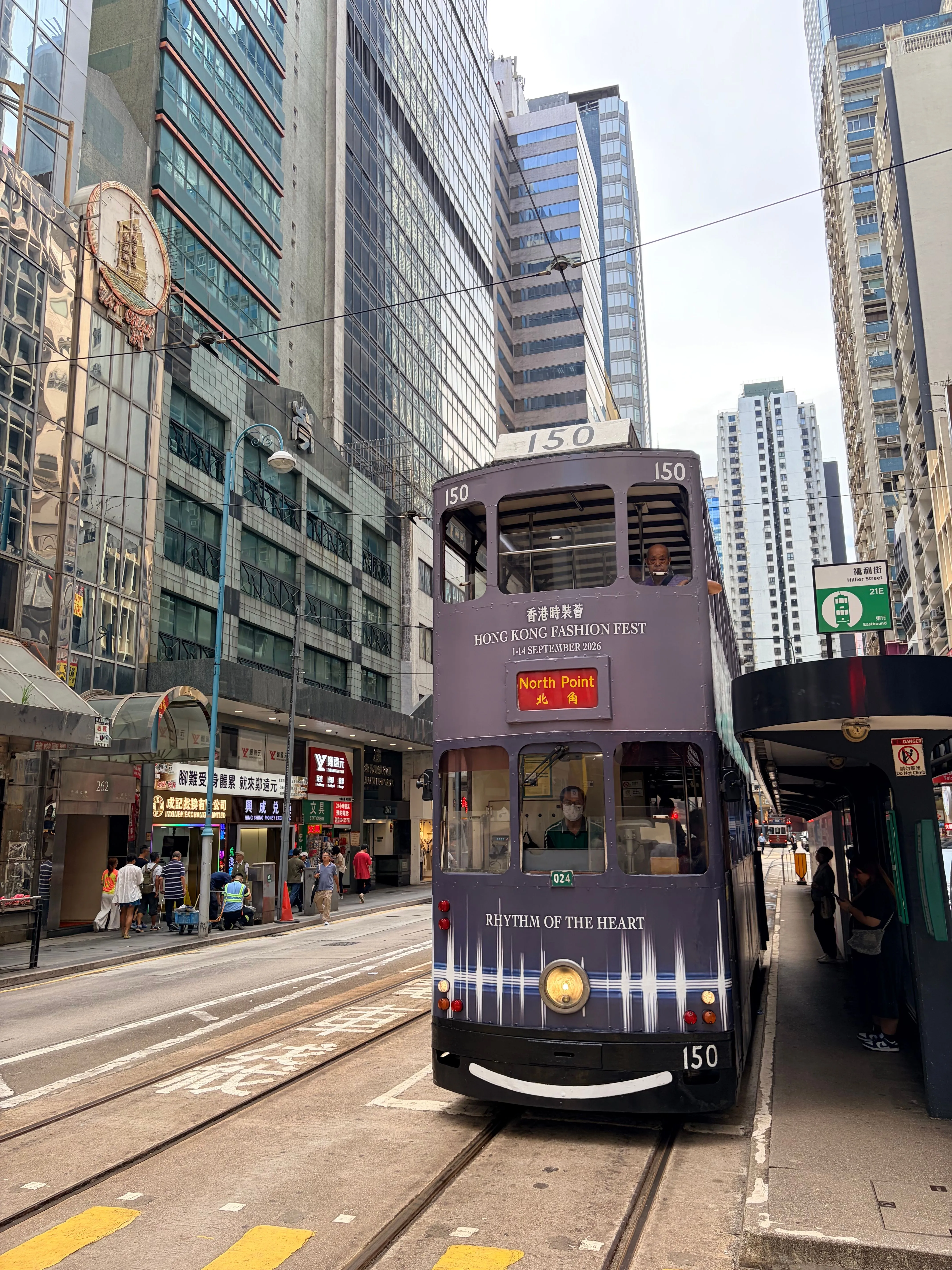
Tram along Hennessy Road: HK$3 flat fare, slower than the MTR but gives you the city at street level
If you need to be close to Victoria Harbour without the Central premium, Causeway Bay is the practical compromise — noisier, denser, but every errand takes half the time.
North Point and Quarry Bay: The East Hong Kong Island Case
North Point and Quarry Bay sit far enough east that most nomads overlook them, which is precisely why rents are lower and streets are quieter — that calculus is worth making deliberately.
Electric Road, North Point — tram terminus, local wet market, Cantonese-speaking neighbourhood that hasn't been reshaped for expats
Quarry Bay Park — waterfront green space, free, 5-minute walk from Quarry Bay MTR, good for a reset between calls
Yue Man Square — market street food from HK$30, genuinely local lunch option
Quarry Bay MTR to Central: 12 minutes — close enough that the distance penalty is almost entirely psychological
The east Hong Kong Island corridor rewards nomads who have done one or two stays in the city before and know they want depth over convenience — it's the district you graduate to, not the one you start in.
Lamma Island and the New Territories: When the City Doesn't Fit
Some digital nomads find Hong Kong's density manageable for three months and suffocating at six — the hiking trails and outer islands are not weekend escapes, they are part of what makes the city liveable long-term.
Yung Shue Wan, Lamma Island — 30-minute ferry from Central, car-free, seafood restaurants from HK$150/person, rent for a house half of what you'd pay on Hong Kong Island
Dragon's Back Trail — 8.5km hiking trail from Shek O, one of the best urban hiking trails in Asia, free, 45 minutes from Central by bus
Sai Kung, New Territories: accessible by bus from Choi Hung MTR, coastal town with a marina and seafood market — a different city from the one Victoria Harbour shows you
Mui Wo, Lantau Island: ferry from Central Pier 6, bicycle rental from HK$60/day, genuinely rural feel 40 minutes from the financial district
Hong Kong offers more geographic variety than its reputation for density suggests — the nomads who stay longest are usually the ones who discovered the hiking trails in the first month and built a rhythm around them.
Browse Hong Kong homes near this area
Healthcare, Banking, and Practical Infrastructure
The practical infrastructure that matters most to remote workers — banking, healthcare, SIM access, emergency services — is where Hong Kong separates itself from every other city in the region, including Singapore.
Healthcare: Public vs. Private and What It Costs Without Cover
Hong Kong's public healthcare system is not designed for short-stay nomads — access is restricted to residents — which means private coverage is not optional if you plan to stay more than a few weeks.
GP consultation at a private clinic: HK$400–800 per visit, no insurance required, walk-in availability at most
Hong Kong Adventist Hospital, Stubbs Road — English-speaking staff, private, emergency room wait times shorter than public hospitals
International health insurance for a healthy adult in their 30s: US$150–300/month depending on coverage tier
Pharmacy medications: over-the-counter drugs are cheaper and more available than in the UK or Australia — common antibiotics dispensed without prescription at many local pharmacies
Travel insurance with a medical evacuation rider is the minimum — if you're staying three months or longer, a proper international health policy is the smarter arithmetic.
Banking and Money: Solving the Access Problem Early
Opening a bank account in Hong Kong without a work visa or proof of address is genuinely difficult — most nomads solve this with a combination of their home bank and a digital alternative, at least for the first stay.
HSBC Main Branch, Central — international accounts available for existing HSBC customers from other markets, easiest bridge for arrivals
Wise and Revolut: accepted at most local merchants via Mastercard, ATM withdrawals at competitive rates, the practical default for short stays
Octopus card doubles as a contactless payment card at convenience stores, supermarkets, and vending machines — more useful day-to-day than a credit card
Currency exchange: Chungking Mansions money changers, Tsim Sha Tsui — better rates than airport or hotel exchange counters, open late
The longer you stay, the more the banking gap costs you in fees — if you're planning a QMAS application, opening a local account early creates the paper trail immigration wants to see.
SIM Cards, Internet, and Staying Connected
Hong Kong's mobile network coverage is effectively total — you will have 5G signal on the MTR, inside the MTR tunnels, and on the ferry to Lamma Island.
3HK and SmarTone prepaid SIMs: available at 7-Eleven and Circle K from HK$88 for 30 days of unlimited data — buy one at the airport
Home broadband: 1Gbps fibre from HK Broadband Network (HKBN) from HK$198/month — fastest consumer fibre in the region
Public WiFi: available at MTR stations, public libraries, and McDonald's locations across the city — not reliable enough for video calls, useful for everything else
VPN: necessary for accessing some Western platforms — choose one before you land, not after
Connectivity is the one category in Hong Kong where the price-to-quality ratio is unambiguously good — HK$88 for a month of genuine unlimited mobile data is less than a single café coffee in most European capitals.
Is Hong Kong Right for You? An Honest Summary
Who Actually Thrives in Hong Kong
Hong Kong suits a specific profile of nomad, and knowing whether you fit it will save you a wasted trip.
You work in time zones that overlap with Asia — Hong Kong's HKT (UTC+8) aligns well with clients across the region
You earn in USD, GBP, or EUR — local costs are high by Asian standards but digestible on a Western income
You value infrastructure over savings — the MTR is world-class, English is everywhere, and the city simply works
You want density without suffocation — over 260 country parks and hiking trails sit within an hour of Central
If your priority is minimising rent, Hong Kong will fight you on that every single month.
Cost Expectations by Where You're Coming From
Your experience of Hong Kong's price level depends almost entirely on your reference point, not the city itself.
Coming from Southeast Asia — a one-bedroom in a central district will recalibrate your budget fast; expect HKD 15,000–22,000 per month
Coming from London or New York — you may find the infrastructure comparable and the prices surprisingly manageable by your standards
Eating out ranges from HKD 40 at a cha chaan teng to HKD 400+ at a mid-range Western restaurant — the gap is real
The visa ceiling of 90 days is a hard constraint regardless of your income level
Hong Kong is not a cheap city that looks expensive — it is an expensive city that delivers on what it charges for.
Why Some Nomads Leave Disappointed — and Why Others Stay
The nomads who leave frustrated almost always made the same avoidable mistakes before they arrived.
Wrong district — staying in Mong Kok or Wan Chai for the price, then resenting the noise and density, when Sai Ying Pun or Kennedy Town would have suited them
Underestimating the visa timeline — 90 days passes quickly when you factor in setup time and the cost of a visa run
Expecting a lower-cost city — arriving with Southeast Asia benchmarks and spending the whole stay doing budget math
Treating it as a short stop — Hong Kong rewards nomads who commit to a neighbourhood and build a routine around the MTR and the trails
Explore fully furnished apartments in Hong Kong and find the base that fits your work life, not just your wishlist.
Making the Move to Hong Kong as a Digital Nomad
Hong Kong is not a city you ease into — it pulls you in fast, tests your adaptability, and then quietly becomes indispensable. For digital nomads who need reliable infrastructure, genuine urban energy, and a gateway to the rest of Asia, few cities compete. The learning curve is real, but so is the payoff once you find your footing.
The practical groundwork matters more here than in most destinations. Sort your visa situation early, open a bank account as soon as you can, and choose your neighbourhood based on how you actually work and live — not just how it looks on a map. A well-chosen apartment transforms the Hong Kong experience from overwhelming to exceptional.
When you're ready to stop planning and start living, browse fully furnished apartments in Hong Kong and find a space that matches your work style, your budget, and the version of the city you want to explore.