

















Top Benefits of Remote Work for a Productive and Flexible Workforce
Discover how remote work enhances productivity and flexibility in today's workforce. Explore the key benefits and transform your work experience. Read more!
The Benefits of Remote Work: Why More Employees Are Ditching the Office
The benefits of remote work go beyond pajamas and Zoom calls.
Remote work isn’t perk—it’s a better way to live. As more employees push back on outdated office space expectations, and remote workers take control of their days, one thing is clear: the world of work has changed.
Why it matters now
The pandemic cracked open a door, and remote employees walked through it—straight into flexibility, freedom, and better work life balance.

Here’s what we’ll explore
-
How remote work helps you save time and energy
-
Why your productivity might skyrocket outside a traditional office
-
What this means for your health, your wallet, and your future
Thinking of going remote? Here’s why it might be the smartest move you’ll make.
The Freedom Remote Work Gives You Over Your Schedule
Forget the 9–5. This isn’t factory life.
One of the biggest benefits of remote work is freedom—not the vacation-in-Bali kind, but the real stuff: flexibility, autonomy, fewer rules that don’t make sense. Remote employees get to design a schedule around how they actually work, not around when someone unlocks an office space. That alone can save your energy, your well being, and a big chunk of your day.
And it's not just about skipping the commute. It’s about reclaiming the hours when you’re most focused—and protecting your home life from creeping deadlines and unnecessary office politics.

A 2023 Gallup study found that remote workers and hybrid workers report significantly lower stress levels compared to their in-office peers. That’s not a fluke—it’s freedom doing its job.
Remote Work Productivity Starts With Flexibility
Working when your brain works best is a game-changer. Some people hit their stride at 6 a.m. Others start solving problems after lunch. You don’t need permission to follow your natural rhythm.
For parents, creatives, or anyone trying to stay sane while working full-time, this flexibility makes room for actual life. You can go for a run at 10 a.m., take a break without guilt, and still deliver on every deadline.
Local Tip: Morning Walks Over Morning Meetings
If you're in Lisbon, start your day with a walk along the Tagus River instead of fighting through Slack notifications at 8:30. A local favorite? Dear Breakfast near Cais do Sodré—amazing poached eggs and coffee for €10, best enjoyed with your inbox closed.

Design Your Day, Your Way
Here are a few ways remote work helps you ditch the clock-in culture:
-
No more “face time” just to impress the boss (office politics, anyone?)
-
Build a schedule that works for your whole team, even across time zones
-
Save hours each week by skipping commutes and inefficient meetings
-
Improve your well being by working in blocks, taking actual breaks, and moving more
Your time, your terms.
Work when you’re most focused—not just when the office lights are on.
Remote Workers Are Getting More Done (Here’s Why)
Forget the myth. Choosing a remote job doesn’t mean you’re working from bed in your pajamas (though no judgment if you are). It means you’re working in a way that actually works—with fewer distractions, less commute time, and more ability to completely focus on what matters.
In fact, a 2023 study from Stanford found that remote workers are 9% more productive than their in-office peers. That gap widens for jobs requiring deep focus and minimal interruptions. Turns out, cutting out small talk in the break room and the daily commute adds up to real progress.
Remote Work Environments Are Built for Focus
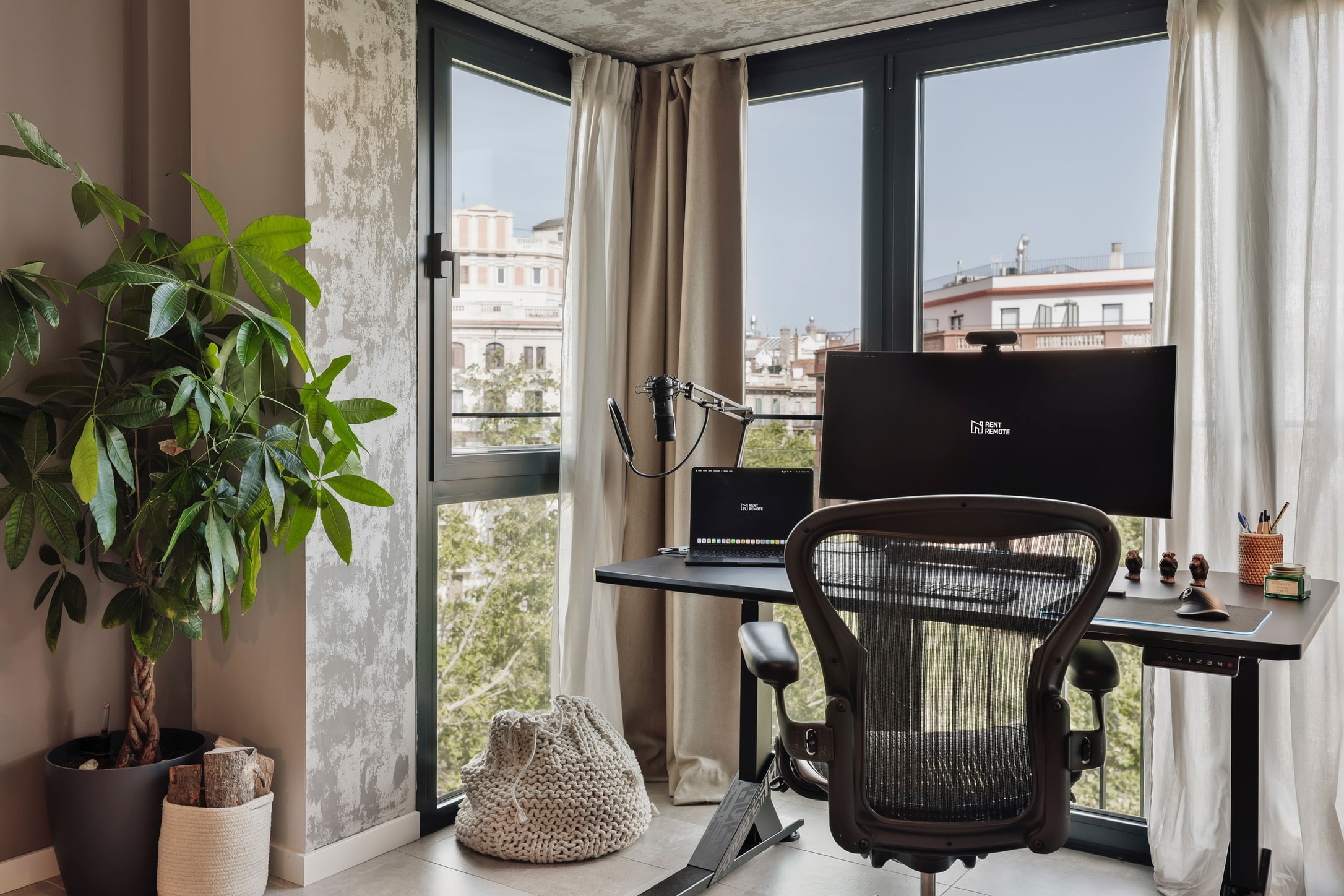
A traditional office might have plants and motivational posters. RentRemote apartments have ultra-wide monitors, ergonomic chairs, strong internet connections, and quiet setups in actual apartments—so you can get into flow without sharing a table with a guy pitching his startup on speakerphone.

If you're working remotely from Barcelona, skip the noisy cafés in El Born. Instead, book a RentRemote spot near Gràcia—tech-ready apartments for around €1,400/month, with everything from a podcast mic to blackout curtains. That’s what we call an environment designed for doing real tasks.
Hybrid Work vs. Remote: Who’s Winning?
Hybrid work has perks, but bouncing between home and HQ can mess with your rhythm. Remote work lets you optimize your work hours around when you’re most alert—not around your manager’s calendar.
Here’s what makes fully remote productivity soar:
-
Skip the commute time and use those hours for deep work
-
No more reshuffling tasks because of back-to-back meetings
-
Say goodbye to lagging internet connections in coworking spots
-
Set up a permanent workstation that supports longer hours (if you want them)
-
Create a positive income effect by saving money on other expenses like gas, lunch, and overpriced coffee
The Real Benefits: More Output, Less Stress
When you work in a space that fits your rhythm, with gear that actually helps, you don’t need to grind for 10+ hours a day. You just need time to completely focus, knock things out, and rest properly after.

Because remote work isn’t about working longer hours. It’s about working smarter. And honestly? That’s a benefit every job should offer.
More Time, Less Stress
-
Commuting is soul-sucking.
-
Reclaim 1–2 hours a day = more time for workouts, breakfast, or side projects.
-
Mental health impact: reduced stress, higher job satisfaction.
-
Include quote or stat from a credible source (e.g., Buffer, Owl Labs, Microsoft Work Trend Index).
Work from Anywhere: The Perk That Changed Everything
Here’s a fact that remote employees already know: your life doesn’t need to revolve around an office building. When you work remotely, you get to pick the view, the pace, and the people you spend your time with.
Whether it’s moving closer to your parents, living near the ocean, or chasing sunshine across time zones, location freedom gives you the ability to create a life that matches both your work and personal goals.
A 2022 report from McKinsey found that 87% of American workers offered remote options took them—and many cited location freedom as the #1 reason. That’s not a trend. That’s a shift in values.

Your Workspace Should Travel with You
We’re not talking about folding chairs and a hope for Wi-Fi. RentRemote setups come with all the gear: ultra-wide monitors, standing desks, blackout curtains, and strong Wi-Fi that doesn’t crash during daily meetings with your managers.
In Mexico City? Try Condesa—RentRemote offers fully furnished spots starting at $950/month with premium setups. In Lisbon? Grabbing a place near Alfama will give you charm and quiet for €1,200/month, perfect for focused productivity.
Hybrid Work Is Good. Location Freedom Is Better.
Hybrid work still puts limits on how far you can go. With full remote work, you're not choosing between career and adventure—you get both. Your flexible schedule allows you to live where you’re happiest and work when you’re most productive.

It also helps you save money by avoiding overpriced cities and choosing destinations with a lower cost of living—while keeping your same remote job.
Real Benefits of Working Anywhere
-
Build a routine that fits your rhythm, not the company’s time zone
-
Avoid the burnout that comes from rigid work hours
-
Make more room for rest, nature, and real social interactions
-
Stay inspired by switching environments when needed
-
Reduce communication issues across remote teams with better time zone planning
Your Life, Upgraded
Living abroad or just away from HQ doesn’t mean you need to stop working. It means you’ve figured out how to build a life that brings a positive impact on your employee engagement and mental well-being.
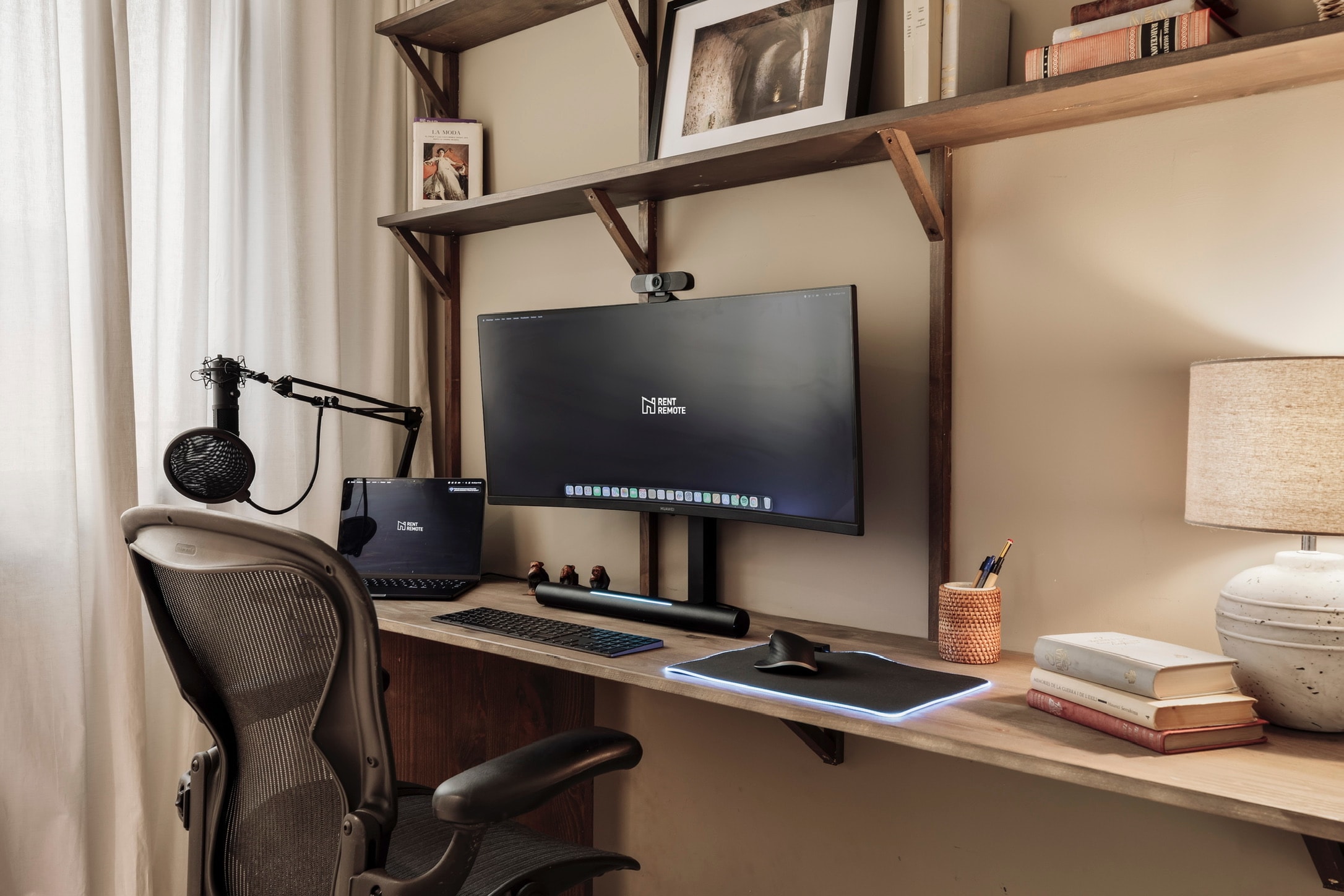
From Mexico City to Lisbon, we’ve got the setup that travels with your ambition.
Real Work-Life Balance Starts with Remote Work
Let’s be honest—many employees spent years pretending office life was working for them. But it wasn’t. Long commutes, rigid schedules, juggling errands in 10-minute windows between online work meetings. No wonder burnout skyrocketed.
Remote work flipped the script. It gave remote employees the freedom to actually spend time where it matters—at home, outdoors, or simply doing something that doesn’t involve public transportation and dry cleaning drama.
And this shift isn't anecdotal. A 2023 report by Owl Labs found that the vast majority of remote workers reported improved employee engagement and productivity thanks to a better work-life balance. That’s not just a perk. That’s a lifestyle upgrade.
Your Environment Should Match Your Values
Want to meditate before your first call? Book a RentRemote apartment in Uluwatu, Bali, just a 5-minute scooter ride from the ocean—around $800/month with a full ergonomic setup.
Prefer Pilates and school drop-offs? Try Roma Norte in Mexico City, where the walkable neighborhood means you can work, parent, and hit a class at Casa Yoga (MX$150 per session) without breaking your stride.
Financial Wins (More Money in Your Pocket)
-
Save on gas, public transport, office lunches, and overpriced suits.
-
Live in low-cost locations while keeping a high-paying job.
-
Mention tax perks or geo-arbitrage (light touch).
-
Optional bullet list of common savings.
Flexible Schedule, Solid Routines
The beauty of remote work? You’re not cramming life into the edges of your day—you’re designing your day around the life you want. And when people feel in control of their time, both their work and personal lives improve.

Here’s what that can look like:
-
Morning surf, midday calls, and evening deep work sessions
-
More time for meal prep, family dinners, and skipping the dry cleaning drama
-
Room to breathe when difficult situations pop up—without explaining yourself to managers
-
Structure that adapts to you, not the other way around
Better Balance = Better Work
This isn’t about working less. It’s about working smarter. When remote employees are in control of their days, they don’t just feel better—they perform better. Their routines stick, their motivation holds, and productivity follows.
That’s one of the quiet benefits of remote work: real balance that doesn’t break under pressure. One that actually fits your life.
Environmental Impact: Fewer Commutes, Fewer Emissions
Let’s start with the obvious: skipping the commute means fewer cars on the road and less carbon in the air. When remote workers aren’t driving, riding, or sitting in traffic five days a week, the planet breathes easier.

In fact, if everyone in the U.S. who could work remotely did so half the time, we’d cut greenhouse gas emissions by 54 million tons each year. That’s like taking 10 million cars off the road.
And it doesn’t stop there. Many remote workers naturally shift toward minimalist living—owning less, wasting less, and consuming more intentionally. Smaller wardrobes, fewer takeout containers, and zero need for disposable coffee cups from your go-to café near the office.
Simple comparison:
-
1 year of daily commuting = 2.6 tons of CO₂
-
1 year of working remotely = almost none
Remote work isn’t just good for productivity. It’s good for the planet too.
Career Growth Isn’t Off the Table
Let’s kill the myth that remote jobs mean plateaued careers. The truth? Growth isn’t about being seen at your desk—it’s about being seen for your work.
Fully remote companies like GitLab, Doist, and Zapier have thriving internal ladders, mentorship programs, and professional development budgets. They’ve built systems to support remote employees growing into leadership and rewarding them for their increased productivity—without ever stepping foot in an office.

Plus, with less time spent commuting or stuck in meetings that could’ve been Slack threads, remote workers gain back hours to upskill, build a portfolio, or join that design webinar in Tokyo. It’s career development without borders.
And don’t underestimate the power of connection. Online nomad circles, niche Slack communities, and global co-working hubs (even virtual ones) help you network with people doing the kind of work you want to do next.

Remote doesn’t mean stagnant. It means global. And growth lives there, too.
The Downsides (And What to Do About Them)
Let’s be real: remote work isn’t always a postcard. Some days, the isolation hits. Some weeks, time zones turn teamwork into Tetris. And motivation? It dips, especially when your sofa becomes your office.
But these aren’t dealbreakers. They’re signals to adjust.
Here’s how to make remote work feel a little less... remote:
-
Build your rhythm. Create anchors in your day (walks, workouts, 3 p.m. stretch breaks) to break the blur.
-
Get social, even online. Join Slack groups, cowork virtually, or pop into a local café with good Wi-Fi and better coffee.
-
Work with people who get it. At RentRemote, our spaces come with more than ergonomic chairs—they come with a community of remote employees nearby, whether in your building or your timezone.
Surround yourself with people who get it—online or in real life. That’s how you make the lifestyle work long-term and minimize the negative effects.

This Is Remote Work, Upgraded
Remote work isn’t a trend—it’s the new standard for how we build careers, grow as people, and live better. The past few years proved that employees don’t need an office to be effective. What they need is the ability to focus, the freedom to move, and the trust to manage their own time—without constant check-ins from managers.

Whether you're already remote or just starting to explore it, the benefits go beyond flexible hours. It’s about working on your terms, building your day around your life, and discovering what you can actually do when you have space to think.
And while hybrid workers are still navigating the push and pull between home and HQ, those who work remotely full-time know the secret: this lifestyle opens up real remote work opportunities that don’t ask you to choose between ambition and autonomy.

Already remote or thinking about making the leap?
Explore RentRemote’s global workstations—built for people who work hard and wander often. Because no company should own your calendar. You should.
Frequently Asked Questions
What are the biggest benefits of remote work?
The benefits go beyond skipping the commute. Remote work gives employees more control over their time, reduces stress, and helps create a lifestyle that balances personal and professional goals. Add in cost savings, flexibility, and the ability to live where you want, and it’s easy to see why it’s become the top perk of the past year.
Is remote work more productive than office work?
Yes. Studies from the past year consistently show that employees who work remotely report higher productivity, better focus, and fewer distractions. Without the noise of an office or constant meetings, people tend to get more done in less time.
Can I travel and still be productive?
Absolutely. In fact, many people work remotely because it allows them to see the world without pausing their careers. With the right setup—strong Wi-Fi, a quiet space, and a smart routine—you can stay focused whether you’re in Tokyo or Tulum.
What gear or setup do I need to work remotely?
To make remote work sustainable, you’ll need more than a laptop. Invest in:
-
An ergonomic chair and desk
-
Noise-canceling headphones
-
A second monitor (or ultra-wide)
-
Stable, fast Wi-Fi
Or… book a RentRemote apartment and get all of that pre-installed.
Are there communities for remote workers?
Definitely. From coworking spaces to digital nomad Slack groups, there are entire networks built for people who work remotely. You’ll also find company-sponsored meetups, online workshops, and even remote work retreats. You’re never really alone in this lifestyle—unless you want to be.