



















eSIMs vs. Starlink: Which Internet Solution Is Best for Nomads?
Compare eSIM vs Starlink for digital nomads. Discover which internet option offers better speed, coverage, and value for your remote lifestyle.
eSIM vs Starlink for Digital Nomads: What’s the Real Difference?
When you’re living the nomad life, reliable internet can make or break your workday. Both eSIMs and Starlink promise high speed internet, but they serve different kinds of digital nomads.
eSIMs connect you through mobile data networks in over 190 countries—ideal for remote workers bouncing between cities with good wi fi.
Starlink, on the other hand, beams low-orbit satellites straight to your dish, offering low latency even in remote mountain cabins or island villages.
If your setup includes multiple devices, you’ll want to know which one keeps you best connected.
| Feature | eSIM | Starlink |
|---|---|---|
| Speed | 30–150 Mbps | 50–220 Mbps |
| Setup | Instant download | Hardware install |
| Portability | Excellent | Moderate |
| Coverage | Global cities | Remote areas |
| Cost | Flexible data plans | Higher monthly fee |
 |
Global Coverage and Internet Access: eSIM Flexibility vs Starlink Reach
When you’re juggling remote jobs across continents, reliable internet access becomes as essential as your passport. eSIMs shine for remote workers who need a stable internet connection in motion—switching between countries without juggling physical SIM cards or waiting in long airport queues. They connect through local carriers, delivering high speed performance in most cities across Europe, Asia, and Latin America. You can top up unlimited data plans or use prepaid options depending on how long you stay.
High Speed Internet Options for Digital Nomads
In Europe, Airalo and Ubigi offer flexible eSIM plans starting at around €20 for 10GB of data, perfect for coffee shops and coworking days. Across Southeast Asia, Nomad eSIM and GigSky perform best where portable wi fi devices often have slower speeds during peak hours. Latin America is catching up fast—Chile, Colombia, and Mexico now support broad LTE coverage for eSIMs, making short-term gigs easier to manage on the go.

Starlink’s Expanding Internet Options and Coverage
If your adventure leads off-grid—to mountain cabins, island colivings, or van life—Starlink steps in where mobile networks fail. Using low-Earth-orbit satellites, it provides stable internet access even in places without cell towers. As of 2024, SpaceX reports that Starlink covers over 70 countries worldwide, including new maritime and RV plans designed for users in motion.
Starlink’s speeds average between 50–220 Mbps, but performance depends on location and weather. Urban areas rarely need it, yet for remote destinations with no 4G, it’s often the only lifeline. Expect to pay around €600 for the hardware and €120–€150 per month—steep, but worth it if you’re working from a mountaintop in Madeira or a beach house in Baja.
When to Choose Which Internet Option
Use this quick guide to match your connectivity to your lifestyle:
-
City-based nomads: eSIMs offer flexible, fast internet access and easy top-ups.
-
Vanlifers and off-grid pros: Starlink delivers stable internet even in remote valleys.
-
Hybrid travelers: Combine both for full coverage and backup connectivity when wi fi drops.
Whichever route you pick, both tools let you connect multiple devices, stream, call, and work globally—no matter how far your next workspace is from the nearest café.

Speed and Reliability: How Internet Providers Stack Up for Remote Workers
When working remotely, reliable internet isn’t optional—it’s non negotiable. Most internet providers promise ultra fast speeds, but what matters is real-world internet quality.
For digital nomads hopping between time zones, mobile data from eSIMs is the go-to. You can expect 30–150 Mbps on strong 5G networks, enough to run Zoom, Slack, and Netflix at once. Just note: signal strength shifts between cities and rural zones, so having portable wi fi devices or backup local SIMs keeps your connectivity smooth when wi fi dips.
Starlink and Satellite Internet for Nomads on the Move
If your idea of an office includes mountain views or campervan rooftops, satellite internet through Starlink is your lifeline. Speeds hit 50–220 Mbps, but storms and heavy clouds can cause dips. The new Starlink Mini setup runs about €599 with a monthly fee near €120, and it offers unlimited data, ideal for those camping far from fiber lines.
Where Coworking Spaces and Networks Invest in Internet Quality

Even the best satellite gear can’t beat city coworking spaces for urban remote work. Most providers in hubs like Lisbon, Medellín, and Chiang Mai deliver stable internet connection and backup generators to dodge unreliable internet. You’ll find desks with ultra fast speeds for €15–€25/day.
A few local favorites:
-
Aticco Med (Barcelona): Rooftop views and fast data for deep focus days.
-
Selina Cowork (Lisbon): Reliable wi fi and a relaxed vibe for remote workers.
-
Publico Cowork (Mexico City): Consistent internet quality, even during peak hours.
Real-World Takeaway
-
eSIMs: best for urban remote work and flexibility on the road.
-
Starlink: better for working remotely in rural villas or remote islands.
-
Coworking spaces: the sweet spot when you need guaranteed uptime and people who get your pace.
However you choose to stay connected, balancing mobility with reliability means you’ll never have to explain “Sorry, bad signal” again.
Cost Breakdown and eSIM Technology: What You’re Really Paying For
When you’re living the digital nomad lifestyle, every euro you spend on connectivity counts. With eSIM technology, setup is nearly free—usually €0–€10—and most internet plans range from €20–€80 per month, depending on your data use. It’s perfect for those who crave seamless connectivity while hopping between cities or coasts. You can pause or cancel anytime, making it a flexible pick for remote work without getting tied down to bulky gear or contracts.

Starlink, on the other hand, is a commitment. The satellite internet setup costs around €500–€600 for the hardware and €120–€150 monthly for residential plans. The Starlink Roam plan climbs to about €200/month but offers unlimited data—a game changer if you’re streaming, taking daily video calls, or working from off-grid destinations where local infrastructure is patchy at best.
Comparing eSIM Technology to Satellite Internet for Remote Work
Here’s how they stack up in real life:
| Option | Setup Cost | Monthly Cost | Data Limits | Portability |
|---|---|---|---|---|
| eSIM | €0–€10 | €20–€80 | Per GB | Excellent |
| Starlink Residential | €500–€600 | €120–€150 | Unlimited | Moderate |
| Starlink Roam | €600+ | €150–€200 | Unlimited | High |
| While Starlink delivers enterprise level internet infrastructure, it’s more suited for digital nomads who need consistent upload speed and reliability in remote areas. eSIMs lean toward flexibility—ideal for those working from apartments, coworking spaces, or cafés with strong wi fi. |
Security, Mobility, and Everyday Costs
Frequent travelers know that public wi fi and poorly protected networks can lead to phishing attacks or security breaches. eSIMs offer safer, direct carrier connections—no need for sketchy public hotspots. They also preserve battery life better than tethering through external routers.
Quick tip for cost-conscious nomads:
-
Choose eSIM technology for city-based remote work and mobility.
-
Invest in satellite internet only if your connectivity depends on isolated or rural coverage.
For most digital nomads, eSIMs win on price, portability, and simplicity—while Starlink makes sense for those who trade skyline cafés for sky views.

Ease of Setup and Portability for Digital Nomads in Motion
When you’re constantly moving, setup speed and portability make or break your workflow. eSIMs win here: instant activation, no local SIM cards to juggle, and no waiting for public wi fi to catch up. They let you keep work flowing wherever you go, with high speed data and seamless switching between countries. Perfect for transforming urban remote work, an eSIM can be installed in minutes through apps like Airalo or Ubigi, both of which start at around €15 for 5GB in Spain or Portugal.
Starlink’s Setup Challenges When Living Off Grid
Starlink has its own strengths, especially for those living off grid or traveling through South America. But it’s not plug-and-play. You’ll need a power source, open sky, and patience to align the dish. For heavy users—like video editors or teams managing cloud storage—it delivers high speed wi fi that’s worth the setup effort.
Staying Productive While in Motion
Each tool serves a purpose:
-
eSIMs: Quick activation, great battery life, and smooth transitions between most coworking networks and cafés.
-
Starlink: Reliable signal for remote bases where public wi fi doesn’t exist.
A 2024 Statista report showed that 73% of remote professionals prioritize easy setup and mobility when choosing connectivity options—a clear nod to eSIMs for day-to-day flexibility.
So if you’re hopping between Lisbon rooftops, Medellín coworkings, and coastal retreats, go eSIM. But if your “office” runs on wheels or sits under the stars, Starlink keeps your data steady, even when the nearest café is 200 kilometers away.

Real-World Use Cases: When Each Option Makes Sense
For digital nomads grounded in cities, low latency and wi fi stability are non negotiable. Here, eSIMs are the clear winner. They offer 5G speeds without the hassle of tiny plastic cards or airport kiosks. Just scan, activate, and you’re online in minutes—no sim swapping or waiting for deliveries.
In hubs like Lisbon, Barcelona, and Medellín, not all carriers perform equally well, but eSIM options like Airalo and Ubigi shine for quick setup and solid performance. Expect to pay around €25 for 10GB of data that keeps your calls clear and uploads snappy.
A 2024 Cybersecurity Ventures survey found that 61% of security breaches begin on unsecured wi fi, making eSIMs the safer choice for professionals who handle sensitive files from cafés or coworking spaces.
Low Latency for Van Lifers and Off-Grid Workers
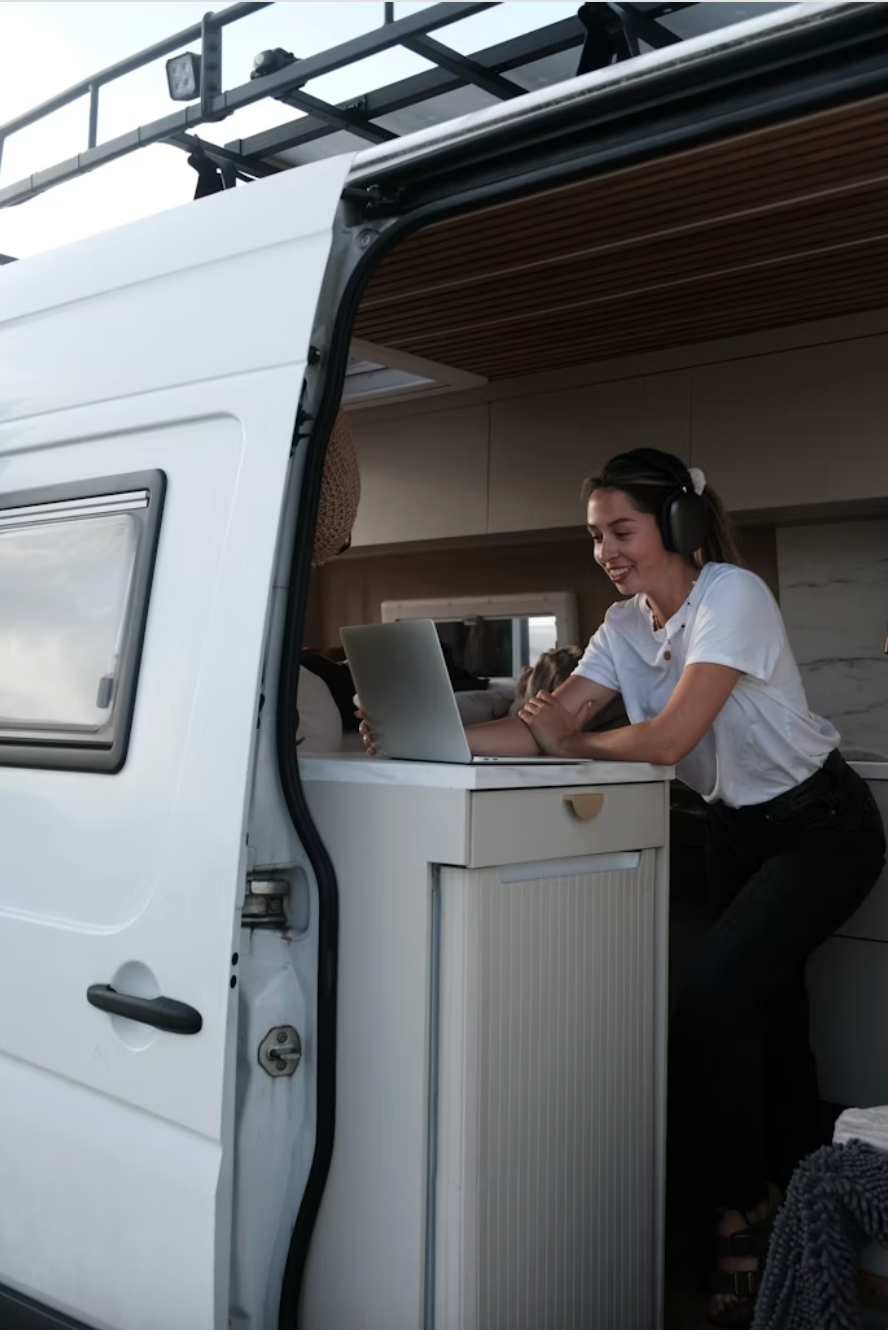
If your journey takes you into the wild, Starlink dominates. Its low latency wi fi reaches places mobile networks can’t. For vanlifers exploring Andalusia or remote freelancers camping near the Algarve, Starlink’s dish setup delivers speeds up to 220 Mbps. The tradeoff? It’s power hungry and needs clear skies—but when it’s on, it’s unbeatable. The hardware runs around €600, and the monthly cost sits between €120–€150.
Low Latency in Hybrid Workflows
Most nomads don’t fit neatly into one category. Many blend eSIM mobility with Starlink’s rural reliability. It’s a “best of both worlds” setup—eSIM for on-the-go travel and Starlink for a base in nature.
-
eSIMs: Great for wi fi in apartments, coworking hubs, or short city stops.
-
Starlink: Perfect for deep-focus weeks where the only neighbors are pine trees.
Both options keep your wi fi strong, your files secure, and your freedom intact—whether your workspace overlooks city rooftops or a starry Andalusian sky.
Can Starlink Replace eSIMs for Full-Time Nomads?
Not quite. While Starlink has changed what connectivity looks like for people living off-grid, it still can’t match the flexibility of an eSIM when it comes to cross-border mobility. Every time you enter a new country, Starlink needs to register a new coverage zone, and it’s not yet available everywhere. eSIMs, by contrast, adapt instantly. You can land in Lisbon, Tokyo, or Mexico City, and your wi fi connection updates before you’ve cleared customs.
That’s why the smartest digital nomads treat Starlink as a home-base solution and eSIMs as their travel safety net. Starlink offers stability, low latency, and dependable data for stationary setups—perfect for deep work weeks in the mountains or by the sea. But when you’re on the move, your eSIM keeps things fluid.
The winning combo? Starlink at your base for high speed focus days, and eSIMs for seamless travel and quick tethering between flights, buses, and coworking stops.
Verdict: eSIM vs Starlink for Digital Nomads
When it comes to staying connected, both tools have their strengths—what matters is how (and where) you work.
eSIMs are for the restless: mobility, affordability, and zero setup headaches. Perfect if you’re bouncing between coworking spaces, public wi fi networks, and new cities every month.
Starlink suits the rooted nomad: stability, strong upload speeds, and reliable internet for team video calls and cloud-heavy projects. It’s built for rural villas, campervans, or any place where traditional internet providers fall short.
In the end, choose based on your travel rhythm, not the tech hype. If your work depends on movement, eSIM wins. If your peace depends on staying put, Starlink delivers.
Explore RentRemote’s furnished apartments across Europe and stay connected wherever you work.

FAQs
What’s the main difference between eSIM and Starlink for digital nomads?
eSIMs connect to mobile data networks through your device—no tiny plastic cards or sim swapping required. They’re made for travelers who move often and need instant wi fi access in new countries. Starlink uses satellite internet, giving you low latency coverage in areas without cell towers. In short: eSIMs win for flexibility, Starlink wins for isolation.
Which option offers better internet speed for remote work?
In cities or areas with strong local infrastructure, eSIMs deliver high speed 5G—usually between 30–150 Mbps. Starlink provides satellite internet with speeds of 50–220 Mbps, but it’s more consistent off-grid than in busy urban zones. If you’re working from a café, eSIMs are smoother; if you’re parked in a campervan under the stars, Starlink is unbeatable.
Can I use both eSIM and Starlink together while traveling?
Yes, and it’s the best strategy for digital nomads who mix travel with deep work weeks. Use your eSIM for mobility—checking data on the go, joining calls from airports, or navigating cities. Keep Starlink at your base for heavy uploads, video calls, or teamwork sessions. Many pros pair them to ensure seamless connectivity wherever they go.
Is Starlink worth it for digital nomads living in cities?
Not usually. In urban areas, public wi fi and most coworking networks already provide stable, affordable internet. Starlink shines in rural areas, islands, or for those living off grid. In cities like Barcelona or Lisbon, you’ll find better battery life, faster speeds, and lower costs using eSIMs and local plans instead.
Which option is more cost-effective for long-term travel in 2025?
For frequent travelers, eSIMs are the clear winner. They offer internet plans starting around €20/month, easy cancellation, and flexible top-ups. Starlink, while powerful, comes with hardware costs of €600+ and monthly fees near €150. Unless your journey takes you beyond cell coverage, eSIMs keep your work flowing—without draining your wallet.