


















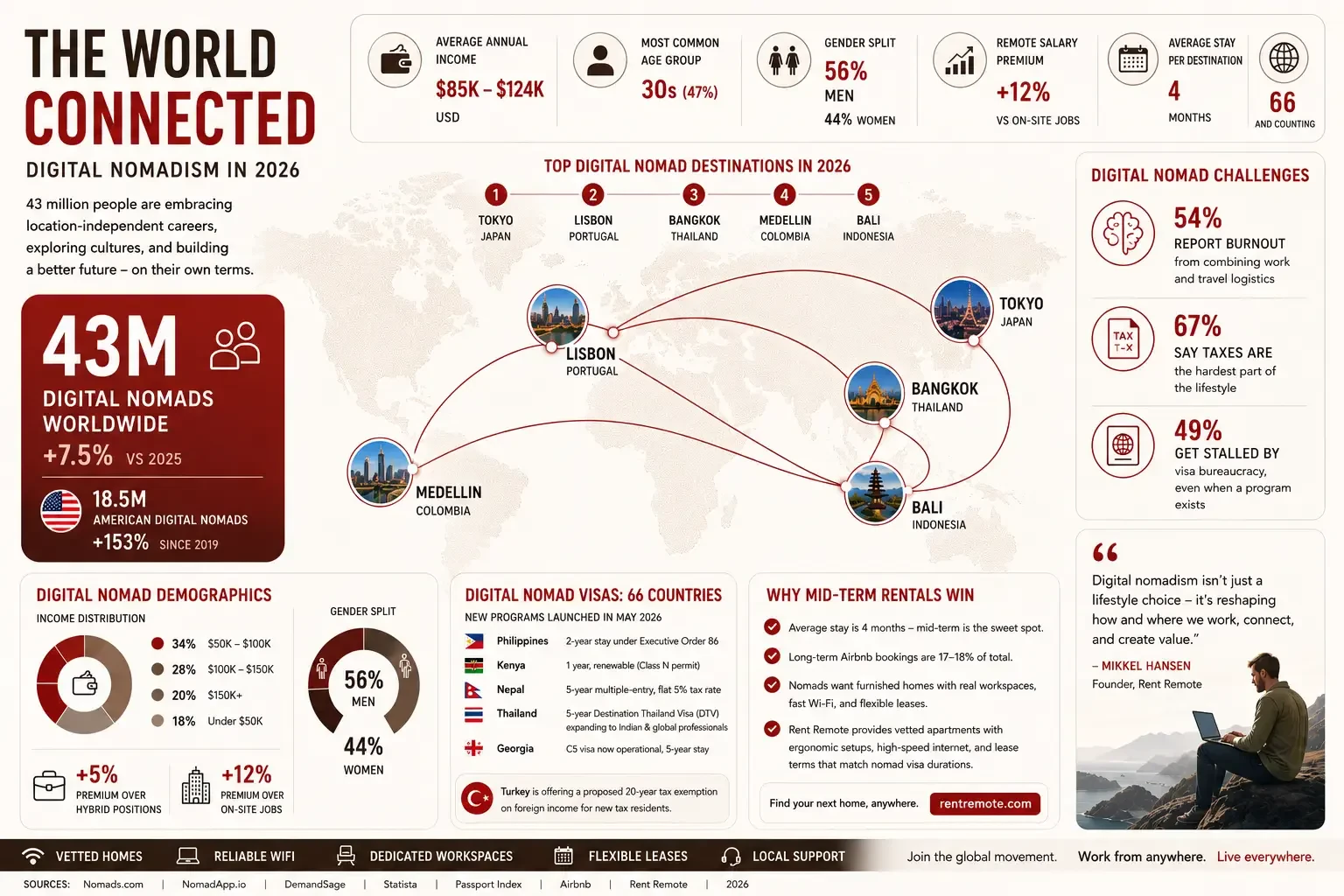
Digital Nomad Statistics 2026: 43M Remote Workers, Salaries, Visas & Global Trends
Explore 2026 digital nomad statistics: 43M global nomads, salaries, top destinations, visa growth, burnout, taxes, and mid-term rental trends.
Global digital nomads
Countries with nomad visas
Average stay per destination
Typical annual income range
Remote work infrastructure, digital nomad visas, mid-term furnished rentals, and global hiring have accelerated rapidly since 2020. Countries are now competing to attract remote workers with tax incentives, long-stay visas, and improved digital infrastructure.
This report compiles the latest available data from remote work platforms, digital nomad research firms, government visa programs, booking trends, and housing providers to understand where the movement is heading in 2026.
How Many Digital Nomads Are There in 2026?
Current estimates place the global digital nomad population at approximately 43 million people worldwide in 2026, based on aggregated reporting from Nomads.com, DemandSage, MBO Partners, and Nomad List trend data.
The United States continues to represent the largest single national group of remote workers living abroad or traveling long-term while working online. Multiple industry reports estimate there are approximately 18 to 19 million American digital nomads, representing substantial growth compared to pre-pandemic levels.
Digital nomadism is no longer just travel culture. It is becoming a permanent layer of global labor mobility, housing demand, and visa policy.
The growth is no longer driven solely by temporary pandemic policies. Structural changes in employment are now the primary force behind the trend:
- Global companies increasingly support distributed teams
- Remote-first startups continue expanding internationally
- Governments actively compete for remote workers
- Mid-term housing infrastructure has matured significantly
- Cross-border hiring has become operationally easier
Digital Nomad Growth Timeline
Digital Nomad Demographics
Most digital nomads remain concentrated in their late 20s and 30s, though older remote workers and remote-working families continue to grow as a percentage of the market.
Age 30–39
Male
Full-time employees
Freelance / self-employed
Marketing, software engineering, design, consulting, content creation, and product management continue to dominate among the most common professions.
Average Income and Careers
Income among digital nomads varies widely depending on profession, geography, and employment structure. Most large surveys place average annual earnings between $85,000 and $124,000 USD.
Higher-income remote workers are disproportionately concentrated in software engineering, product management, enterprise consulting, AI operations, and technical marketing roles.
Several studies also suggest that fully remote workers continue to earn slightly more than hybrid or fully office-based workers in high-demand technical industries, although compensation differences vary significantly by sector and geography.
Common High-Income Digital Nomad Careers
Top Digital Nomad Destinations in 2026
The most popular destinations continue shifting as visa rules, currency exchange rates, cost of living, and infrastructure evolve.
While Lisbon, Bali, Mexico City, Bangkok, and Medellin remain major hubs, Tokyo has emerged as one of the fastest-growing destinations for remote professionals following recent visa and infrastructure improvements.
Fast-growing Asian hub
European remote work classic
Cost, food, infrastructure
North American favorite
Creator and startup culture
Established Latin America hub
Key factors driving destination popularity include reliable high-speed internet, long-term visa availability, safety and healthcare, cost of living relative to income, furnished monthly rentals, and coworking infrastructure.
Digital Nomad Visa Statistics
By 2026, approximately 66 countries offer some form of dedicated digital nomad visa or remote worker residency pathway.
Competition between countries has intensified significantly as governments increasingly view remote workers as a source of long-term economic contribution without directly competing for local jobs.
Tax policy remains one of the biggest deciding factors for location selection. Countries offering simplified taxation systems or territorial tax structures continue attracting disproportionate demand from higher-income remote workers.
Burnout, Taxes, and Operational Challenges
Despite the lifestyle appeal, long-term digital nomadism presents significant operational and psychological challenges.
Report burnout or travel fatigue
Say taxes are difficult
Get delayed by visa bureaucracy
Long-term travelers increasingly report that slower travel and longer stays significantly improve quality of life and reduce burnout risk.
Additional concerns frequently discussed within the digital nomad ecosystem include housing affordability pressure in major nomad hubs, gentrification concerns, changing visa enforcement policies, tax residency uncertainty, and healthcare continuity across countries.
Why Mid-Term Rentals Continue Growing
The average digital nomad stay is now estimated at approximately 4 months per destination, creating strong demand for furnished monthly housing rather than nightly accommodations.
What remote workers now prioritize
This shift has contributed to the growth of mid-term rental platforms focused specifically on remote workers and international professionals.
Tokyo furnished apartments, Lisbon monthly rentals, and other long-stay housing hubs continue seeing increased demand from remote workers seeking stable work environments instead of short-term vacation accommodations.
Key Digital Nomad Statistics for 2026
| Global digital nomads | 43M |
| American digital nomads | 18–19M |
| Average annual income | $85K–$124K |
| Most common age group | 30s |
| Countries with nomad visas | 66 |
| Average destination stay | 4 months |
Frequently Asked Questions
How many digital nomads are there in 2026?
Current estimates suggest there are approximately 43 million digital nomads globally in 2026.
Which country has the most digital nomads?
The United States continues to represent the largest national group of digital nomads.
What is the average digital nomad salary?
Most major surveys place average annual income between $85,000 and $124,000 USD, though earnings vary widely.
How long do digital nomads stay in one place?
The average stay is now approximately four months per destination.
Methodology and Sources
This report compiles publicly available information from remote work studies, government visa announcements, booking trend reports, digital nomad platforms, and industry surveys published between 2024 and 2026.
Because global digital nomad measurement lacks standardized international reporting frameworks, some figures represent aggregated industry estimates rather than official census data.
Bottom Line
The digital nomad economy is no longer a temporary pandemic phenomenon. It has become a permanent structural shift in how professionals approach work, mobility, and lifestyle design.
As remote infrastructure improves and countries continue expanding visa programs, long-term furnished rentals, tax services, healthcare portability, and remote work ecosystems will become increasingly important components of the global economy.
Explore furnished monthly rentals