














Beyond the Capitals: How Fiber, Starlink, and Smart Policy Are Opening Up a New Nomad Map in 2026
Fiber, Starlink, and governments paying you to relocate are opening up rural Europe and Latin America to remote workers. Here's where the map is expanding.
For most of remote work's history, the map of places worth going has been surprisingly small. Lisbon. Barcelona. Bali. Medellín. Mexico City. Chiang Mai. The same names appeared on every list, in roughly the same order, year after year. They became nomad hubs because they had the infrastructure — fast internet, coworking spaces, mid-term apartments, an existing community to land into. Everything else was, essentially, the rest of the world: beautiful, perhaps, but impractical.
That map is being redrawn.
In 2026, fiber internet is reaching places it never reached before. Satellite connectivity via Starlink has eliminated the hard dependency on fixed broadband infrastructure in thousands of locations. Governments in depopulating regions are actively recruiting remote workers. And a generation of nomads that has already cycled through the classic hubs is looking for something different — quieter, cheaper, more local, more real.
The capital city is no longer the only option. And for a growing number of remote workers, it's not even the preferred one.
The Infrastructure Shift That Made This Possible
The single biggest barrier to working remotely from a small town or rural area has always been internet reliability. That barrier is eroding on multiple fronts simultaneously.
Fiber expansion is accelerating in ways that would have seemed implausible five years ago. Research shows that communities with fiber internet see 213% higher business growth and 10% higher self-employment rates. Governments have taken notice — public investment programs in the US, EU, and Latin America are directing billions toward rural fiber buildout. The result is that villages and small towns that were effectively off-limits for remote work in 2021 now have gigabit connections.
Where fiber hasn't arrived yet, Starlink has. SpaceX's satellite internet service, now available across most of the planet, has been transformative for remote and rural locations. Speeds that used to require proximity to urban infrastructure are now available on a mountain in Portugal, a coastal village in Croatia, or a small town in Colombia's coffee region. The nomads who discovered this first — in places like Bansko in Bulgaria, Playa Venao in Panama, or Comporta in Portugal — quietly built communities around it before anyone else noticed.
5G is adding a third layer. In regions where fiber is still years away and Starlink faces geographic limitations, 5G fixed wireless is delivering home-broadband speeds from mobile infrastructure. The combination of all three technologies means that in 2026, internet quality is no longer a binary divide between cities and everywhere else.
The Policy Layer: Governments Paying You to Leave the City
The infrastructure shift coincides with a policy shift that gives it economic momentum.
Across Europe, regions experiencing depopulation have started treating remote workers as a solution to a demographic problem. Spain is the most developed example. Spain's digital nomad visa explicitly encourages remote workers to settle in economically deprived regions known as España vaciada — the "emptied Spain" of inland towns and villages that have been losing population to the cities for decades. The National Network of Welcoming Villages for Remote Work has grown to include 77 municipalities, each offering infrastructure, community integration, and in some cases financial support to remote workers willing to make the move.
Extremadura, one of Spain's least densely populated regions, offers grants of up to €15,000 to remote workers who relocate there. Southern Italian municipalities have offered subsidised housing. Croatia provides housing subsidies in rural towns alongside its digital nomad visa. These are not experimental pilots — they are scaled programs with real uptake, and they are multiplying across Europe and Latin America as governments observe what works.
In the Canary Islands, a program called Remote Villages placed around 30 remote workers in rural communities, generating over €40,000 in direct economic contribution and creating 18 new tourism products through collaboration between remote workers and local entrepreneurs. The model has since expanded to seven rural areas across Spain. The logic is elegant: remote workers bring outside income, share skills with local businesses, and — unlike tourists — stay long enough to actually contribute to community life.
Where Nomads Are Actually Going
The shift away from the classic hubs is visible in the destinations gaining traction in 2026.
The Balkans. For nomads priced out of Lisbon or Barcelona, the Balkans have become what Southern Europe was ten years ago: affordable, beautiful, surprisingly well-connected, and largely undiscovered by the mainstream. Tirana, Belgrade, Sofia, Zagreb, Cluj, and a string of Adriatic coastal towns are accumulating remote worker communities. Bulgaria and Slovenia have launched dedicated nomad visas. Moldova introduced a two-year visa in 2025. Montenegro and Serbia are on radar. The combination of low costs, EU adjacency, and Schengen access (for some) makes the region a compelling alternative.
Africa and the Middle East. Kenya's Class N Digital Nomad permit is now live, inviting remote workers to base in Nairobi, coastal towns, or game reserve-adjacent hubs. South Africa, Namibia, Mauritius, and Cape Verde have established or are developing programs. These are early-stage nomad markets — the infrastructure is uneven and the communities are still forming — but the trajectory is clear. Africa is entering the nomad map.
Rural Europe beyond the cities. Portugal's Alentejo region, Madeira (a long-established nomad hub), the Azores, inland Andalucía, rural Tuscany, the Basque country — these are places where the lifestyle proposition is different from Barcelona or Lisbon. Less urban intensity, more direct connection to landscape and local culture, lower costs, and the particular quality of life that comes from living somewhere that wasn't designed for people like you. Some nomads find this alienating. Others find it exactly what they were looking for after years of cities.
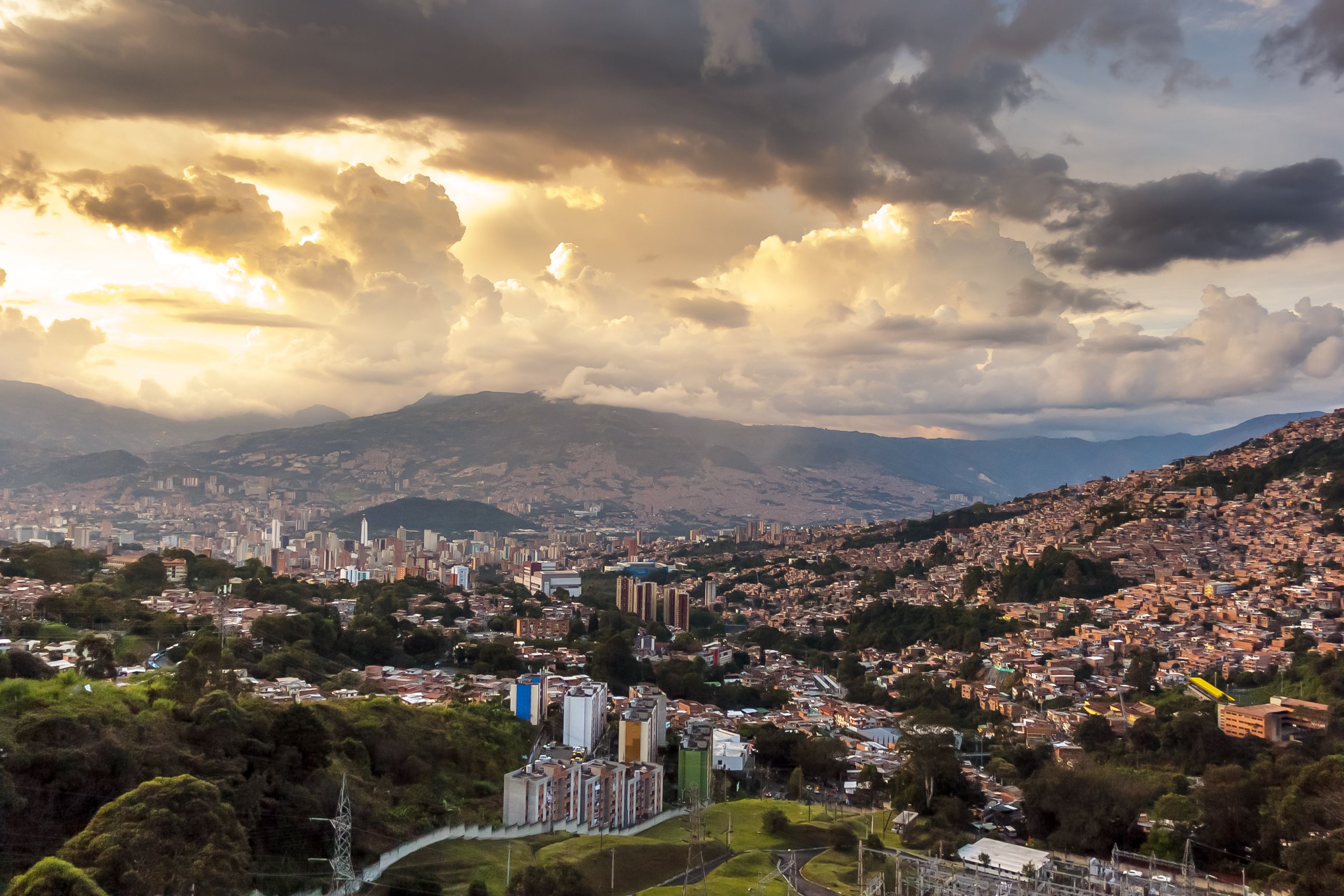
Latin America's secondary cities. Medellín has been on the map for years, but its surrounding region is now expanding the nomad footprint. Colombia's coffee region — Salento, Manizales, Armenia — is attracting remote workers who want Medellín's quality of life at a lower price point and with more direct access to nature. In Mexico, Oaxaca has grown into a serious alternative to Mexico City. In Argentina, Mendoza and Córdoba are emerging as options for people who want Buenos Aires' culture without Buenos Aires' urban density.
What Rural and Small-Town Life Actually Offers
The case for smaller places is not just economic. It touches the question of what the nomad lifestyle is actually for.
The cities that became hubs did so partly because they made the transition easy. You could land in Lisbon and immediately find your people — nomads, expats, coworking spaces, English menus, a community that knew what a Notion workspace was. The friction was low. The belonging came pre-packaged.
Smaller places offer something different. The friction is higher — language barriers are more present, local culture is less filtered for international consumption, the nomad community is smaller or non-existent. But the depth of experience is different too. When there are fewer of you, you integrate more. You learn more local vocabulary because you have to. You become a regular at fewer places, which means you become a real regular. You notice the seasons changing in a way that a city somehow obscures.
The nomads moving in this direction tend to describe it in similar terms: they wanted to actually live somewhere, not just be a visitor in a place optimised for visitors. Smaller towns offer that, albeit with trade-offs that are worth understanding before going.
The Trade-offs Worth Knowing
The rural and small-town nomad story is genuinely optimistic — but honest optimism includes the downsides.
Internet reliability, while dramatically improved, is still not uniform. Starlink works until it doesn't; fiber availability varies by specific address, not just by region. Anyone planning to work from a remote location should verify connectivity independently before committing, not rely on general reputation.
Healthcare infrastructure in smaller towns is often basic. Anything serious typically requires travel to a larger city. Travel insurance with medical evacuation coverage is not optional in these contexts.
Social infrastructure is thinner. The coworking spaces, nomad events, and instant community of the classic hubs do not exist in a small Andalusian village or a Balkan coastal town. Building a social life requires more effort and more time. The slomad philosophy — staying long enough for depth to develop — is not just a preference in these settings; it is a requirement.
And some of the appeal is fragile. The Bansko effect — a tiny town becoming famous in nomad circles and subsequently less affordable and less intimate — is a real phenomenon. The best small-town nomad destinations tend to have a window of optimal conditions that closes as they become more well-known.
The Bigger Shift
What's happening beyond the capitals is not a rejection of city life. It is a diversification of what location independence can look like. The infrastructure that once made the classic hubs necessary is now available in more places. The policy environment is actively trying to direct remote workers toward regions that need them. And a growing segment of the nomad population is ready for something with more depth and less familiarity.
The map of places worth going is expanding. That is, unambiguously, good news.
Further reading: Why 2026 Is the Year of Slow Travel · Spain Will Pay You €15,000 to Live in Extremadura · Starlink Price Hike 2026: What Nomads Need to Know
Frequently Asked Questions
Can you work remotely from rural areas in 2026?
Yes, increasingly so. The combination of fiber expansion, Starlink satellite internet, and 5G fixed wireless has dramatically improved internet reliability in rural and small-town locations that were impractical for remote work just a few years ago. That said, reliability varies by specific location and should always be verified independently before committing to a long stay.
What is España vaciada and why does it matter for digital nomads?
España vaciada — "emptied Spain" — refers to the depopulating inland towns and rural regions of Spain that have been losing residents to cities for decades. The Spanish government's digital nomad visa explicitly encourages remote workers to settle in these regions, and a National Network of Welcoming Villages for Remote Work has grown to include 77 municipalities offering infrastructure, community integration, and in some cases financial incentives to remote workers willing to relocate there.
Which Balkan countries are emerging as nomad destinations in 2026?
Several Balkan countries are gaining traction as affordable alternatives to saturated Western European hubs. Bulgaria has a digital nomad permit, Schengen access, and a 10% flat tax. Slovenia launched a dedicated nomad visa in late 2025. Moldova introduced a two-year visa. Croatia has an established program with foreign income tax exemption. Cities like Tirana, Belgrade, Sofia, and Zagreb, as well as Adriatic coastal towns, are accumulating remote worker communities.
What are the downsides of living as a nomad in small towns or rural areas?
The main trade-offs are: internet reliability that still varies by specific address and should always be verified; limited healthcare infrastructure (anything serious typically requires travel to a larger city); a thinner social scene requiring more effort and longer stays to build real community; and fewer of the nomad-specific amenities (coworking spaces, English-language services) that the classic hubs offer. Rural nomad life rewards patience and slower travel — it tends not to work well for people expecting the plug-and-play experience of Lisbon or Barcelona.
Is Africa becoming a digital nomad destination?
Yes, gradually. Kenya's Class N Digital Nomad permit is now live. South Africa, Namibia, Mauritius, and Cape Verde have established or are developing programs. These are early-stage markets with uneven infrastructure and forming communities, but the direction is clear. Africa is entering the nomad map in a meaningful way, particularly for nomads looking for adventure combined with urban infrastructure in cities like Nairobi and Cape Town.